Switzerland is open to changing its offer to the United States in response to planned tariffs from Washington, Swiss Federal Councillor for the Economy Guy Parmelin said on Aug. 3.
Bern was hit by 39 percent tariffs, one of the highest rates imposed by the Trump administration, on Aug. 1.
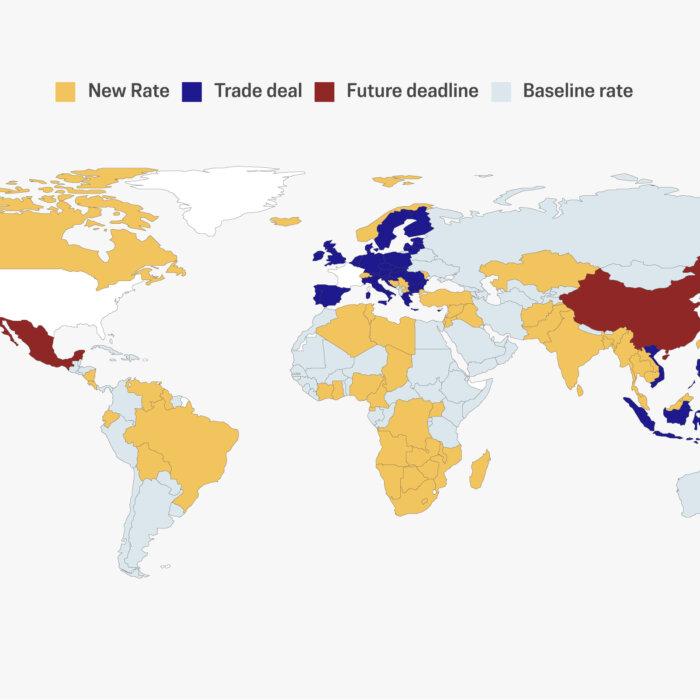
Only Laos, Burma (also known as Myanmar), and Syria had steeper tariffs—at 40 percent to 41 percent—while the 27-member European Union has tariffs at 15 percent, and the UK, which, like Switzerland, is outside the bloc, negotiated 10 percent tariffs.
A special meeting of the Federal Council, the Swiss equivalent of the Cabinet, will be held on Aug. 4 to discuss Bern’s response in the hope of avoiding the levies slated to come into effect on Aug. 7.
“We need to fully understand what happened, why the U.S. president made this decision. Once we have that on the table, we can decide how to proceed,” Parmelin told Swiss radio broadcaster RTS.
“The timeline is tight, it may be hard to achieve something by the 7th, but we'll do everything we can to show goodwill and revise our offer.”
One of the options on the table was Switzerland opting to buy American liquefied natural gas, said Parmelin.
Another option could be further investments in the United States by Swiss companies, the biggest export market for its pharmaceuticals, machinery, and world-famous watches.
Parmelin and Swiss President Karin Keller-Sutter are also prepared to make a trip to Washington for talks if needed, he added.
The Swiss stock market opened 1.9 percent lower on Aug. 4, which was the first day of trading—due to the Swiss National Day public holiday on Aug. 1—in the country following the July 31 announcement of the tariffs, Bloomberg reported.
However, Swatch CEO Nick Hayek Jr. said on Aug. 4 that the move by the Trump administration was “not doomsday.”
“Of course, a settlement can be reached. Why would Donald Trump say tariffs are coming on August 1 and not implement them until the 7th? The door is always open,” Hayek said.
Rahul Sahgal, CEO of the Swiss–American Chamber of Commerce, said he was confident Switzerland would manage to avoid the 39 percent rate set to take effect.
“I think the approach now is for us to regroup and consider what the best strategy is. And then we have to see whether we can manage to have something in place before August 7 that might bring us down from 39 percent.”