A group of university students, historians, and local conservatives are renewing calls to restore a statue of former Prime Minister Sir John A. Macdonald to a park in Kingston, Ontario.
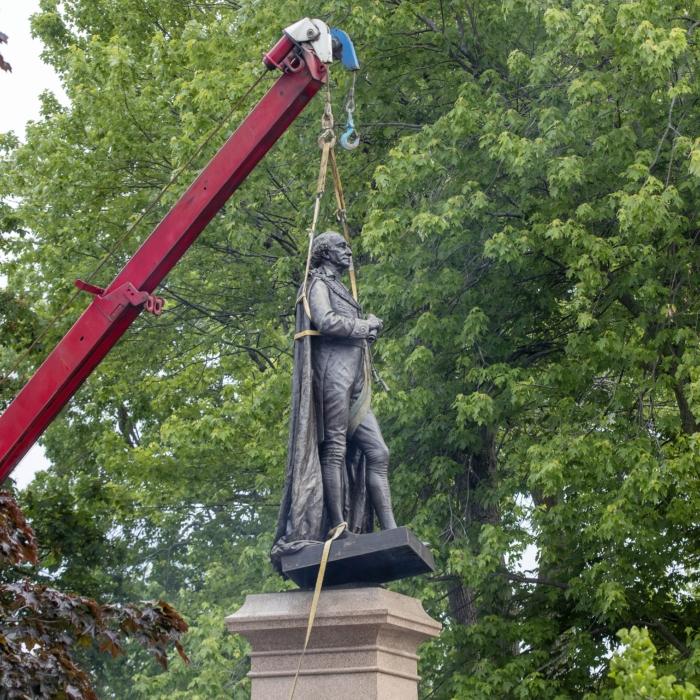
The statue was removed from City Park in Kingston—Macdonald’s hometown—on June 18, 2021, after city council voted two days earlier to relocate it to Cataraqui Cemetery, where he is buried, amid protests and calls for its removal.
The petition says there is widespread misinformation in Canada about Macdonald, including claims attributing actions to him that occurred after his death, and rejects suggestions that he was a “racist architect of genocide” against indigenous peoples.
It highlights Macdonald’s role as Canada’s first prime minister and a founding figure who helped build the transcontinental railway, and presents him as an important historical figure, particularly in Kingston, where he is buried.
“We need to cancel misinformation, not cancel history. We need to celebrate Canada, not tear it down,” the petition says.
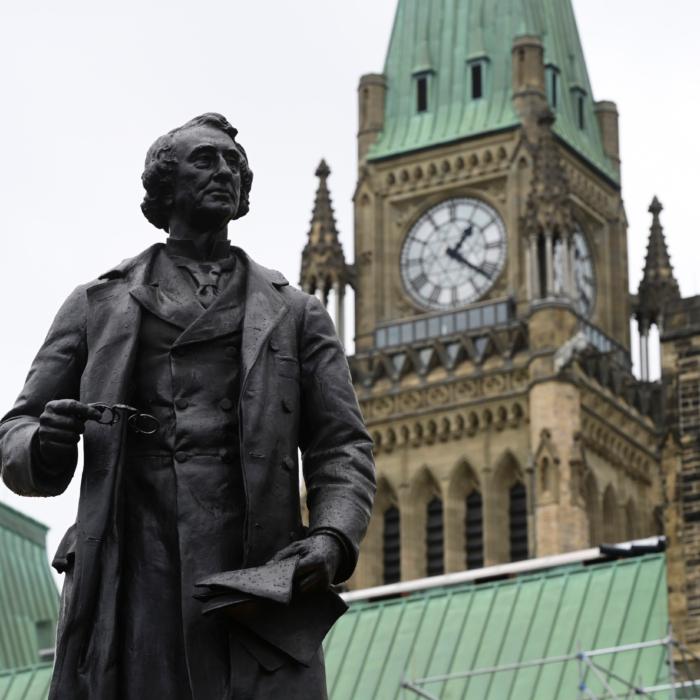
In recent years, several municipalities have removed Macdonald’s statues in response to protesters who criticize him for establishing the residential school system for indigenous children.
He called the decision to remove the statue “abrupt and impulsive,” and said some had alleged the removal violated local bylaws and the Ontario Heritage Act.
“I would suggest that this is not how history is run. History is not a process of subtraction, taking something out of our heritage,” he said. “It is the process of addition and amplification, by which we update our understanding of our heritage.”
McDowall called for the statue to be returned to the park or another prominent location where new contextualization could be applied, “celebrating what Macdonald stood for in this city and this nation, but at the same time identifying the shortfalls in that generation’s management of Canada, including prominently the Indigenous peoples of Canada.”