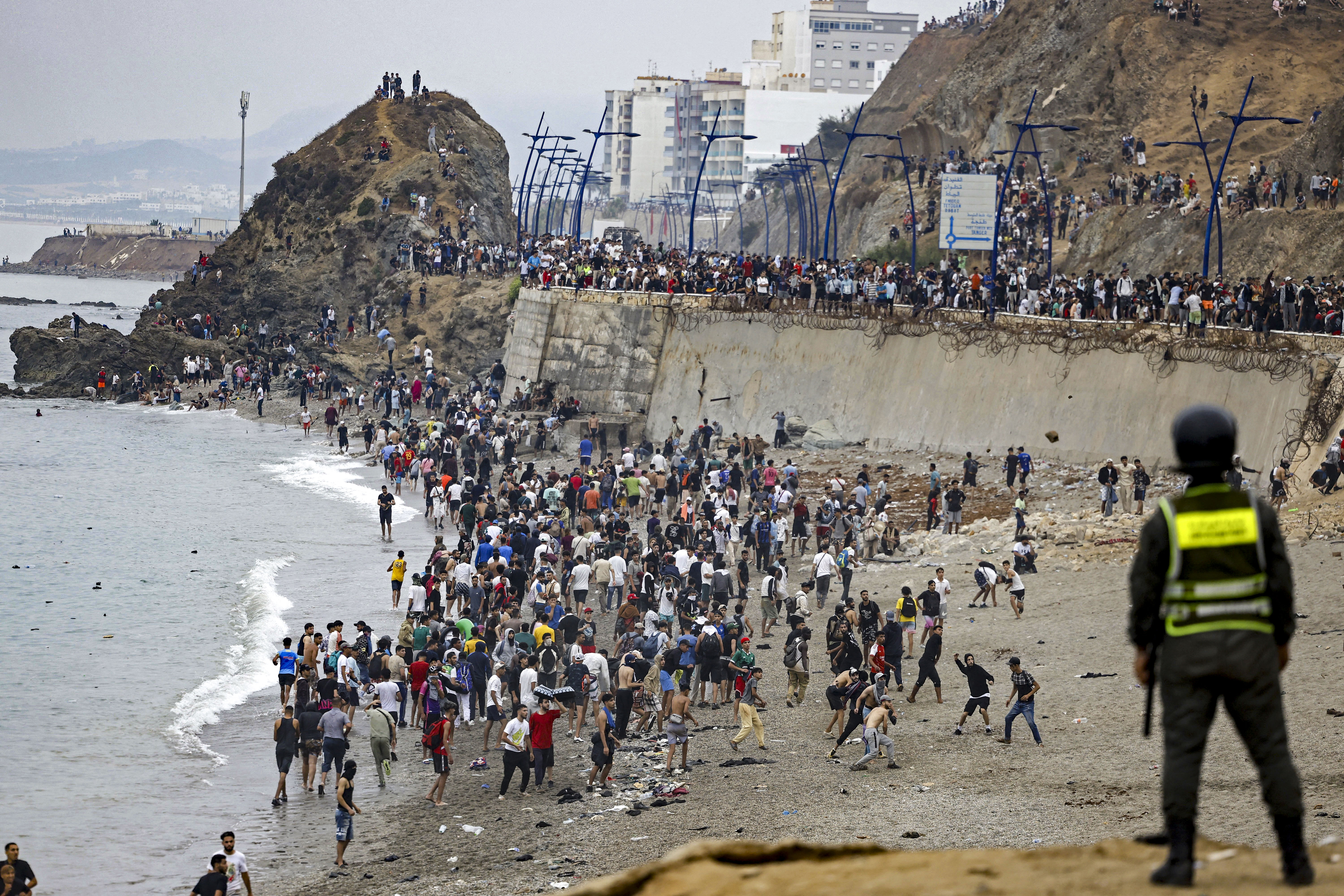

Tens of thousands of illegal immigrants crossed from Morocco into Spain in a single day, igniting worldwide debates over open-border policies.
Ceuta’s president, Juan Jesús Vivas, estimated nearly 60,000 illegal immigrants entered from Morocco. The city’s population is about 83,000.
How It Began
Thousands breached Ceuta’s border with Morocco on July 30, as local officials and police associations begged the Spanish government to declare a national emergency, deploy the army, and fully close the borders.
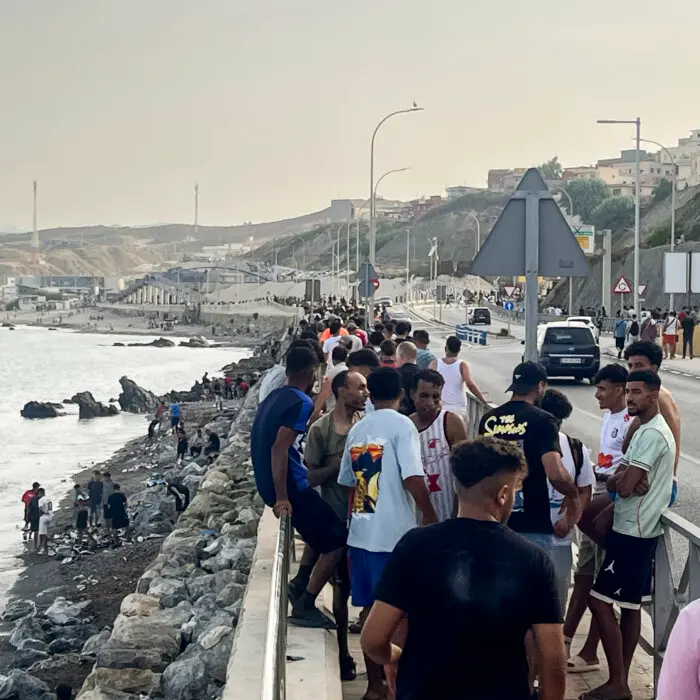

“We are facing a situation of absolute humanitarian and social emergency,” said the exclave’s president, Juan Jesús Vivas.
Earlier reports indicated there were about 49,000 sea and land arrivals by the morning of July 31, with 19 deaths. Those numbers increased, with Vivas estimating nearly 60,000 illegal immigrants entered from Morocco and at least 41 died trying to enter Spanish territory.
“The situation that Ceuta is going through is absolutely unsustainable,” Vivas had told reporters.
Vivas said on the Spanish Radio station Cadena SER that some immigration facilities were operating at 2,400 percent of capacity.
Spain’s national police association, JUPOL, said on X that they warned for days there was not enough police presence in Ceuta at the border.
“We have been publicly warning that the situation in the autonomous city was unsustainable and denouncing the absolute lack of measures on the part of the government. Today, those warnings have been confirmed,” the group said.
Spain’s Guardia Civil police association released similar statements on X, writing that Ceuta was on the brink of collapse and the civil guards were unable to do anything.
“They are entering en masse. ... There aren’t enough civil guards to stop that human tide,” the police association said.

Most of the illegal immigrants who The Epoch Times spoke with or saw were quite young and explained they wanted to come to Europe for better economic opportunities. One of them said he hoped to become an MMA fighter.
Spain’s Response
“What has happened is an attack on Spain’s territorial integrity and deserves our most resounding and energetic condemnation,” Sánchez said in a July 31 post on X after his arrival.
While the Spanish government declined to declare a national emergency because it said legislation does not classify migration flows as a risk to national security, it did send 60 soldiers, police reinforcements, a military vessel, and a diving unit to handle nearly 60,000 illegal crossings over about 24 hours.
Sánchez said the government will guarantee the safety of residents in Ceuta and deploy a containment barrier in the sea to “facilitate repatriation at the border, in compliance with the Supreme Court ruling.”
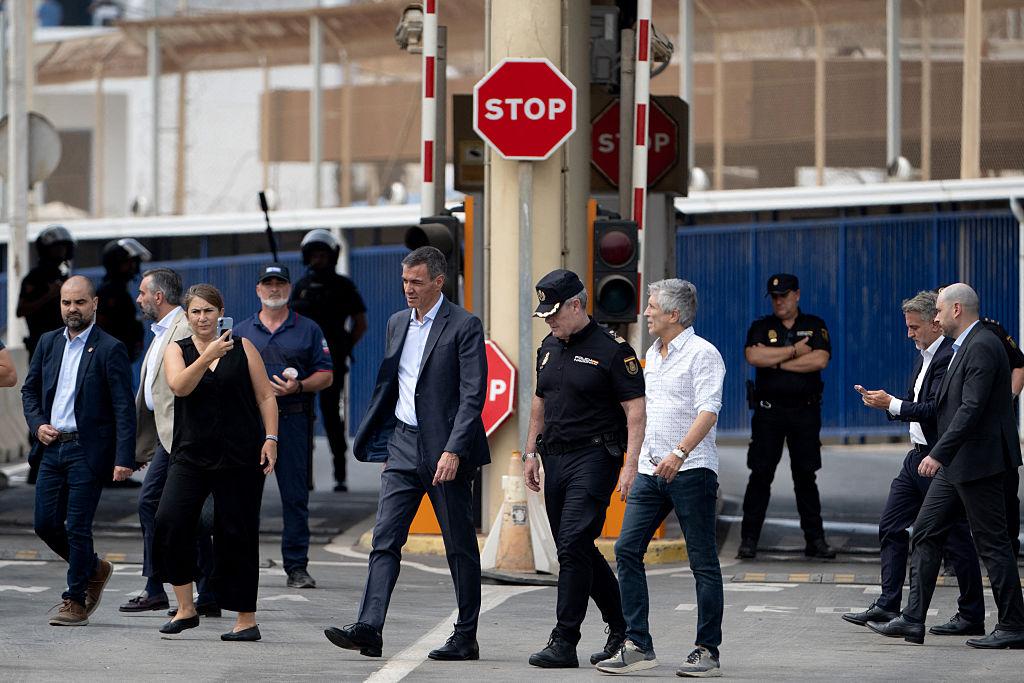
Meanwhile, Spain’s right-wing party, Vox, has furthered the criticism of Sánchez and his government, saying the surge in illegal crossings is a direct result of the prime minister’s policies.
“They are not exiles, nor refugees, nor women, nor children; they are all men of military age,” Vox said.
The party’s leader, Santiago Abascal, noted that the illegal immigrants were not fleeing a war or poverty. He called it an invasion.
Vox’s secretary-general and regional lawmaker in Catalonia, Ignacio Garriga, also blamed Sánchez.
“Let us put up the walls and provide the necessary tools so that Ceuta and Melilla can be a real and secure border,” Garriga said. “It is a moral duty and an institutional obligation to the Spaniards who are terrified, have their businesses closed, and fear for their safety.”
Immigration Policy Changes
The surge in illegal crossings comes after two major policy changes in Spain this year.
The government estimated that half a million individuals could be eligible under the legislation, but Spanish think tank Funcas said that number could be roughly 840,000.
However, nearly 1.2 million had applied by the June 30 deadline. Applications for the program opened in April.
It was initially unclear whether Spain intended to give the tens of thousands of individuals who crossed in the past day or so a court hearing, but Territorial Policy Minister Angel Victor Torres indicated on July 31 that the Spanish government would eventually return the immigrants.
European, US Leaders React
World leaders are condemning the illegal crossings and bringing attention to Spain’s immigration policies, while some are moving to strengthen their own borders with Spain in response to the surge.
Ursula von der Leyen, president of the European Union, called the scenes in Spain “unacceptable.”
“We cannot allow anyone to come to our Union without abiding by our rules,” she wrote in a July 31 post on X. “Dangerous crossings must stop immediately. Smuggling networks must be dismantled. And returns must be swift, as our rules allow.”
French Interior Minister Laurent Nunez said in a July 31 post on X that he instructed the bolstering of checks at the Spanish border “without delay” and that he was activating the country’s Rapid Intervention Border Force. President Emmanuel Macron also announced France would be strengthening its land borders with Spain.
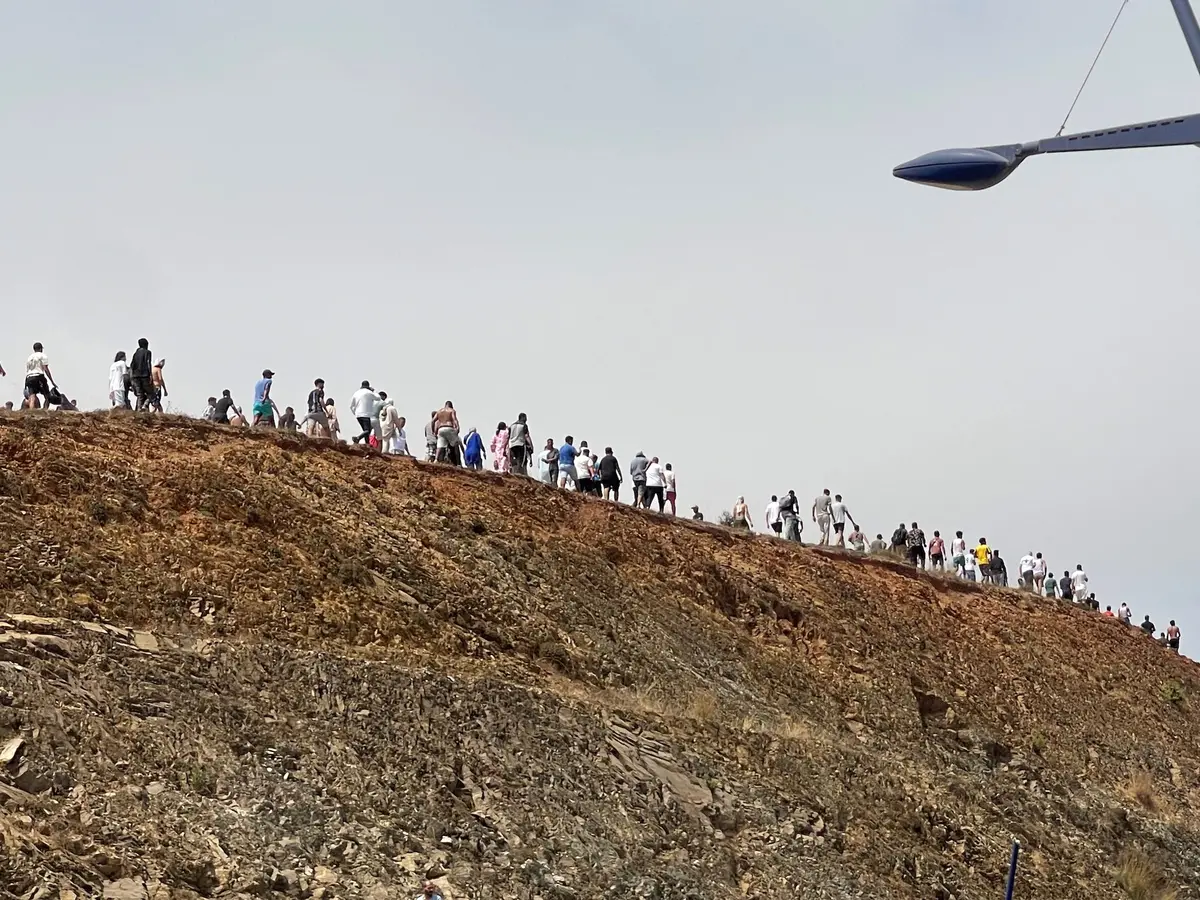
Likewise, Co-Chair Alice Weidel of Germany’s populist Alternative for Germany (AfD) party said the many thousands of immigrants who illegally crossed into Spain likely have Germany as a destination in mind.
“Borders must now be closed and rejections rigorously enforced,” Weidel said on X.
Italy’s prime minister, Giorgia Meloni, called the situation in Ceuta a demonstration that “uncontrolled illegal immigration poses a concrete threat to the security of Europe’s borders.”
“On illegal immigration, we will not yield an inch: defending the borders, stopping human traffickers, and ensuring effective repatriations will continue to be the line of this Government,” Meloni said.
Italian Deputy Prime Minister and Minister of Foreign Affairs Antonio Tajani was also in favor of closing the Schengen Area with Spain.
“The Madrid Government’s decision to grant Spanish, and therefore European, citizenship to over 500,000 irregular immigrants is profoundly wrong and encourages human trafficking,” Tajani wrote on X.
Tajani’s comments received harsh words in return from Spanish Foreign Minister José Manuel Albares, who wrote it is “unbecoming of the foreign minister of a partner and friendly country, from which we expect European solidarity, not partisan demagoguery.”
Meanwhile, Tajani and Meloni’s stance received backing from Finnish Interior Minister Mari Rantanen, who urged other European countries to follow.
The Schengen Area involves 29 European countries and more than 450 million people. Rantanen said Spain had failed to “protect the Schengen Area’s external border from infiltration.”
“Countries that do not fulfill their obligation to protect the external border cannot be members of Schengen,” Rantanen said on X.
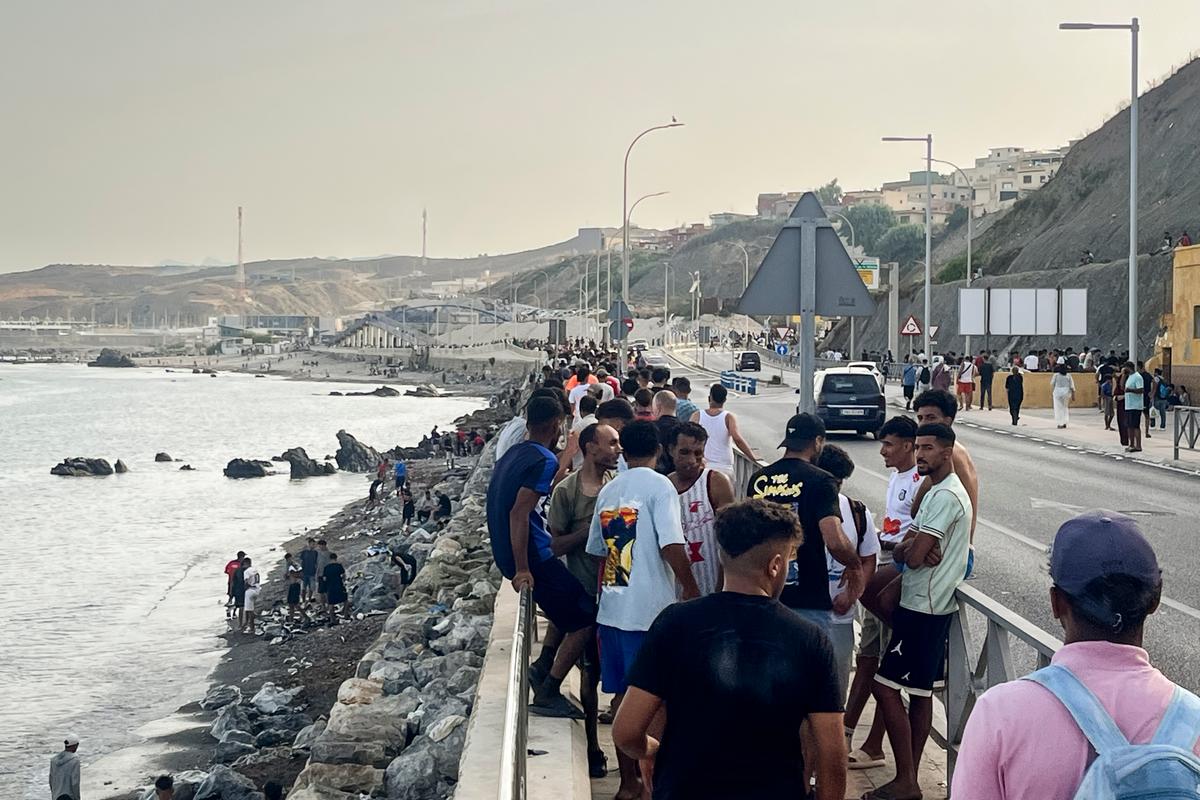
The U.S. Department of State issued a response to the surge of illegal immigration, calling it an egregious violation of human rights and of Spain and Europe’s sovereignty.
U.S. Vice President JD Vance, in a comment on the crisis, praised President Donald Trump for securing America’s borders.
“These images out of Spain are an unfortunate reminder of the consequences of mass migration and the radical left-wing globalist policies that have enabled the Invasion of the West,” Vance said on X on July 31.