Spanish and Moroccan security forces are fortifying both sides of the border around Ceuta ahead of Aug. 15, a date promoted on Moroccan social media for a new attempt at a mass crossing into the Spanish North African city, two weeks after a surge that brought tens of thousands of illegal immigrants into the exclave within days.
“The security forces are monitoring this situation at all times, and the necessary measures have been taken to prevent a repeat of episodes such as the one that occurred on July 30,” a spokesman for the Spanish Interior Ministry told The Epoch Times on Aug. 11.
‘The Border Is Not Open’
On Aug. 11, Spain’s Civil Guard also issued a warning in French, the language of many of the posts fueling the mobilization, addressed to those considering the journey.
“The border with Spain is not open, nor will it open. There are new containment barriers. If you cross them, you will be sent back. Do not be deceived,” the force stated.
French is widely used in Morocco as a second or working language in business, government, culture, media, and higher education.
The Spanish Embassy in Morocco released a message in French, Spanish, English, and Arabic almost simultaneously, stating that irregular entry into Ceuta or Melilla, Spain’s other North African autonomous city, confers no right to remain in Spain or to travel on to the rest of Europe, and that “any information to the contrary is false.”
The warnings follow weeks of calls on Facebook, WhatsApp, Telegram, and Instagram to repeat the late July breach.
A six-page Civil Guard assessment based on open sources, reported on by Spain’s public broadcaster RTVE on Aug. 6, concluded that the call for Aug. 15 is “real and documented,” circulating with dates, departure points, and logistical discussions through groups that together count some 400,000 members, a figure the report says should be interpreted with caution.
“The risk of materialization is real, but its magnitude is uncertain,” it adds.
Reinforcements on Both Sides
Madrid has matched the warnings with manpower.
The Interior Ministry has sent 45 additional riot police officers to Ceuta, together with specialists in immigration and border control and intelligence units, while the Civil Guard has bolstered its deployment with reserve and public safety units, naval assets, drones, divers, and air support.
The force has also suspended vacations and leave for part of its personnel stationed in Ceuta and Melilla.
The city’s authorities had already sounded the alarm.
Alejandro Ramírez, spokesman for Ceuta’s local government, said the executive was following the new calls with concern after July’s crisis and had forwarded the information gathered to the relevant state bodies.
Across the border, Morocco has mounted a large-scale operation of its own, EFE reported.
Police officers, the Royal Gendarmerie, and Auxiliary Forces are manning checkpoints on the roads leading to the Bab Sebta border crossing, systematically searching vehicles and busing intercepted travelers back to their cities of origin.
A gendarmerie helicopter is flying reconnaissance missions over the mountains and coastline near Ceuta, where patrols with dog teams comb strategic footpaths, and the authorities have begun erecting a metal barrier some 13 feet high along the road linking the border town of Fnideq, also known as Castillejos, to the crossing.
A similar deployment has been reported in the province of Nador, which borders Melilla.
Mehdi Alioua, a sociologist and professor at the International University of Rabat, told The Epoch Times that the days ahead carry a real risk of unrest, but not, in his view, of another breach.
“Yes, there is cause for concern, in the sense that there may be clashes. But I don’t think young Moroccans will let themselves be fooled a second time,” he said.
“Many anti-riot trucks have been deployed. It will be difficult to get close.”
In terms of those who crossed the border, Alioua said that “all groups are represented, from the most modest backgrounds to the lower middle class: students, graduates, people who were employed, and even athletes.”
Echoes of July 30
The current mobilization follows the pattern that preceded the July 30 surge: open calls posted publicly to attract participants, followed by a migration of the conversation into smaller private messaging groups.
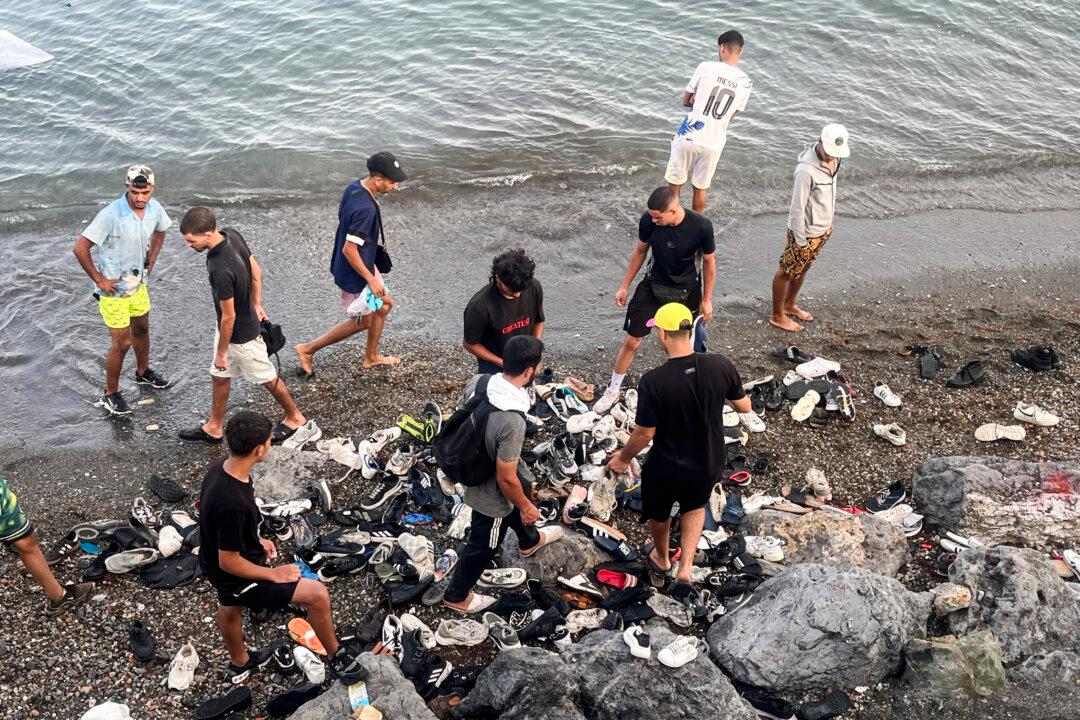
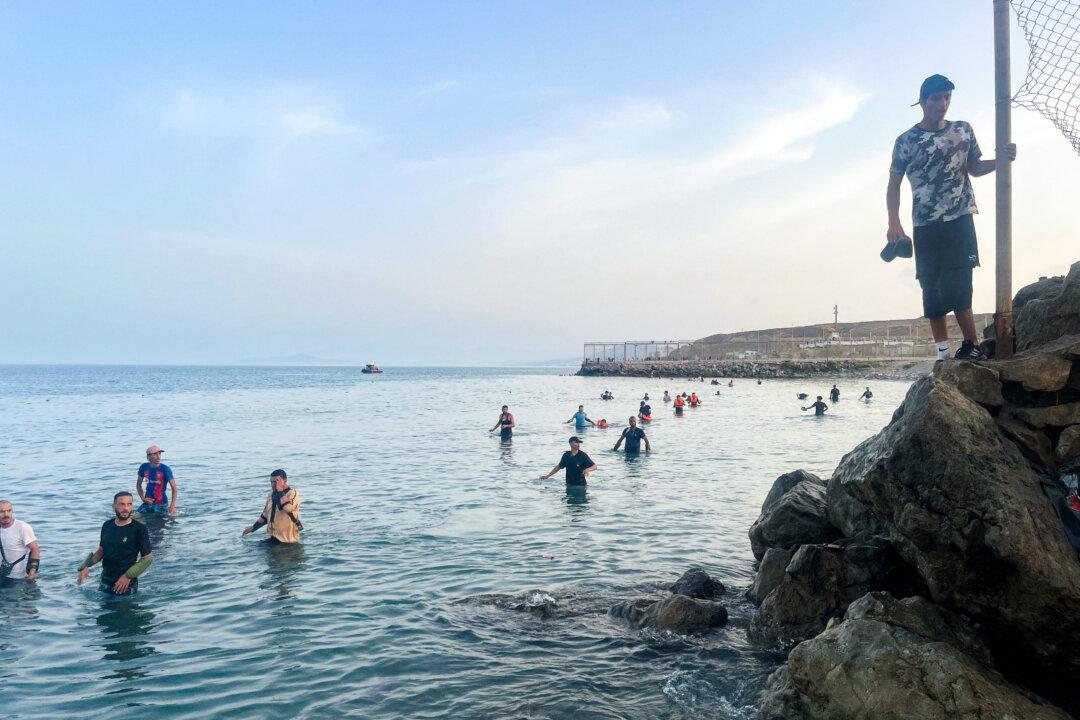
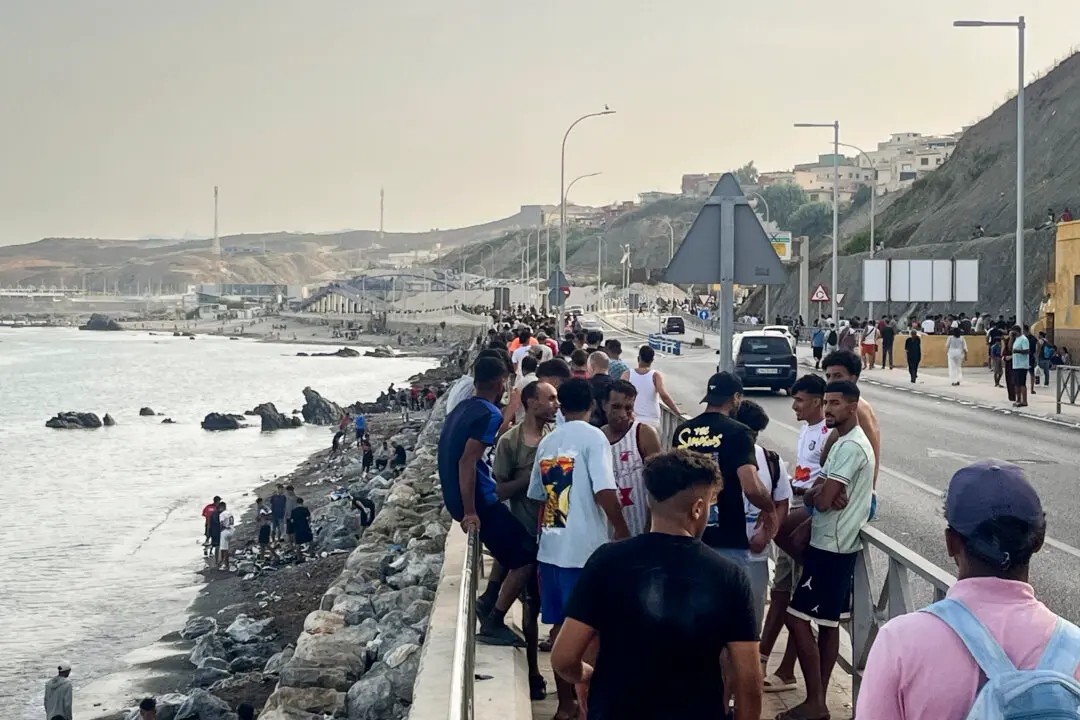
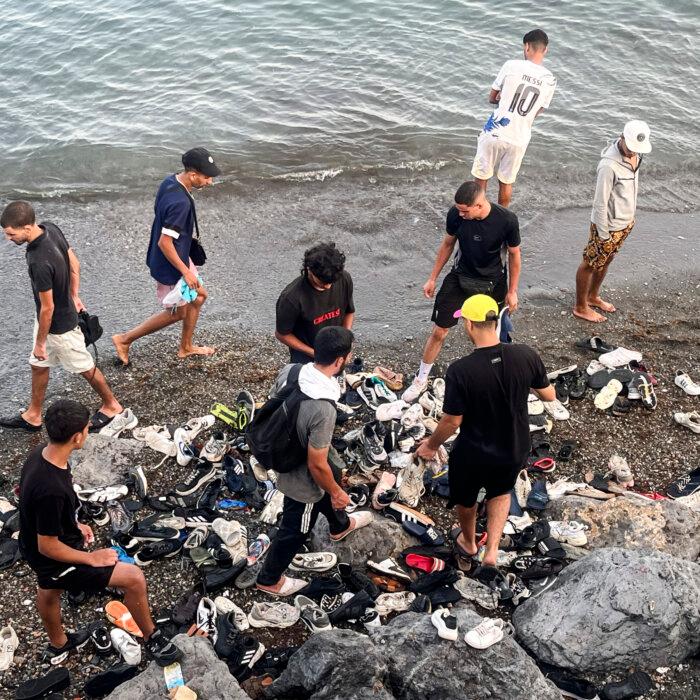
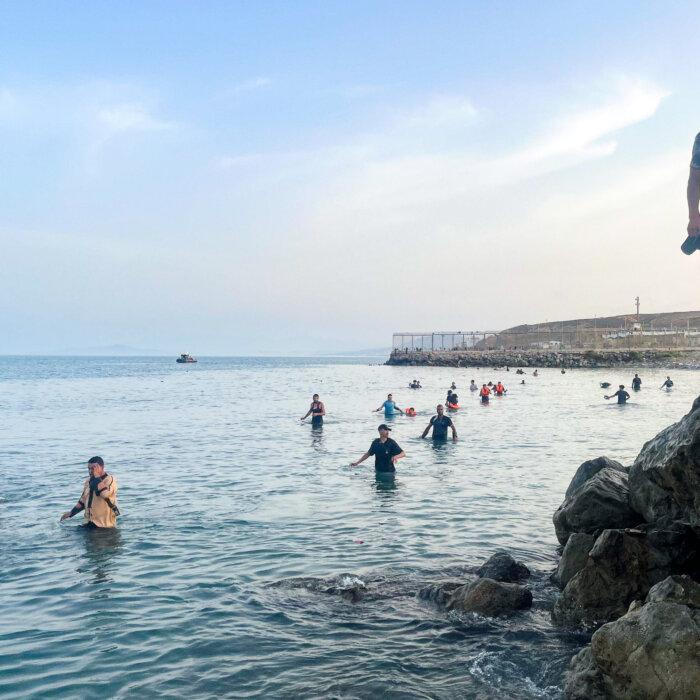
On that day, after weeks of similar calls, tens of thousands of people, most of them young Moroccan men, poured into Ceuta by sea and land.
Spanish authorities said 72,000 people entered Ceuta illegally, of whom around 69,500 returned to Morocco within the first four days.
At least 80 migrants died, Spain reported, while Morocco reported 11 deaths on its side of the border.
Alioua expects the scenario to repeat itself sooner or later, whatever happens on Aug. 15.
“There will be no more crossings of this kind until the next time, when Moroccan authorities’ attention is once again relaxed, absorbed by subjects deemed more important than watching these borders,” he said.
“Every summer, people try to cross. As long as the social crisis is there, it will come back.”
Pierre Vermeren, a French historian at Paris 1 Panthéon-Sorbonne University and the author of “Morocco in 100 Questions,” told The Epoch Times that the ruling was one of two Spanish decisions that set the wave in motion.
“The news of the mass regularization of hundreds of thousands of illegal immigrants, combined with that of the Spanish Supreme Court ruling prohibiting the immediate return of migrants arriving by swimming, spread like wildfire on social media in Morocco, where young people are all connected,” he said.
“Spain bears a moral responsibility, since it gave birth to this hope.”
Vermeren said that rumors circulated online claiming that the border was about to open, prompting young people to rush toward it en masse.
Establishing responsibility for the crisis, he also said, begins with a simple question: Who launched those calls on social media?
According to the Civil Guard assessment reported by RTVE on Aug. 6, there is no evidence establishing who launched the campaign or linking it to the Moroccan government, its security services, or any specific organization.
At the same time, the assessment cautions that it would be incorrect to conclude that the movement is spontaneous, pointing to “some degree of digital facilitation” whose origin has yet to be determined.
Suspicions and accusations of possible Algerian involvement have also surfaced in Moroccan media following the publication of a report by Spanish security analyst Jose Maria Gil Garre, which found that identified WhatsApp groups were administered from a phone number bearing Algeria’s +213 country code.
Gil Garre, however, cautioned against treating these findings as proof of Algerian state involvement.
“From the existence of a phone terminal with an Algerian prefix, no conclusion of attribution of responsibility can be drawn,” he told The Epoch Times.
Gil Garre’s report also identified participants based in Morocco, Tunisia, France, and the United States.