South Korean Court Increases Former President Yoon’s Prison Sentence in Obstruction Case

Yoon Suk Yeol’s lawyers called the verdict ’very disappointing' and said the former president’s legal team would appeal the decision at the Supreme Court.
South Korean Court Increases Former President Yoon’s Prison Sentence in Obstruction Case
South Korea's former impeached president, Yoon Suk Yeol, arrives at a court in Seoul on July 9, 2025. Kim Hong-Ji/AFP via Getty Images
|Updated:
0:00

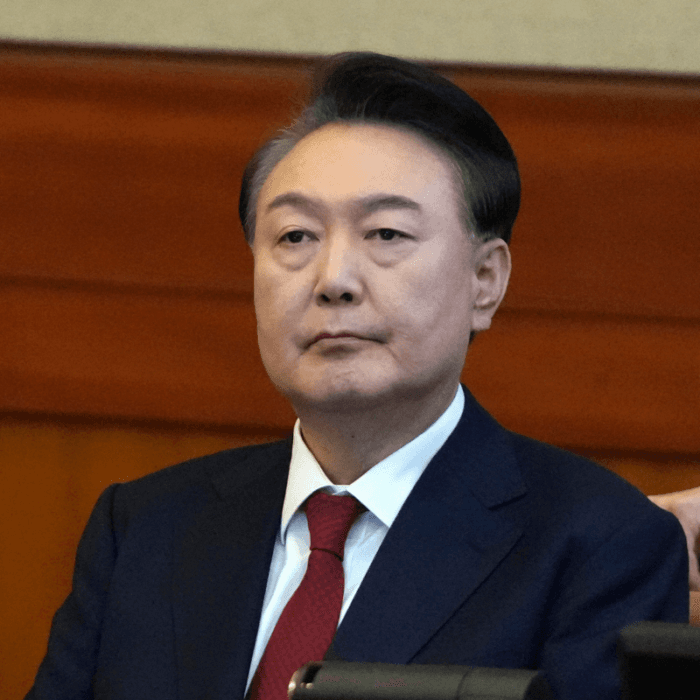
A South Korean appeals court on April 29 increased the prison sentence from five to seven years for former conservative President Yoon Suk Yeol in the obstruction of justice case linked to his December 2024 martial law declaration.

On Jan. 16, Seoul Central District Court found Yoon guilty of mobilizing the presidential security service to prevent authorities from detaining him, fabricating official documents, and failing to follow the legal process required for declaring martial law. He was cleared of some of the other charges and sentenced to five years’ imprisonment.

Yoon and prosecutors challenged the ruling, and on Wednesday, the Seoul High Court upheld the original verdict and further found the former president guilty of other charges. This included abuse-of-power charges tied to the Cabinet meeting ahead of the martial law declaration, finding he was responsible for failing to notify several Cabinet members that a formal meeting was going ahead.

Judge Yoon Sung-sik said the conservative former president sidestepped a legally mandated full Cabinet meeting by notifying only a select few members in order to simulate a legitimate meeting before declaring the state of emergency.

The judge also said the former president deployed security officials “like a private army” to resist police efforts to arrest him in the weeks following his impeachment.
The South Korean judicial system allows both prosecutors and defendants the right to challenge rulings and sentences if they believe the decisions are flawed.

One of Yoon’s lawyers, Yoo Jeong-hwa, called the verdict “very disappointing” and said the former president’s legal team would appeal the decision at the Supreme Court.

Yoon attempted to impose martial law on Dec. 3, 2024, but backed down after six hours amid public protest and after the parliament voted to overturn the decree.
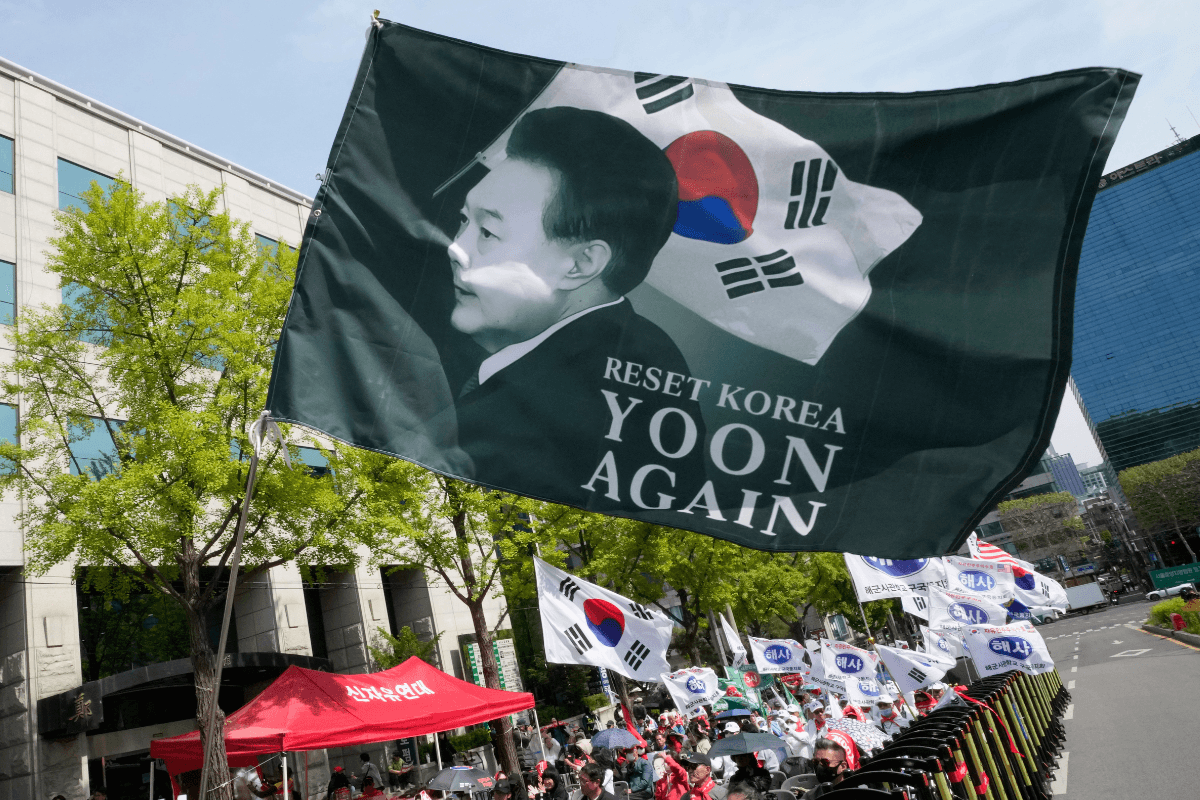
At the time, Yoon said he was aiming to protect the constitution because the opposition, which controlled the parliament, was sympathetic to communists and North Korea.
Supporters of former South Korean President Yoon Suk Yeol stage a rally outside the Seoul High Court in Seoul on April 29, 2026. (Ahn Young-joon/AP Photo)
Supporters of former South Korean President Yoon Suk Yeol stage a rally outside the Seoul High Court in Seoul on April 29, 2026. Ahn Young-joon/AP Photo
Weeks later, authorities issued a warrant to detain Yoon after he failed to comply with three summonses for questioning. On Jan. 3, 2025, Yoon barricaded himself inside the presidential residence, and the security service blocked investigators.
Authorities detained Yoon in a second attempt on Jan. 15, 2025, with the operation involving more than 3,000 police officers. He was then indicted on Jan. 26, 2025, on charges of leading an insurrection.
On April 4, 2025, he was removed from office after South Korea’s Constitutional Court voted to uphold the Dec. 14, 2024, parliamentary vote to impeach him.
The Constitutional Court’s decision triggered a snap election, and in June 2025, Lee Jae-myung, a former Democratic Party of Korea leader who led the impeachment bid against Yoon, won the presidency.

Other Charges and Convictions

The updated convictions for obstruction of justice come on top of Yoon’s Feb. 19 conviction for abuse of authority and orchestrating an insurrection. He was sentenced to life in prison.
Yoon is facing a total of eight trials. The latest trial recently closed, during which the former president faced charges of benefiting an enemy and of abuse of power.

South Korean prosecutors accuse Yoon of trying to escalate tensions with North Korea by allegedly flying drones over Pyongyang in a bid to create justification for later imposing martial law.

Prosecutors requested on April 24 a 30-year prison sentence for the conservative politician, if found guilty.

The conservative politician and his legal team deny all charges.

Former First Lady Imprisoned

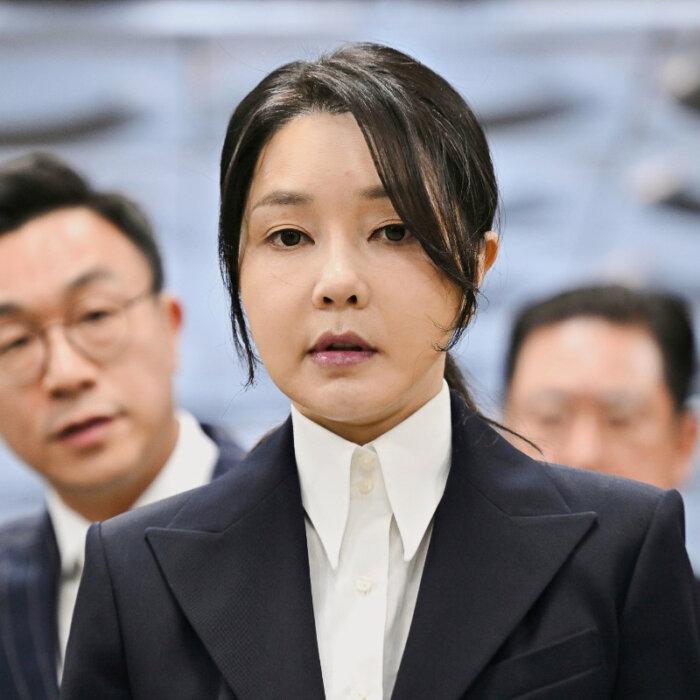
Wednesday’s ruling came a day after the same court increased the sentence of Yoon’s wife, Kim Keon Hee, from 20 months to 4 years in prison, after convicting her of further charges.
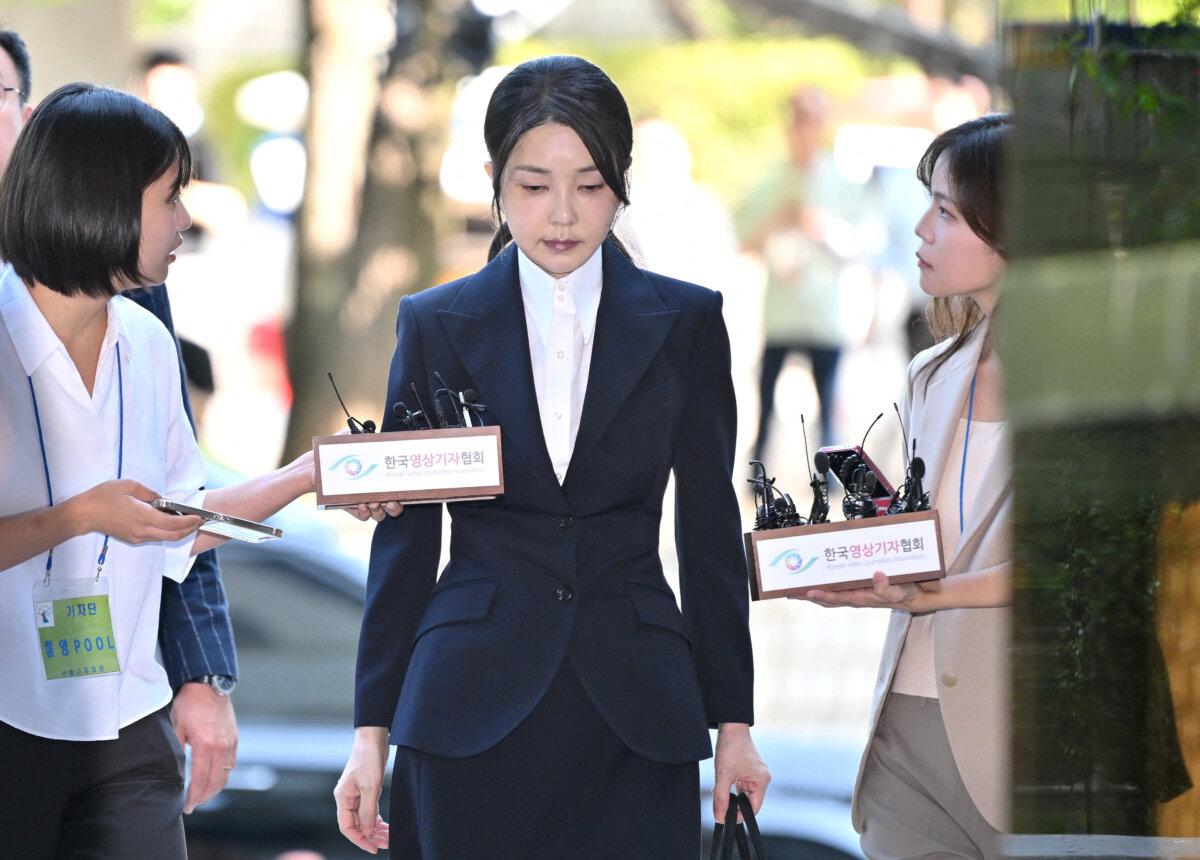
Kim was sentenced on Jan. 28 to one year and eight months in prison for corruption, after being found guilty of receiving luxury gifts, including a Chanel bag and a Graff diamond necklace, from the Unification Church in exchange for promises of political favors.
South Korea's former first lady, Kim Keon Hee, wife of impeached former president Yoon Suk Yeol, arrives at the Seoul Central District Court to attend a hearing on her arrest warrant, requested by special prosecutors, in Seoul on Aug. 12, 2025. (Jung Yeon-Je/Pool via Reuters)
South Korea's former first lady, Kim Keon Hee, wife of impeached former president Yoon Suk Yeol, arrives at the Seoul Central District Court to attend a hearing on her arrest warrant, requested by special prosecutors, in Seoul on Aug. 12, 2025. Jung Yeon-Je/Pool via Reuters

The court initially acquitted Kim of other charges, including stock price manipulation and violations of the political funding law, citing a lack of evidence among its reasons.

But following an appeal from both Kim and prosecutors, the court on April 28 extended her sentence after convicting her of the stock manipulation charge and of receiving another Chanel bag from the church.

The former first lady denies all charges, and her lawyers said they would appeal the Seoul High Court’s ruling.
The Associated Press contributed to this report.
Google LogoMark Us Preferred on Google
Victoria Friedman
Victoria Friedman
Author
Victoria Friedman is a UK-based journalist covering a wide range of international stories, with a particular interest in technology, eastern Europe, and defense.