This copy is for your personal, non-commercial use only. Distribution and use of this material are governed by our Subscriber Agreement and by copyright law. For non-personal use or to order multiple copies, please contact The Epoch Times Reprints.
South Africa Appoints Veteran Afrikaner Politician as Ambassador to US
Roelf Meyer, 78, will replace Ebrahim Rasool, who was accused by U.S. Secretary of State Marco Rubio of being a ‘race-baiting politician who hates America.’
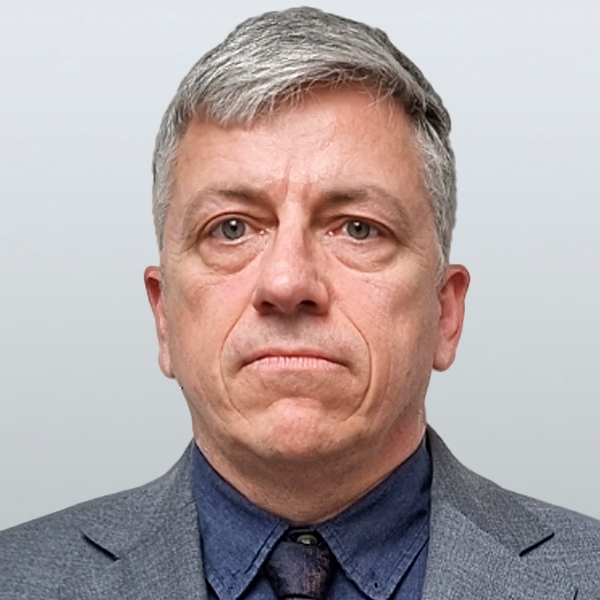
Roelf Meyer, South African politician and businessan, speaks during "Nation in Conversation" talks at the Nampo Harvest Day Expo in Bothaville on May 15, 2018. Wikus de Wet/AFP via Getty Images
South African President Cyril Ramaphosa has appointed Roelf Meyer—who was the apartheid-era government’s chief negotiator during talks to end white rule in the early 1990s—as his country’s ambassador to the United States.
Meyer, 78, will replace Ebrahim Rasool, who was expelled in March 2025 and was accused by U.S. Secretary of State Marco Rubio of being a “race-baiting politician who hates America.”
“I can confirm that President Cyril Ramaphosa has appointed Mr Roelf Meyer as South Africa’s Ambassador to the US,” Vincent Magwenya, a spokesman for Ramaphosa, said in a statement.
The appointment of Meyer comes after a period of strained relations between South Africa and Washington, during which U.S. President Donald Trump has aired concerns about reports that white Afrikaners in the country are being subjected to a “genocide.”
In December 2025, Trump appointed conservative activist Leo Brent Bozell III as the new U.S. ambassador to South Africa.
Bozell is the founder and president of the Media Research Center, the largest conservative media watchdog organization in the United States.
‘Undiplomatic Remarks’ by US Ambassador
Speaking at a meeting of South African business leaders in March, Bozell challenged Ramaphosa’s socialist government over its relations with Iran and its affirmative action laws.
South African Foreign Minister Ronald Lamola later said Bozell had been called in to “explain his undiplomatic remarks.”
In May 2024, Bozell’s son Leo Brent Bozell IV was jailed for 45 months for his involvement in the breach of the U.S. Capitol on Jan. 6, 2021.
On Jan. 20, 2025, the day he took office for his second term, Trump pardoned Bozell and others convicted of crimes “relating to the events at or near the United States Capitol on January 6, 2021.”
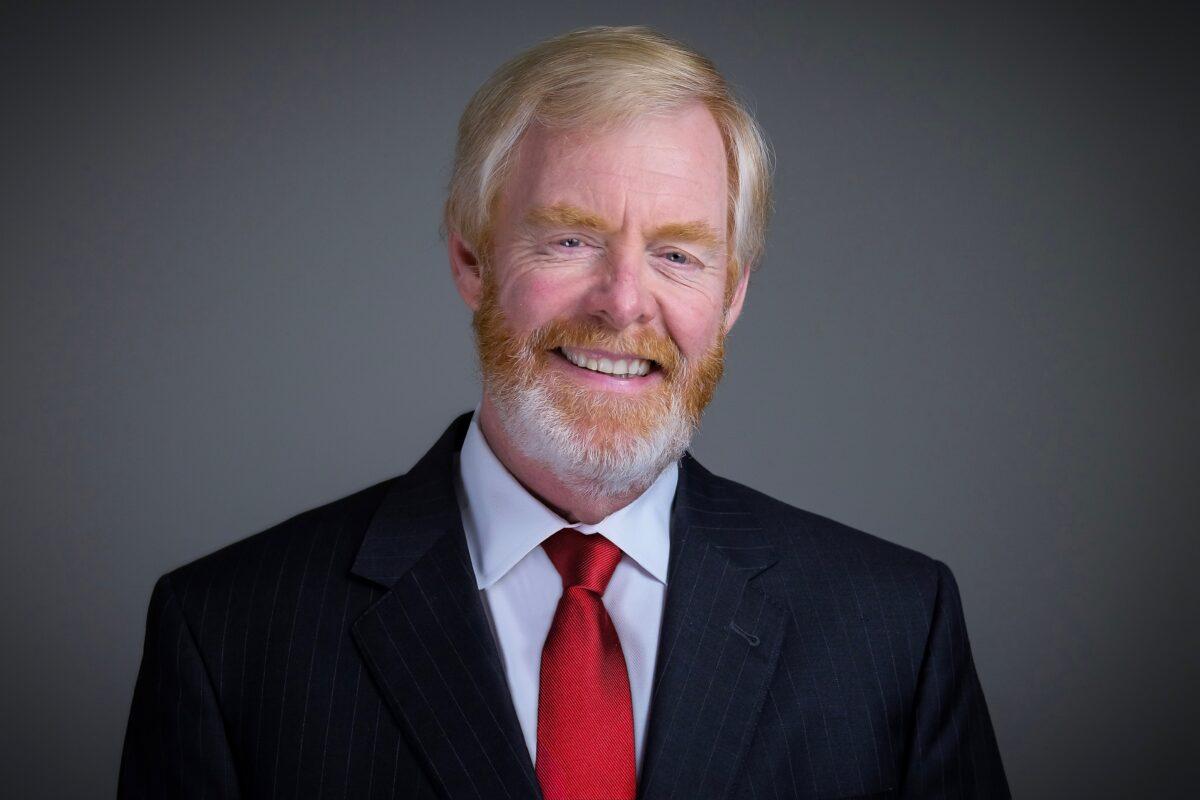
An undated image of Brent Bozell, president of the Media Research Center, who was appointed U.S. ambassador to South Africa in Dec. 2025.
In May 2025, when Ramaphosa visited the White House, Trump confronted him, screening a video showing opposition politician Julius Malema at crowded rallies calling for white farmers to be shot.
Ramaphosa rejected the claims, denying that any such killings were taking place.
Julius Malema, whose “Kill the boer!” chants at rallies of his Economic Freedom Fighters party were at the center of the controversy, is due to be sentenced on April 16 for firing a gun in the air at a rally. Prosecutors are seeking a 15-year prison term.
Trump signed an executive order on Feb. 7, 2025, cutting federal aid to South Africa, objecting to its land policy and a genocide case the nation made against Israel at the International Court of Justice.
“The government of South Africa blatantly discriminates against ethnic minority Afrikaners,” the White House wrote in a summary of the order.
Trump subsequently implemented a program offering asylum to white Afrikaners who no longer felt safe in South Africa, and the first group arrived on May 12, 2025.
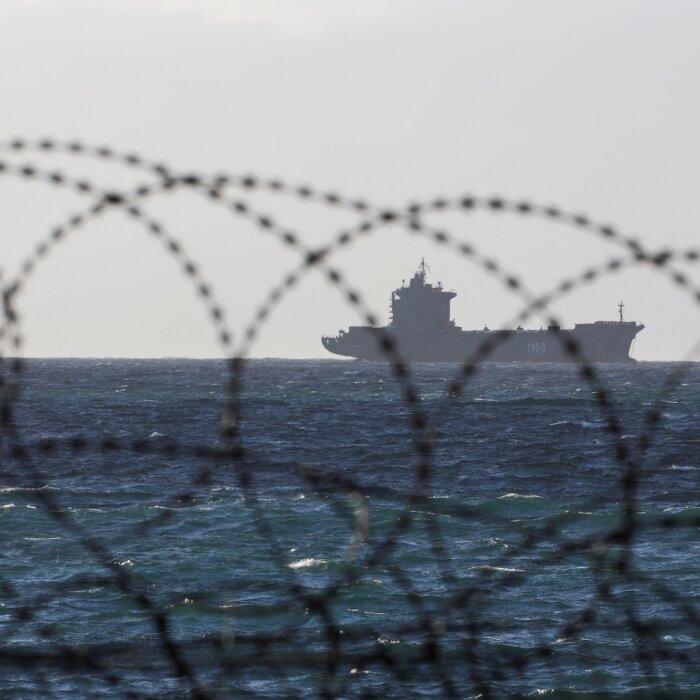
In January this year, the United States accused the South African government of undermining regional maritime security by allowing Iranian military participation in naval exercises held in South African waters.
South Africa’s defense ministry said on Jan. 16 that defense minister Angie Motshekga had opened an inquiry into Iran’s involvement in the naval exercises.
In a post on X on Jan. 15, the U.S. Embassy in South Africa said, “South Africa can’t lecture the world on ‘justice’ while cozying up to Iran.”
On Jan. 30, South Africa declared the Israeli ambassador, Ariel Seidman, “persona non grata,” accusing him of violating South Africa’s sovereignty and diplomatic norms.
Meyer, an Afrikaner, was minister of defense under the last white minority government of former President F.W. De Klerk, between 1991 and 1992.
He was the chief negotiator for De Klerk’s government in the talks that led to the first fully democratic election in South Africa, which led to the election of Nelson Mandela as president in 1994.
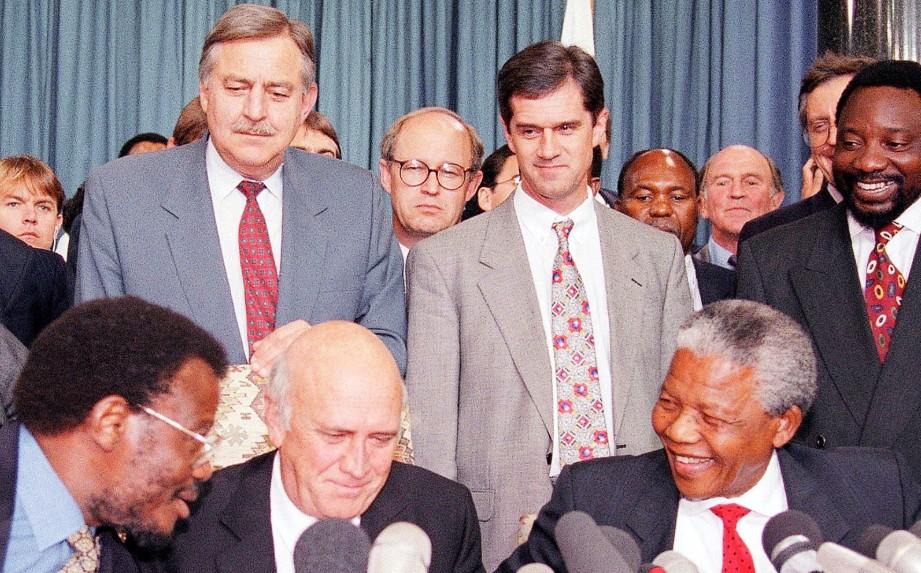
Roelf Meyer (back C) stands next to Cyril Ramaphosa (back R) and behind Nelson Mandela (front R) and then-President F.W. de Klerk (front C) during a press conference in Pretoria, South Africa, on April 19, 1994. Lynne Sladky/AP
During those negotiations, the chief negotiator for Mandela’s African National Congress was Ramaphosa.
Meyer then served under Mandela as a constitutional development minister until 1996.
John Stremlau, a U.S.–Africa relations expert at the University of the Witwatersrand, said Meyer was “the right person, at the right time.”
“He is an excellent and experienced negotiator who not only negotiated in South Africa, but has brokered agreements elsewhere in various other places under very difficult circumstances,” Stremlau said.
‘Disappointing’ Appointment
Jaco Kleynhans, head of public liaison at Solidarity, a South African Christian foundation, called Meyer’s appointment “disappointing.”
In a post on X on April 14, Kleynhans wrote: “At 78, he is a retired politician whose career belongs to a previous political era.
“Far from instilling confidence among Afrikaners, this choice risks deepening existing concerns within our community. It does little to repair strained relations with Washington and instead appears to be yet another misstep in the South African government’s handling of its relationship with the United States.”
The Associated Press contributed to this report.
Correction: A previous version of this article misstated who was calling for white farmers to be shot in the video Trump screened in the White House in May 2025. The Epoch Times regrets the error.