The European Union’s solar energy program is bound for its first annual slowdown in more than a decade, according to industry data released on Thursday.
The trend mirrors shifting political priorities across the 27-nation bloc as some countries scale back green measures or find their ability to sustain clean energy projects is stretched due to spending on defense and local industries.
The EU is on track to install 64.2 gigawatts (GW) of new solar energy capacity in 2025, a 1.4 percent decline from the 65.1 GW installed last year, industry association SolarPower Europe reported.
“While the EU remains on track to meet its 2025 solar target of 320 GWAC (400 GWDC), this achievement contrasts with mounting concerns about reaching the 2030 goal of 600 GWAC (750 GWDC), as the market shows signs of slowing down,” the report said.
The reason for both being included in the report is that solar panels create direct current electricity, which then has to be converted to alternating current for use in the electrical grid.
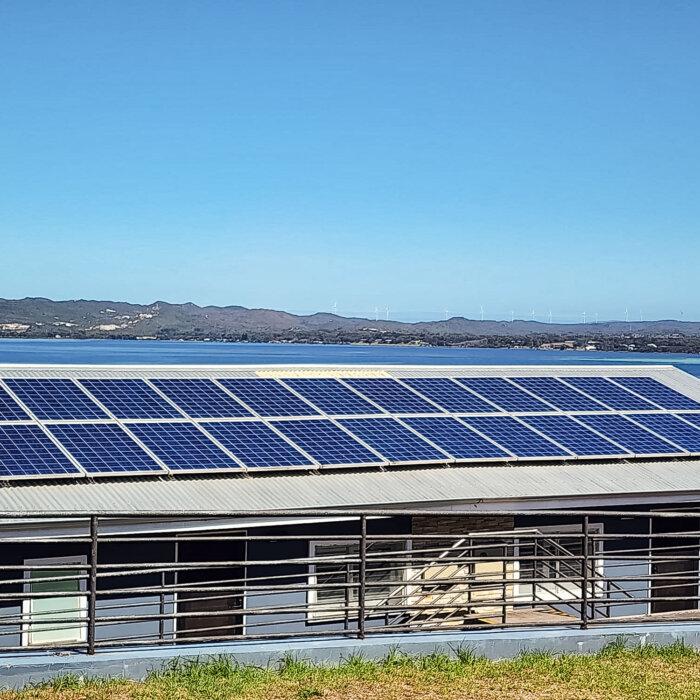
“The market will most likely contract slightly in 2025, primarily due to a sharp decline in residential rooftop installations—driven by lower electricity prices and weakening support schemes,” the report said.
However, current deployment rates now indicate the EU will fall short, by some 27 GW, of the 750 GW of solar capacity which SolarPower Europe said is needed by 2030 for the bloc’s climate targets and its wish to phase out energy coming from Russia.
Germany, France, and the Netherlands have cut support for such installations.
The year-on-year drop would mark the first time since 2015 that the growth of Europe’s solar market has slowed. Solar capacity soared by 51 percent in 2023, although last year’s growth had already dipped to 3 percent.
The order will enforce the One Big Beautiful Bill Act, signed into law on July 4, which effectively ends renewable energy tax credits after 2026 for projects that have not begun construction. Wind and solar projects that start construction after that must be placed in service by the end of 2027 to qualify. Under the previous law, developers could have claimed a 30 percent tax credit through 2032.
They are typically installed on rooftops or across fields in large-scale solar farms. While they produce no emissions during use, manufacturing them is energy-intensive and heavily reliant on fossil fuels.
According to the International Energy Agency (IEA), 80 percent of the energy used in solar PV manufacturing is consumed during the production of silicon-based components, such as polysilicon, ingots, and wafers, a process that requires extremely high heat.
This is mainly because most manufacturing takes place in China, particularly in the provinces of Xinjiang and Jiangsu, where coal dominates local energy supply.