Recently appointed Deputy Minister of Immigration Ted Gallivan said past widespread gaps in tracking and enforcing international student visas are “unacceptable” and the system will be fixed by the end of this year.
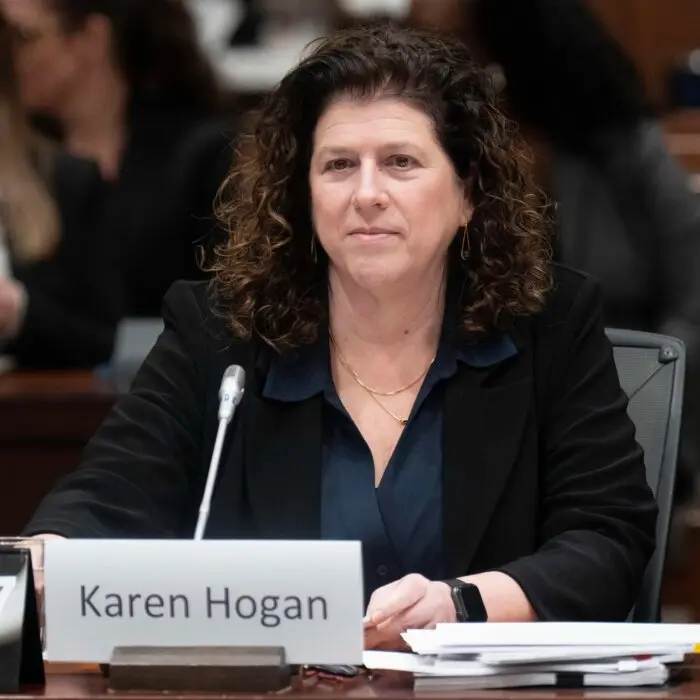
Specifically, Hogan’s audit identified 153,000 international students who were flagged for potential visa non-compliance in 2023–24 but found that only approximately 4,000 cases were investigated.
It also found that immigration officials failed to follow up on 800 confirmed cases of fraud and unable to account for the whereabouts of tens of thousands of international students whose study permits had expired.
Audit
Hogan, along with senior officials from Immigration, Refugees and Citizenship Canada (IRCC), acknowledged systemic issues with detecting visa fraud, monitoring student compliance, and ensuring enforcement for those found in non-compliance.“Most cases could not be closed because the students did not respond,” Hogan said, adding that of 800 confirmed cases of misrepresentation by student visa holders, most applied for further permits or immigration status in Canada and “more than half of those applications have since been approved.”
“What was the government’s justification for rewarding fraudulent study permit holders with PR [permanent residency]?” asked Conservative MP Tom Kmiec.
Gallivan said he had “obtained no explanation” for why the cases of the 800 individuals were not fully “pursued,” while IRCC official Tara Lang said that in some cases, officers reviewing follow-up applications from these individuals may have accepted explanations or updated documentation, determining the materials to be valid or sufficient to process a furthering of immigration status.
Departures
A particular concern raised during committee was the fact that of roughly 39,500 students who were expected to leave Canada in 2024 due to visa expiration or issues, only 40 percent had actually left the country.
“You talked about 39,500 individuals who should have been accounted [for] because they lost their status. Was IRCC not aware ... of that number?” Conservative MP Brad Redekopp asked Hogan.
Hogan said, in many cases, unaccounted for students were “ghosting” Canadian immigration authorities.
“Young individuals today would say this is ghosting. So ghosting the department seemed to have no consequences,” she acknowledged of investigations that were discontinued when students stopped responding to IRCC inquiries. “The files were closed when communication stopped, and then no further action was taken,” she added.
Gallivan, who was appointed to his role last month, said the shortcomings found by the audit, including a lack of effectively tracking departures, will be addressed by the end of the year through a management action plan.
He said this will remedy what he referred to as a lack of a “framework for dealing with this question of fraud.”
Enforcement
Gallivan said one of the solutions to the problems found by the audit will be stronger enforcement for those who don’t comply voluntarily.
“The soft touch, the nudge only works if people know there’s a real consequence,” he told the committee. “There has to be a real consequence, or else they’re just hollow words.”
He said new changes include better use of information technology to track which individuals stay in Canada, as well as more proactive communications with visa holders, along with closer coordination and information-sharing with the Canada Border Services Agency (CBSA).
“We need to know whether people are leaving or not,” Gallivan said.
For her part, CBSA President Erin O'Gorman said enforcement takes a lot of resources and that CBSA prioritizes serious cases involving criminality and failed asylum claims.
“It’s an expensive prospect to have a CBSA officer find somebody to remove them,” she said, noting that improving compliance upstream in the process would lessen pressure on the need for in-person CBSA enforcement actions.
Gaps
Hogan said IRCC “needs to act on the information it already has” and said there were gaps in communication and information-sharing between IRCC and CBSA.
She said the audit itself required working to piece together information on visa compliance across various government departments and that information was not freely shared “amongst the federal family.”
Hogan said, as reforms are implemented, her office plans to follow up with more recommendations within three years to check for progress and further reforms that may be needed.International Students
Canada sharply increased immigration starting in 2022, leading to rapid population growth from roughly 38 million in the middle of 2020 to more than 41.7 million by October 2024.Much of that increase was driven by international students, who increased from approximately 621,600 in 2021 to more than 1 million by 2023.