Russia has announced a plan to put a power plant on the moon by 2036.
The purpose of the lunar power station, according to Roscosmos, is “long-term power supply to consumers (moon rovers, observatory) of the Russian Lunar program, as well as infrastructure facilities of the International Lunar Research Station.”
“The project is an important step toward creating a permanent scientific lunar station and transitioning from one-time missions to a long-term lunar exploration program,” the corporation added.
Partnering with Roscosmos in the project are Russian state nuclear corporation Rosatom and the Kurchatov Institute, Russia’s leading nuclear research institute, suggesting that the power station in question will be nuclear-powered.

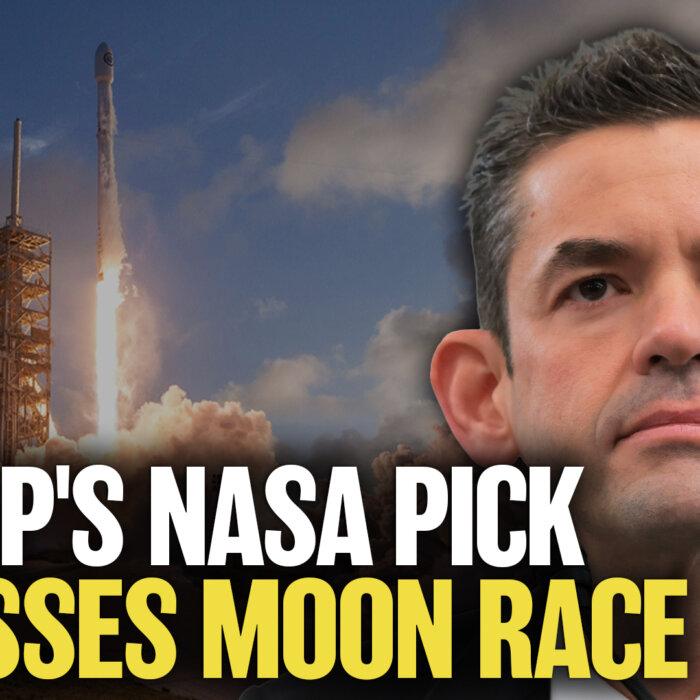
“Superiority in space is a measure of national vision and willpower, and the technologies Americans develop to achieve it contribute substantially to the nation’s strength, security, and prosperity,” Trump said in the order.
“The United States must therefore pursue a space policy that will extend the reach of human discovery, secure the nation’s vital economic and security interests, unleash commercial development, and lay the foundation for a new space age.”
The order outlines the administration’s space policy, focused on four major priorities: expanding humanity’s reach and the United States’ presence in space as the world leader in space exploration; defending and securing the United States’ “vital national and economic security interests” to, from, and in space; utilizing American free enterprise to grow a “vibrant commercial space economy;” and enabling “the next century of space achievements” through developing and deploying advanced capabilities.
Several specific goals are listed with fast-approaching deadlines.
By 2028, the United States needs to return Americans to the moon, demonstrate prototype next-generation missile defense technologies, and attract at least $50 billion of investment into the United States’ space markets.
By 2030, the United States needs to establish the foundational elements of a permanent lunar outpost, as well as ensure that a lunar surface nuclear reactor is ready to launch, and secure a commercial pathway to replace the International Space Station.
Other objectives include enhancing the overall cost-effectiveness and sustainability of the growing spacefaring economy through investments in Earth-bound infrastructure, such as launching and landing areas, improving business models, and enabling commercial launch operations.
The president also said the United States should set the standards for space operations such as traffic management, mitigation of orbital debris, and lunar navigation, to lay the foundation necessary to put the U.S. flag on Mars.
This push to prioritize space through the new year comes as NASA prepares to send its first manned crew around the moon since 1972 as part of its Artemis II mission.
The launch window opens in early February, with the goal to launch no later than April 30.