
There are two common views of marriage, researcher and author Peter Jon Mitchell says. One is a more traditional or “institutional” view, and the other is the “soulmate” view, with the latter being the predominant one today.
The institutional view is a more “ancient way” of thinking of marriage, where partners “voluntarily constrain themselves” in a permanent union to pursue a shared purpose, he says, adding that this model often results in integration through parenthood, emotional intimacy, and economic cooperation.
On the other hand, the soulmate view is based primarily on emotion, and it is often seen as a path to self-fulfillment, Mitchell says. He argues this perception of marriage can develop into a more “individualistic” relationship, emphasizing one’s sense of self over the partnership itself.
He likens the soulmate view to a romantic comedy or “rom-com,” as it tends to be focused on romantic notions of marriage. Meanwhile, the institutional view resembles an “epic adventure,” he says, where “there are highs and lows, loss and grief, but also happiness and joy over the long-term adventure.”
‘Healthy Marriage Culture’
The perception of marriage has shifted over time from being a cornerstone of social life to a personal choice often seen as “nice” but “unnecessary,” Mitchell says.

He suggests that creating a “healthy marriage culture” where young generations are aware of the value of lifelong commitment can help restore what is known in social science as the “marriage advantage,” which, according to research, leads partners to experience better financial, health, and emotional outcomes than their unmarried peers, including those who choose cohabitation.
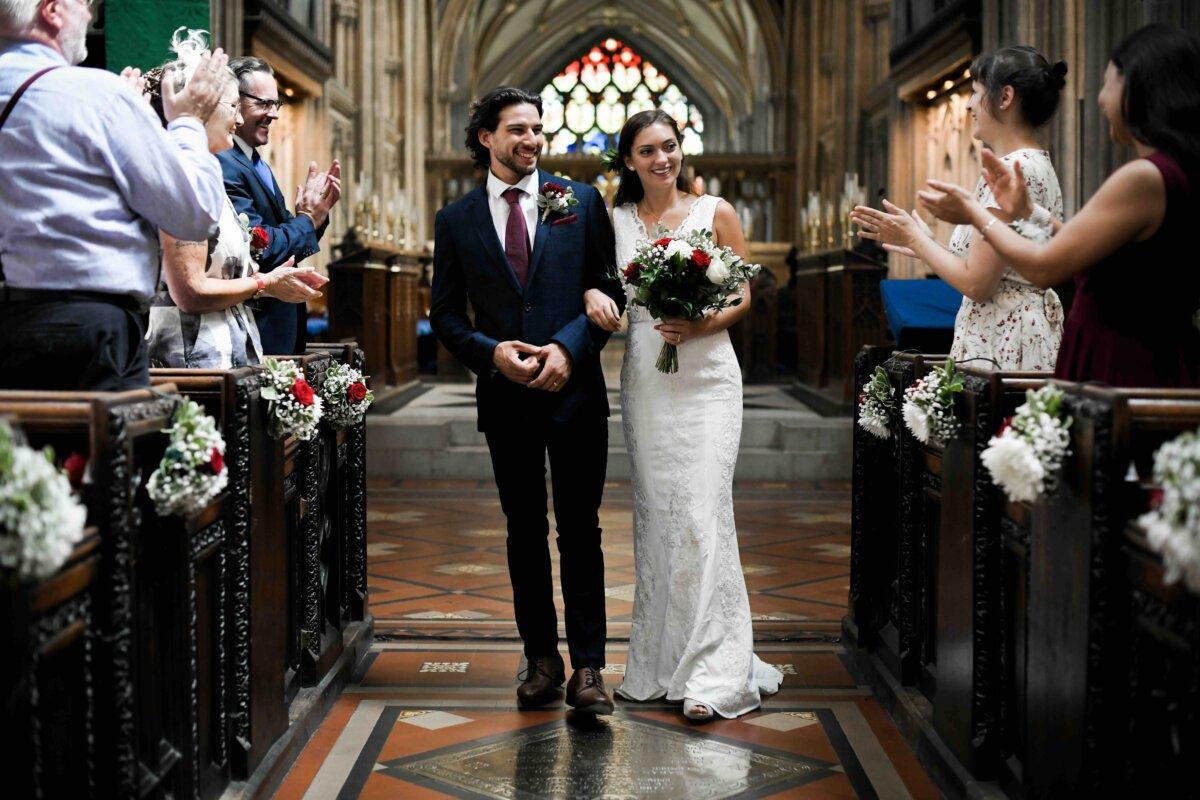
“I’m sure most Canadians are aware that marriage has been declining, but I think we need to care about that,” Mitchell said. “I would really encourage Canadians to think about marriage as something that is more than just nice, but it actually is beneficial, not only to individuals but to Canadian society.”
In the book, Mitchell and his co-author Andrea Mrozek set out to compile insights from nearly two decades of work in family policy and research on marriage and family, he said. Both are research fellows at Cardus, an Ottawa-based think tank.
Mitchell says that in recent decades, shifting views on marriage have contributed to lower marriage rates, later first marriages, and fewer public conversations about its role. He notes that many young adults tend to see marriage as a personal choice rather than a priority, often focusing on individual fulfillment over long-term commitment to a partner.
Drop in Marriages
In 2020, Canada saw the largest annual decline in marriages in more than nine decades, with a 33 percent drop from the previous year’s number of 146,121. That year, the country recorded 98,355 marriages, the lowest number since 1938, which saw 90,709 marriages.
Mitchell identifies the 1950s to the 1970s as the period when views on marriage began to change. Key factors included the sexual revolution and the divorce revolution, the latter accompanied by laws that made divorce more accessible.

“All these changes certainly had an impact on how people viewed marriage and needed relationships,” he said.
A key change in that legislation was the introduction of no-fault divorce, allowing couples to dissolve their marriage without the need to prove wrongdoing, such as adultery, physical cruelty, or mental cruelty.
Cohabitation Trends
In 2021, Canada had the highest share of couples living common law among G7 countries, with Quebec leading this trend. That year, 23 percent of couples in Canada were cohabiting, and two-fifths of them (43 percent) were from Quebec.“We see higher rates of cohabitation in Canada than we do in the U.S., interestingly enough, and part of that is driven too by interesting and unique family dynamics in Quebec,” Mitchell said.

Living together without being married was most common among young Canadian adults, as nearly 80 percent of those aged 20 to 24 who were part of a couple were in common-law relationships in 2021, according to Statistics Canada.
By that year, the number of common-law couples had increased by 447 percent since 1981, while the number of married couples grew by 26 percent over the same period. However, marriage remained the most common type of union, StatCan notes.
While some “cohabiting relationships look a lot like marriage and function a lot like marriage,” there are still some differences between cohabiting couples and those who are married, Mitchell says.
On the other hand, marriage can offer financial advantages, as married couples are more likely to pool their income and utilize it together, Mitchell said, whereas cohabiting partners are more likely to keep separate bank accounts.
Meanwhile, married couples tend to have higher net worth than those who cohabit, Mitchell notes, pointing to various studies.
The study’s authors attribute this pattern to the “more short-term and unstable” nature of cohabiting relationships, which they say often require individuals to restart their financial planning after a breakup.
The ‘Marriage Advantage’
Marriage seems to offer extra benefits, says Mitchell, referring to the “marriage advantage.” In their book, Mitchell and Mrozek outline studies suggesting that married couples may have better outcomes than their unmarried peers in areas like health and emotional well-being.
“One of the [advantages] we addressed in the book, and I found so surprising when I was researching at the time, was the health advantage that is associated with being married,” Mitchell said.
“We see faster recovery from illnesses, earlier detection of disease from these sorts of things, and generally longer lifespans for married people.”
The book notes that the positive outcomes of marriage depend on the quality of the relationship and are more likely when the relationship is healthy, not high in conflict.
Two main hypotheses may explain the marriage advantage, Mitchell says. One is that happy and healthy people are more likely to get married. The other is that marriage itself may help improve overall well-being.
Reframing the Conversation
Mitchell points to several ways in which the role of marriage in society can be restored. One is to change public policy to remove barriers that prevent couples from getting married.He cites the example of a couple who he says waited almost 10 years to get married because marriage would have lowered one partner’s disability benefits. He explains this is known as the “marriage penalty” in public policy, where getting married affects a person financially through taxes or social benefits.
“This couple waited 10 years because of the financial disadvantage of getting married,” Mitchell said. “That is something that governments can easily deal with.”
In addition, helping younger generations understand why marriage still matters today could shift the conversation. One way to do this, he suggests, is by including discussions on marriage and its benefits in schools.
“I think we have to be honest about how rewarding it is, but also how difficult it can be,” he said.
On the other hand, a more positive portrayal of marriage and family life in the media could help improve how they are viewed, Mitchell says.
“I would love to see marriage portrayed more positively in the media, and I would love to hear more stories of successful marriages,” he said.
“I think that will be helpful in terms of re-establishing a healthy marriage culture.”