Removing Interprovincial Trade Barriers Could Boost 30,000 New Home Starts Annually: Housing Agency

Removing Interprovincial Trade Barriers Could Boost 30,000 New Home Starts Annually: Housing Agency
A truck gets set to dump clean fill at a new housing development in Oakville, Ont., in this file photo. The Canadian Press/Richard Buchan
|Updated:
0:00
Removing interprovincial trade barriers and improving transport infrastructure would lead to 30,000 additional home starts per year, according to Canada’s national housing agency.
Though some measures were introduced earlier this month to reduce interprovincial barriers, more needs to be done in order to improve trade and coordination between provinces, according to a July 17 report from the Canada Mortgage and Housing Corporation (CMHC).

CMHC chief economist Mathieu Laberge said in the report that there are still numerous trade barriers “that prevent the movement of either resources or labour in the residential construction industry.”

He added that achieving 30,000 new home starts per year would equate to around 15 percent of the additional housing supply needed annually over the next decade to return to pre-pandemic affordability levels.

Laberge noted that specific barriers to interprovincial trade that impact the construction industry include “different standards for different inputs to the residential construction industry,” along with agreements that block labour mobility and “isolate residential construction labour.”

Adding 30,000 additional housing starts would bring Canada’s annual housing starts to around 280,000. According to CMHC, around 4.8 million new houses will have to be constructed by 2035 in order to bring prices back to 2019 levels. This would require around 430,000 to 480,000 new home starts per year.
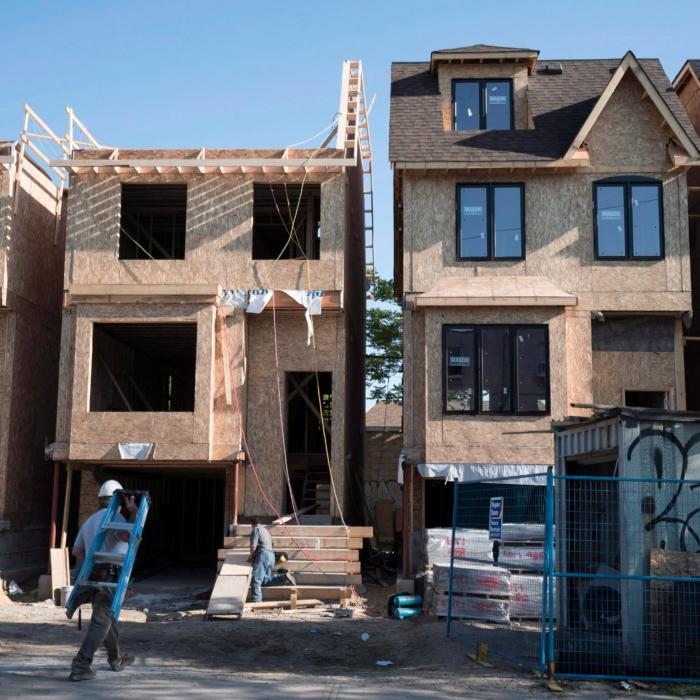

Laberge said getting rid of interprovincial trade barriers would make the economy “stronger overall, and that would benefit housing construction as a result,” including by increasing demand for home purchases and driving down unemployment.

Improving the flow of goods and services between provinces, as well as getting costs down for transport would also be a benefit to the rental market, according to Laberge, who said “rental housing market affordability will improve since incomes will be growing faster than rents.”

Prime Minister Mark Carney vowed to get rid of interprovincial trade barriers during the recent federal election campaign, saying he would create “free trade” within Canada by July 1. The passage of Bill C-5, also known as the One Canadian Economy Actfast-tracks the approval process of projects deemed in the national interest, along with reducing Ottawa’s regulations around interprovincial trade.
However, numerous trade barriers continue to exist between provinces who set their own regulations, tax laws, licensing processes and restrictions, costing Canada around $200 billion annually, according to the Canadian Federation of Small Business (CFIB).
CFIB vice-president of legislative affairs Ryan Mallough said in a July 8 release that “several provinces have gotten their legislative frameworks in place, but we need to see more action to allow goods to get moving.”

Canada’s high domestic production of key construction materials such as lumber, steel, and aluminum puts the country in a position to internally supply many of its own construction needs instead of prioritizing exports, according to the Laberge, who said that “a significant share of our domestic production could be redirected towards residential construction in Canada.” He added that “a scenario where the reduction of interprovincial trade barriers foster better use of our domestic resources is realistic” and “one that economists have called for over decades.”


In addition to removing interprovincial trade hurdles, CMHC pointed to the results of a March survey by Statistics Canada showing that around half of construction companies in Canada say distance and transport costs are the primary reason they don’t buy goods or services from other provinces and territories, citing the need for better Canada-wide transport infrastructure including railways and seaports to access remote communities.