This copy is for your personal, non-commercial use only. Distribution and use of this material are governed by our Subscriber Agreement and by copyright law. For non-personal use or to order multiple copies, please contact The Epoch Times Reprints.
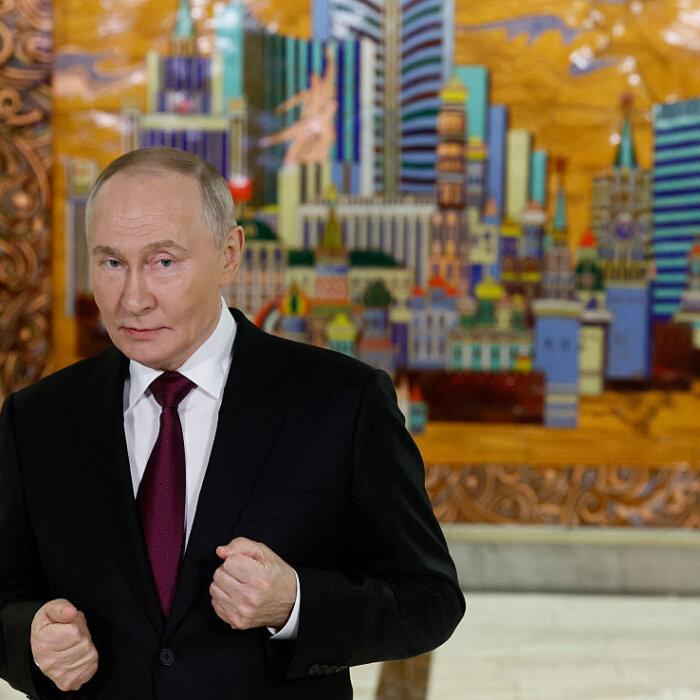
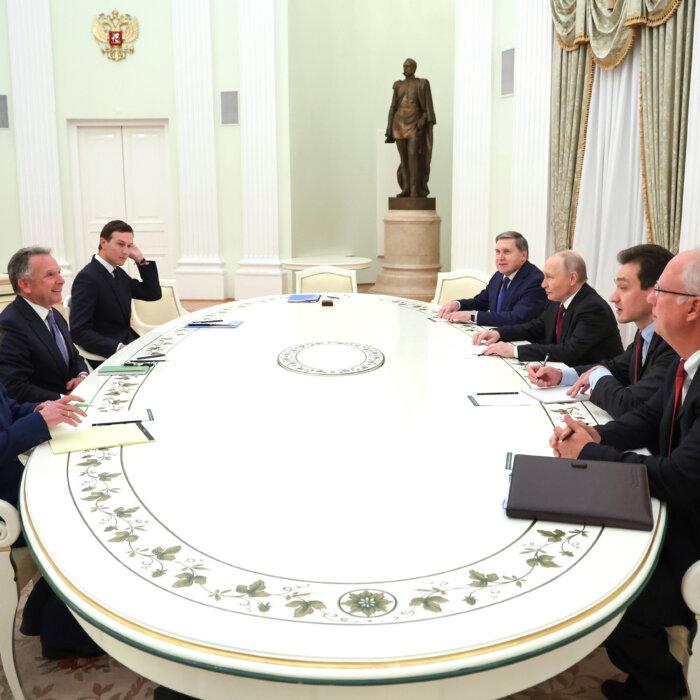
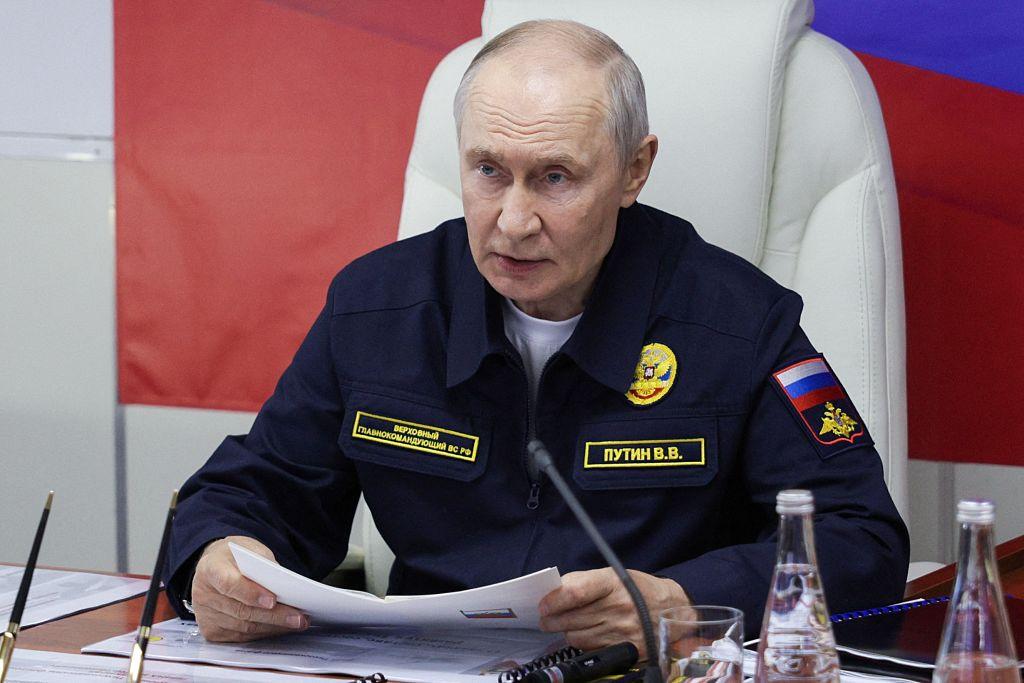
Russian President Vladimir Putin and Indian Prime Minister Narendra Modi began their talks in New Delhi on Dec. 5, as Moscow’s leader made his first visit to the country in four years.
In a joint statement, both leaders described the relationship as a “special and privileged strategic partnership,” marking 25 years since the two countries formalized their strategic cooperation.
They reaffirmed that the Indo-Russian partnership remains resilient despite what they called a complex and challenging geopolitical environment.
India has become the world’s top buyer of Russian seaborne oil, at about 1.6 million barrels per day, after sanctions over the war in Ukraine cut Russia off from much of the West, according to data from the Kyiv School of Economics. However, when pipeline deliveries are taken into account, China far outstrips India in terms of total imports of Russian oil, at about 2.3 million barrels per day.
Moscow has also been New Delhi’s largest arms supplier for many years.
The visit comes as both countries are engaged in talks with the United States, with Russia and Washington discussing a plan to bring peace between Moscow and Kyiv, and New Delhi aiming to negotiate a trade deal to cut tariffs imposed by U.S. President Donald Trump on its goods due to India’s continued Russian oil purchases.
India has said Trump’s tariffs are unjustified and unreasonable, highlighting ongoing U.S. trade with Moscow.
Both the United States and European Union continue to import billions of dollars worth of Russian energy and commodities, ranging from liquefied natural gas to enriched uranium.
In an interview with India Today that aired late on Dec. 4, Putin also raised the question of American pressure on India not to buy Russian fuel while the United States continues to purchase Russian nuclear fuel.
“If the U.S. has the right to buy our fuel, why shouldn’t India have the same privilege? This question deserves thorough examination, and we stand ready to discuss it, including with President Trump,” Putin said.
He also said that while there was a minor dip in India–Russia trade during the first nine months of this year, energy trade was “running smoothly.”
During the talks, Putin said that Russia was ready to provide “uninterrupted” supplies of fuel to India, and said that the two countries were capable of increasing the amount of trade between them to $100 billion.
“Last year, bilateral trade [between Russia and India] increased by another 12 percent, setting another record. The figures vary according to various statistics, but overall, it’s somewhere in the region of $64–65 billion. It’s projected that trade volume will remain roughly at the same level by the end of this year. However, it appears we have the potential to reach $100 billion,” Putin said, according to Russian state news agency TASS.
The two leaders signed a joint statement setting a $100 billion target by 2030, which included mechanisms to eliminate tariff and non-tariff trade barriers and logistical bottlenecks, promotion of connectivity, uninterrupted implementation of payment mechanisms, and regular interaction between businesses in the two countries.
The joint statement also adopted a new “Programme 2030” economic roadmap to guide cooperation in trade, investment, high technology, critical minerals, and industrial projects. Both sides pledged to expand rupee–ruble settlement systems, with Putin telling reporters at a briefing that bilateral trade between the two countries grew by a further 12 percent last year to reach a new record. The Russian leader noted that 96 percent of bilateral trade is already conducted in national currencies.
Modi told reporters that the partnership has “always stood the test of time,” highlighting new cooperation in fertilizers, shipbuilding, the Arctic, and the North–South Transport Corridor, as well as joint manufacturing initiatives expected to create new Indian jobs. He also announced progress toward a 30-day visa-free regime for tourist groups.
As the talks began, Modi addressed the situation in Ukraine, telling Putin, “India is not neutral—India has a position, and that position is for peace.”
“We support every effort for peace, and we stand shoulder to shoulder with every initiative taken for peace,” he added.
Putin responded by thanking Modi for his attention and efforts in resolving the conflict.
“We had the opportunity—and you gave me that opportunity—to speak in detail about what is happening on the Ukrainian track and about the steps we are taking jointly with some other partners, including the United States, toward a possible peaceful settlement of this crisis,” he said.
“As our countries and economies grow, the opportunities for cooperation expand. New areas are emerging - high technologies, joint work in aviation, space, and artificial intelligence. We have a very trusting relationship in the field of military-technical cooperation, and we intend to move forward in all these areas.”
Putin also discussed Moscow’s commitment to cooperating with New Delhi on defense.
“Russia and India have traditionally enjoyed close cooperation in the military-technical sphere. For over half a century, our country has been helping equip and modernize the Indian army, including its air defense forces, aviation, and navy,” he said, according to TASS.
Putin and Modi also announced the launch of electronic visas for Russians visiting India and group visas for Indians visiting Russia, as well as plans to create a free trade zone between New Delhi and the Eurasian Economic Union, according to TASS.
They also welcomed the opening of new Indian consulates in Yekaterinburg and Kazan and reaffirmed plans to deepen civil nuclear cooperation, including continued progress at the Kudankulam Nuclear Power Plant and steps toward finalizing a second site in India for future Russian-designed reactors.