This copy is for your personal, non-commercial use only. Distribution and use of this material are governed by our Subscriber Agreement and by copyright law. For non-personal use or to order multiple copies, please contact The Epoch Times Reprints.
Proposed BC Copper Mine Shows Promises, Obstacles Facing Canada’s Critical Mineral Industry
Add to My List
Save
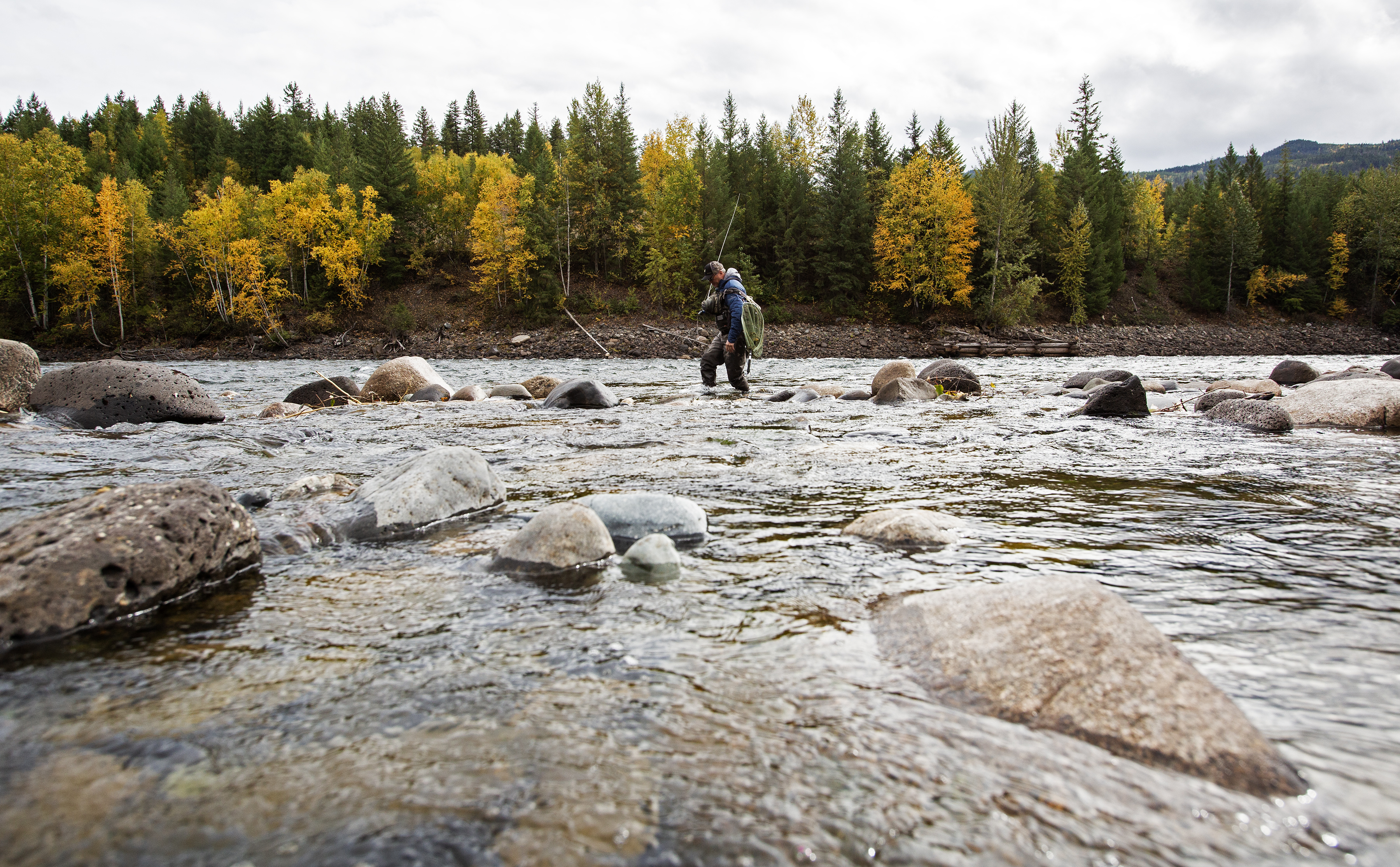
A man takes part in a fishing competition on the Clearwater River in Clearwater, B.C., on Sept. 27, 2023. A Vancouver company has proposed a major copper mine project near the town. The Canadian Press/Marissa Tiel
A man takes part in a fishing competition on the Clearwater River in Clearwater, B.C., on Sept. 27, 2023. A Vancouver company has proposed a major copper mine project near the town. The Canadian Press/Marissa Tiel
The small B.C. town of Clearwater is set for an economic and population boom in the coming years if a major copper mine project goes ahead.
The proposed Yellowhead open-pit mine, launched by Vancouver-based Taseko Mines, highlights the broader challenges Canada faces on major resource projects—proponents citing regulatory hurdles, while opponents raise land-use and environmental concerns.
While many resource projects in Canada also face infrastructure limitations, in the case of the proposed Yellowhead mine, the concerns are lessened by the existence of Taseko’s Gibraltar mine approximately 300 kilometres northwest, which Taseko says will allow Yellowhead to use the existing infrastructure for more efficient operations.
The proposed site of the proposed mine is roughly 150 kilometres northeast of the City of Kamloops in south central B.C., located near the town of Clearwater, a small village of only 2,500 where the primary industry is forestry. The mine could bring more prosperity to the area, but significant environmental and regulatory hurdles remain.
Opponents have also voiced environmental concerns and the prospect of disruptions that could be caused to wildlife and the large local tourism industry.
The stakes are exceptionally high, as the exploration and production of critical minerals have emerged as a central focus for Western nations in their rivalry with China. This has also become a significant priority for both federal and provincial governments aiming to advance the industry, fulfill NATO defence spending targets, and bolster Canada’s economy in the face of U.S. tariffs and China’s global dominance of the critical mineral industry.
Taseko’s Vision for the Mine
Taseko says the proposed project will be an open-pit copper mine producing approximately 90,000 tonnes per day over a 25-year operational period, with an output of roughly 180 million pounds of copper per year. Ore from the pit will be taken by truck to a crusher near the pit rim, and the crushed ore will then be moved by overland conveyor to the plant site where it will be processed within a concentrator to produce a copper concentrate containing certain amounts of gold and silver as byproducts, according to Taseko’s project description.
The final concentrate will then be trucked to a rail yard 20 kilometres away near Vavenby, B.C., where it will be transported by rail to the Port of Vancouver or other North American markets. From the Port of Vancouver it will be shipped to overseas markets. Power will be supplied to the project site by a 110-kilometre transmission line connecting the site to an existing BC Hydro substation at 100 Mile House, B.C.
The project is currently in the early engagement phase, which began on July 7. During this first phase of the environmental assessment process, public feedback is being sought on the initial project description prepared by Taseko, with a public comment period extending from Aug. 5 to Sept. 15.
The Environmental Assessment Process
The proposed mine sits primarily within the territory of the Simpcw First Nation. Taseko says it has consulted closely with the First Nation to ensure its members are informed and consent to the mine as it moves forward into development.
The B. C. Environmental Assessment Office is seeking the public input in coordination with the Impact Assessment Agency of Canada.
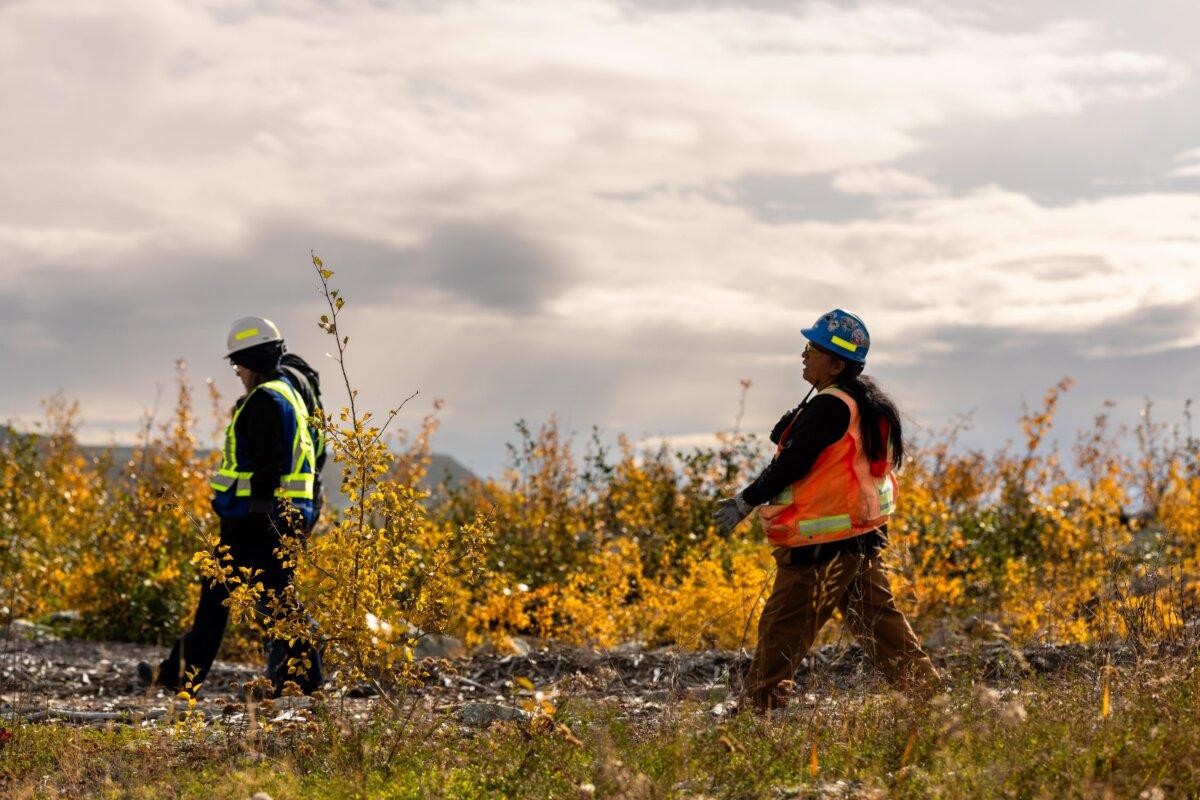
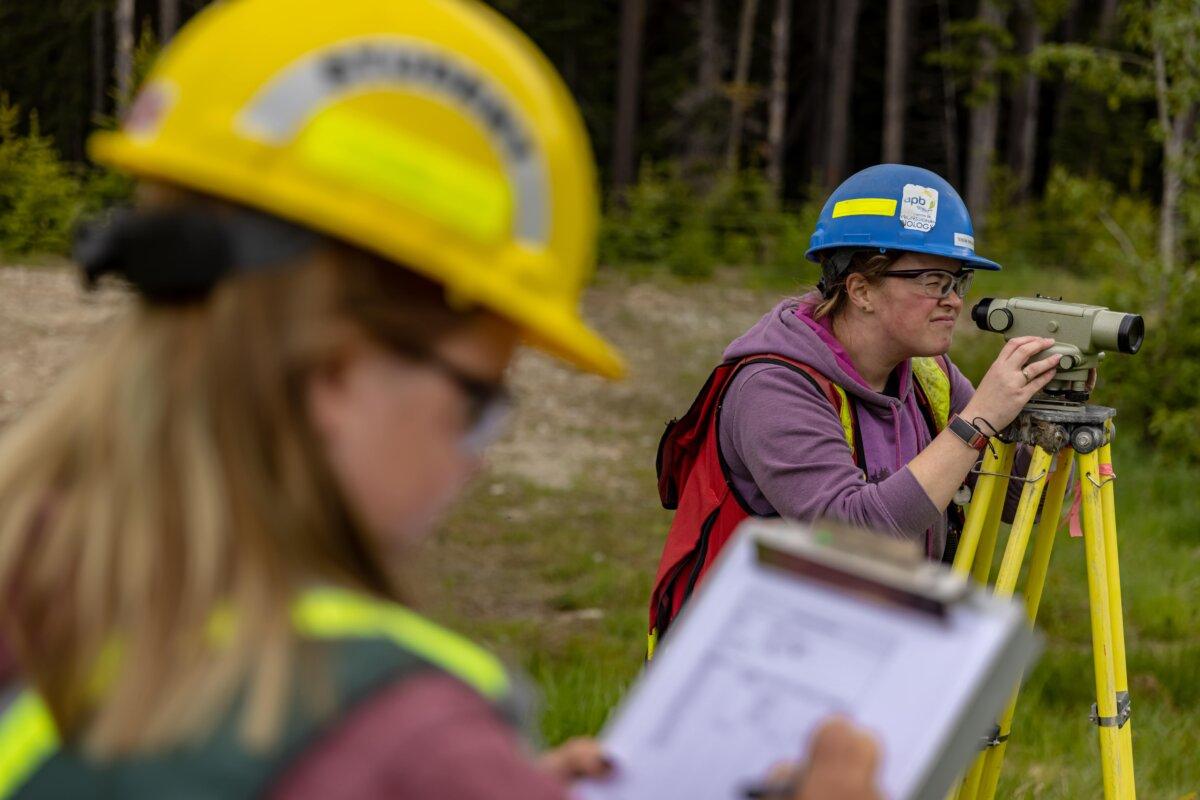
Surveyors working for Taseko Mines survey the site of a proposed copper mine near Clearwater, B.C. Photo/Taseko Mines
The overlapping federal and provincial environmental assessment (EA) process also includes the duty to consult and obtain consent from the local Simpcw First Nation, which has already approved the initial project proposal and engagement plan for the mine.
Other indigenous groups involved include the Neskonlith Indian Band, Adams Lake Indian Band, Skwlāx te Secwepemcúl̓ecw (formerly Little Shuswap Lake Band), and Tsq̓éscen̓ First Nation (formerly Canim Lake Band).
“The key challenge facing the Yellowhead Project today is facilitating an efficient, comprehensive and transparent EA and permitting process that results in government, community and indigenous support for development,” Taseko spokesperson Ainsley Wooding wrote in an Aug. 21 statement to The Epoch Times.
The Yellowhead project could break ground in the next four to seven years following the environmental assessment and permitting process, followed by two to three years for construction, according to Wooding.
Key aspects to be reviewed under the environmental assessment include waste management, risks pertaining to the mine’s tailings storage facility, greenhouse gas emissions, and disruptions to local wildlife and bodies of water.
Mine’s Copper Won’t Be Subject to US Tariffs: Taseko
U.S. President Donald Trump applied a 50 percent tariff on all copper imports effective Aug. 1, but Taseko says this won’t apply to the output from the proposed Yellowhead project because the copper concentrate it produces will be shipped offshore where it can be refined in Asia.
“Once operational, the primary product from the Yellowhead mine will be a copper concentrate, which must be shipped to offshore smelters and refiners in Asia for processing into copper metal,” Wooding said. “As a result, none of the product produced at Yellowhead is expected to be subject to tariffs imposed by the United States.”
Taseko vice-president of corporate affairs Sean Magee said Taseko only sells the concentrate to Asia and is not involved in the next steps of its trade.
“What happens is we essentially sell that product to smelters and refiners in Asia, and then they sell on the metal to other markets,” he said in a Sept. 9 interview with The Epoch Times.
“There’s not enough smelting and refining capacity in North America. So most copper is produced as concentrate and some of it is smelted in North America, but most of it leaves. There’s business reasons for it, environmental permitting reasons, but that’s sort of the state of the industry.”
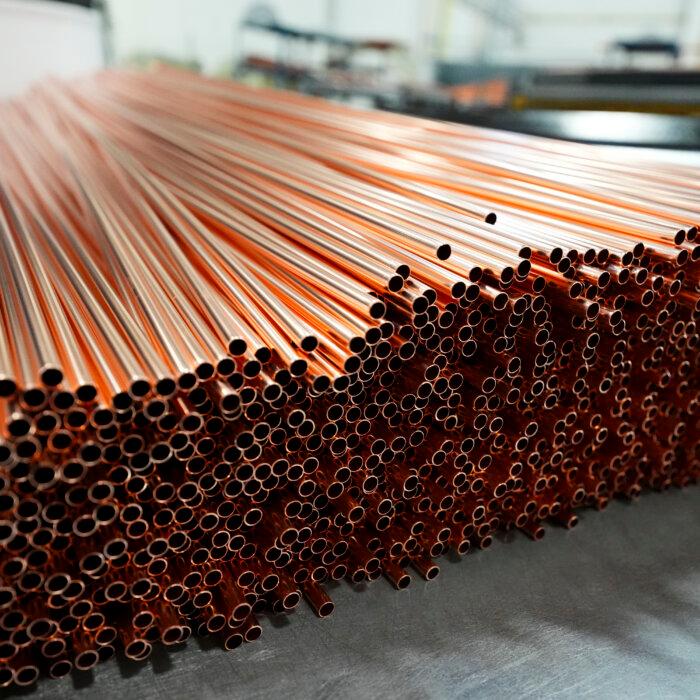
Copper is a critical mineral for the electrical industry and is the third most consumed industrial metal after iron and aluminum. It’s key in the production of everyday items such as TVs, cellphones, computers, and many aspects of vehicle and electrical production.
Economic Boom
Clearview Mayor Merlin Blackwell said the project represents a major opportunity for his community and that environmental assessment officers and Taseko employees have been busy getting the project prepared.
“They’ve actually been fairly active on the mine site, doing surveying and exploration work over the summer,” Blackwell said in an interview with The Epoch Times. Approval for the “massive” project could be fast-tracked if it’s considered under Canada’s recently passed One Canadian Economy Act, he added.
The project was not included in the first set of projects announced by the federal government on Sept. 11 for consideration for fast approval. Of the five shortlisted projects referred to the newly created Major Projects Office, two were copper mine developments in B.C.
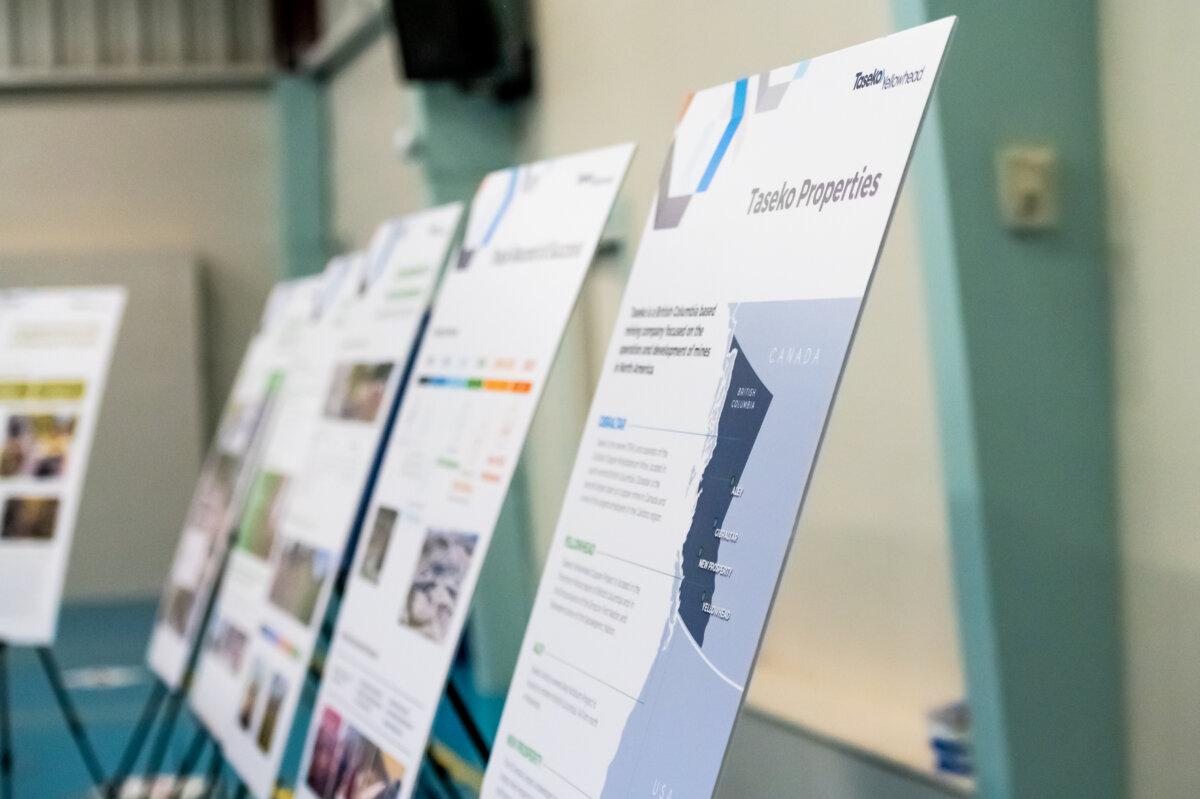
Information about Taseko Mines' proposed Yellowhead copper mine project are displayed during a community meeting in Clearwater, B.C. Photo/Taseko Mines
Taseko spokesperson Wooding said the mine would create numerous job opportunities in Clearwater and the surrounding region.
“When operating, Yellowhead will support approximately 590 direct and 1,700 total jobs annually in BC, as well as business and contracting opportunities throughout the North Thompson region,” Wooding said in her statement.
Mayor Blackwell said the economic benefits could be even larger than anticipated when considering the secondary careers that would be supported by the mine.
“If you think about the number of extra nurses, doctors, teachers, and other businesses that would be needed to supply services to this expanded population, ... pushing toward 4,500 is pretty realistic, sort of seven, eight, nine years out,” he said.
Clearwater plans to approach the provincial Housing and Municipal Affairs minister for a loan ranging from $8 million to $15 million to build essential infrastructure for up to 600 new homes, Blackwell added, noting that while suitable lots already exist, they lack critical services like water and sewer.
More and better-paying jobs brought by the mine would be a boon to a community that Blackwell says has been experiencing a cost-of-living crisis in the wake of the Trans Mountain pipeline expansion (TMX), which was completed in May of last year.
“We recently went through the whole Trans Mountain expansion process and lived through the boomtown of that where a four-bedroom house is renting for $7,500 a month. People were renting rooms for $1,500 to $1,800 a month. That was the kind of stuff that’s going on,” Blackwell said, noting that Clearview has a population of roughly 2,500 people.
Public Consultations
Some residents have raised concerns about the impact of the mine on tourism. The proposed mine site is nestled near the popular tourist destination of Wells Gray Provincial Park, which Blackwell said attracts approximately 400,000 visitors annually and generates more than $35 million each year for local businesses.
But the proposed mine site is roughly 25 kilometres west of the park entrance, Blackwell said, noting that environmental considerations may be a bigger issue due to the presence of radon in that section of the valley.
Surveyors with Taseko Mines work on the property of the proposed site of a copper mine near Clearwater, B.C. Taseko Mines
Documents submitted as part of the public hearing by project critic North Thompson Watch, who preferred to keep his name anonymous, say that particulate dust from the mining operations stays in the air for a long time and creates breathing difficulties. He also pointed to radioactive material concerns.
“While the major uranium deposit lies around the old Rexpar claim, there are smaller amounts of uranium scattered throughout the claim area. When this is disturbed, through excavation, the potential for radon to enter the atmosphere will be radically increased,” North Thompson Watch wrote in a submission to the Impact Assessment Agency of Canada (IAAC) on Aug. 25.
Wooding responded to concerns about radon and uranium on Sept. 9 saying that Taseko is confident it will not present any issues at the site.
“The Yellowhead property hosts a copper deposit. Based on extensive drill core sample assays, uranium has not been identified as an element of concern,” she wrote.
Another critical comment from local resident Mat Radoszewski says the transmission line to get power to the mine will cut through his property and negatively impact local wildlife.
“Some areas have animals not found elsewhere and this would impact their habitat completely,” Radoszewski wrote in his submission to the IAAC on Aug. 25. “For those reasons I oppose the path of the transmission line and hope that if the corporation continues to pursue this project, it finds alternative, less destructive ways of getting power to it.”
Taseko says transmission lines have been designed to reduce and avoid impacting the local caribou and badger population and skirt around populated areas.
The B.C. Environmental Assessment Office (EAO) says public engagement on the proposed project is ongoing.
“There has been healthy public interest in the environmental assessment of the Yellowhead project so far during our first public comment period, which is open until September,” a spokesperson told The Epoch Times.
The EAO spokesperson also noted that a community information session was held in early September to allow residents to ask questions about local government involvement, community impacts, the transmission line, tailings pond, mine safety, and the environmental review process.
He also said the EAO hosted an open house in Clearwater on Sept. 10 to give the public an opportunity to learn more about the project and the assessment process, and that there will be three further public comment periods as the review continues.