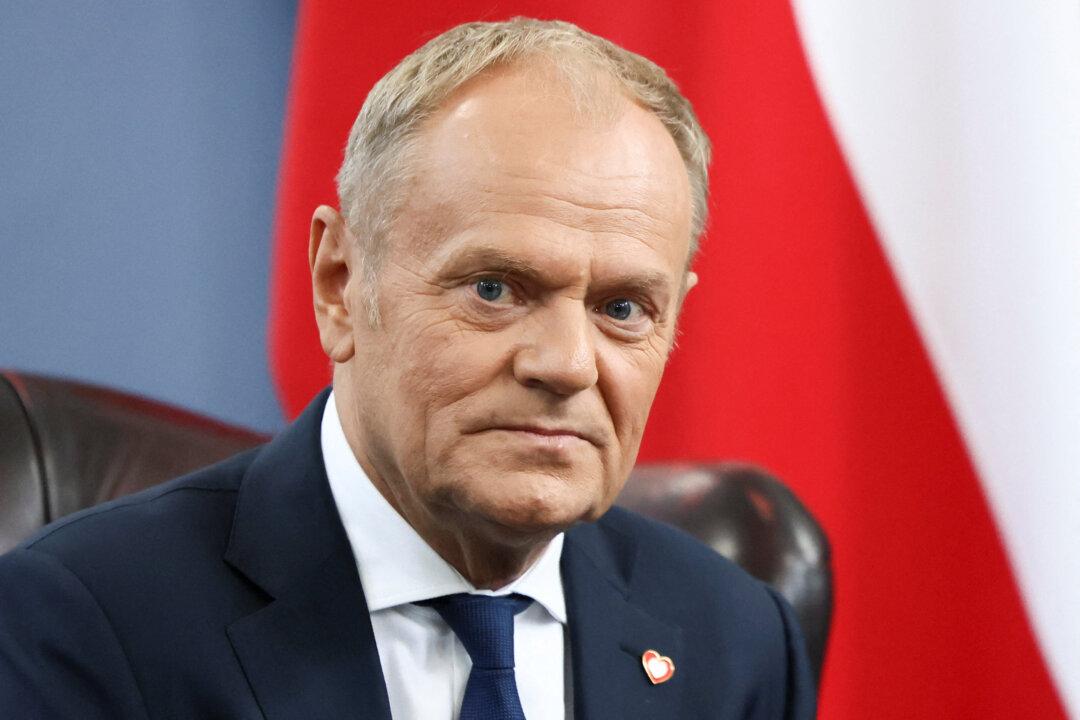
The Polish Ministry of Foreign Affairs confirmed in a post on X after the meeting that Moscow’s ambassador had been served with a protest note by Robert Kupiecki, who serves as the ministry’s undersecretary of state and as national security adviser to Tusk.
The summoning of the ambassador came after Poland confirmed, following an investigation on July 30, that the missile was Russian.
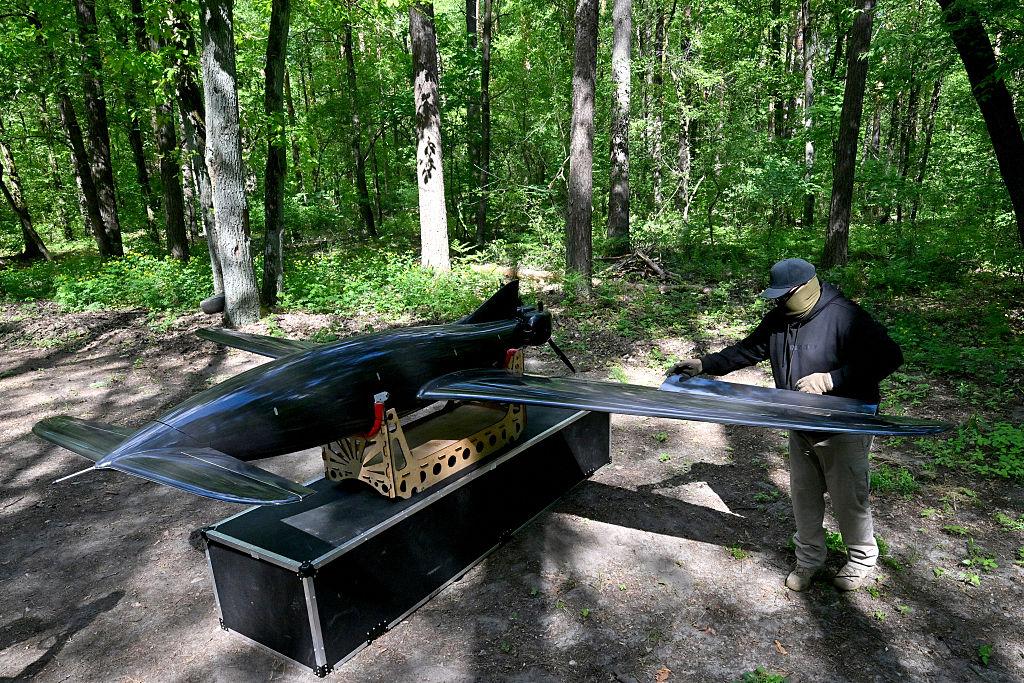
Polish Deputy Minister of National Defense Cezary Tomczyk told Polish radio station RMF24, in an interview on July 30, that the ministry “can confirm with full responsibility that it was a Russian Kh-101 missile. ... i.e. a cruise missile capable of carrying even nuclear warheads, which exploded on impact with the ground.”
He noted that the missile that struck Polish territory was part of a 70-missile-strong barrage that Moscow’s forces launched against Ukraine, 20 of which were “flying towards Poland.”
Tomczyk said that the bulk of these missiles were “shot down by Ukraine over Ukraine,” but that the pilot tracking the missile that eventually hit the country failed to neutralize it and then “turned back 20 seconds before the border” because of the risk of being shot down by a Polish F-16.
Asked if the strike was intentionally launched at Poland, Tomczyk said the government currently did not know.
“In the case of the drones shot down by the Polish Army on Sept. 10 of last year, I can say with certainty that it was no accident,” he said, calling it a provocation and a test of the NATO alliance.
The crater left by the impact was about 30 feet wide, Polish Interior Ministry spokesperson Karolina Gałecka said in a July 30 post on X, noting that it was found a little more than a mile away from some buildings.
Polish Deputy Prime Minister Wladyslaw Kosiniak-Kamysz shed further light on the missile’s origin in a July 31 post on X. He said that the Military Gendarmerie had confirmed that it was “manufactured in the second quarter of this year at a factory near Moscow.”
“This means that Russia is using missiles produced on an ongoing basis to attack Ukraine,” he said, noting that the information confirms reports that Russian military stockpiles have been depleted.
The incident provoked widespread condemnation on July 30, with NATO Secretary-General Mark Rutte calling it yet another reckless act by Russia and a dangerous consequence of its war against Ukraine, before reaffirming the alliance’s “unwavering” commitment to supporting Kyiv, in a post on X.
European Commission President Ursula von der Leyen also criticized Moscow over the incursion, calling it “another unacceptable violation of ... [European Union] airspace caused by Russia’s latest strikes on Ukraine” in a post on X.
“To put an end to this, we are helping Ukraine win this war in every way we can,” she said. “And we are building a robust European security architecture on land, at sea and in the air.”
U.S. Ambassador to Poland Tom Rose said that his embassy was “in constant contact” with the Polish government, U.S. Ambassador to NATO Matt Whitaker, and U.S. President Donald Trump over the incident, saying in a July 30 post on X that “any breach of a NATO ally’s territory is a matter we take extremely seriously.”
“We were lucky and grateful there were no casualties,” he said. “The United States stands firmly with Poland. We are coordinating closely with Polish authorities as the investigation proceeds and remain committed to defending Allied territory and upholding NATO’s collective security.”
Despite the summoning of its ambassador by Poland, Moscow has not yet officially commented on the incident.
However, the Russian Defense Ministry confirmed in a July 30 post on Telegram that it had “launched a massive strike using long-range air, land, and sea-based precision weapons, as well as attack drones, against military industrial facilities, telecommunications and logistics centers” across a range of cities in Ukraine.