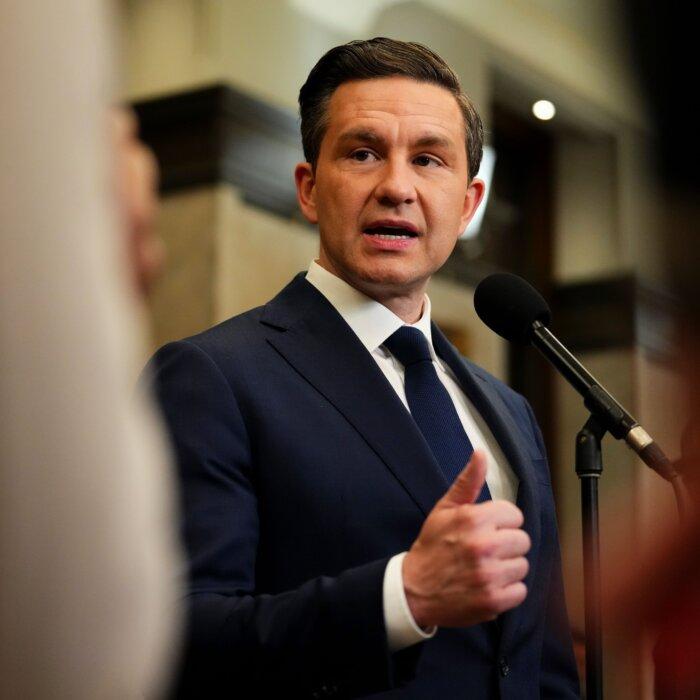
Conservative Leader Pierre Poilievre said his party will not be voting in favour of the Liberal government’s spending plan, saying the expenditures will drive up inflation.
Prime Minister Mark Carney said he will not be tabling a budget this spring, but his government tabled the Main Estimates this week, which are part of the parliamentary financial cycle and outline the funds provided to departments and programs.
The Main Estimates for fiscal 2025–26 indicate $486.9 billion in spending, an increase of 8 percent over the previous year.
“Mark Carney introduced a half trillion dollars of spending with no budget, the first time that that has happened in decades,” Poilievre told reporters in Ottawa on May 30.
“Not only that, but he’s increasing government spending by 8 percent, with the lion’s share of that spending going to bloated bureaucracy, consultants, and contractors.”
The estimates show that expenditure on consultants, or “professional and special services,” will increase from $19 billion to $26 billion.
Poilievre said the increased spending will drive up interest rates above what they would normally be and pointed to increased credit and mortgage delinquencies.
Carney took questions from MPs in the House of Commons this week about the lack of budget and the increased spending shown in the Main Estimates. The prime minister said the spending would be made to “catalyze” investment, especially in the private sector.
“Spending less to invest more” has been a key message of Carney in recent months as he says he wants to grow Canada’s economy with the help of federal government intervention.
Along tabling the Main Estimates this week, the Liberal government also introduced a ways and means motion that includes measures meant to address affordability issues. It includes repealing the consumer carbon tax, passing an income tax cut, and removing the GST on new homes under $1 million.
On those issues, Poilievre said his party would vote in favour, though he said earlier this week amendments would be proposed beforehand. Conservatives had made similar fiscal promises during the election campaign, albeit going further on all counts.
“I made it clear that we as Conservatives would vote in favour of any good policies that helped restore the Canadian promise, even if they did not go far enough, or they were not as good as we would have proposed,” Poilievre said.
Poilievre said he would wait to see the bill before commenting, while adding that if it does speed up approvals and remove barriers, his party would support it. Conservatives have advocated for the elimination of laws such as the Impact Assessment Act and the West Coast tanker ban to build new energy projects as part of efforts to grow the country’s economy.
Carney has not indicated he will repeal such legislation, but he told CTV News earlier this month he would consider making changes “in order for projects to move forward.”
Carney will be meeting with premiers in Saskatchewan next week where issues such as the building of major projects and eliminating internal trade barriers will be discussed.