Conservative Leader Pierre Poilievre has responded to Prime Minister Mark Carney’s recent speech at the World Economic Forum, highlighting the need for strong continued U.S.-Canada trade ties and criticizing Ottawa’s deepening relationship with Beijing, while saying urgent policy changes are needed at home.
“We need to do things, not just say them,” Poilievre said.
The Tory leader called for rapidly greenlighting an oil pipeline from Alberta to the B.C. coast, growing and improving the Canadian Armed Forces, and repealing several federal laws that he said hold up resource development and hamper Canada’s exports.
“So far, Mr. Carney has been lucky that he’s been judged by his rhetoric and his stated intentions, by the number of his trips and meetings overseas. Because nearly a year into his term, the rhetoric has changed, but reality has not,” Poilievre said. “There is an illusion of purpose, but no results to back it up.”

Carney’s Speech
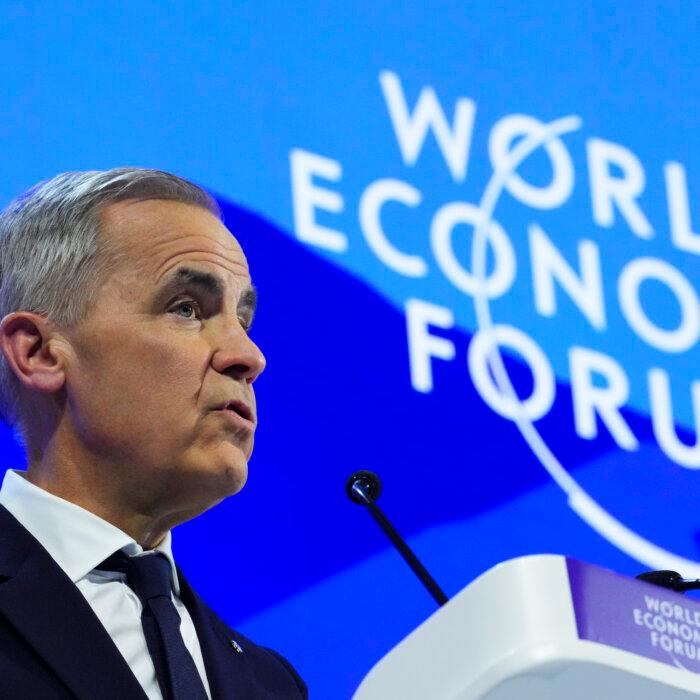
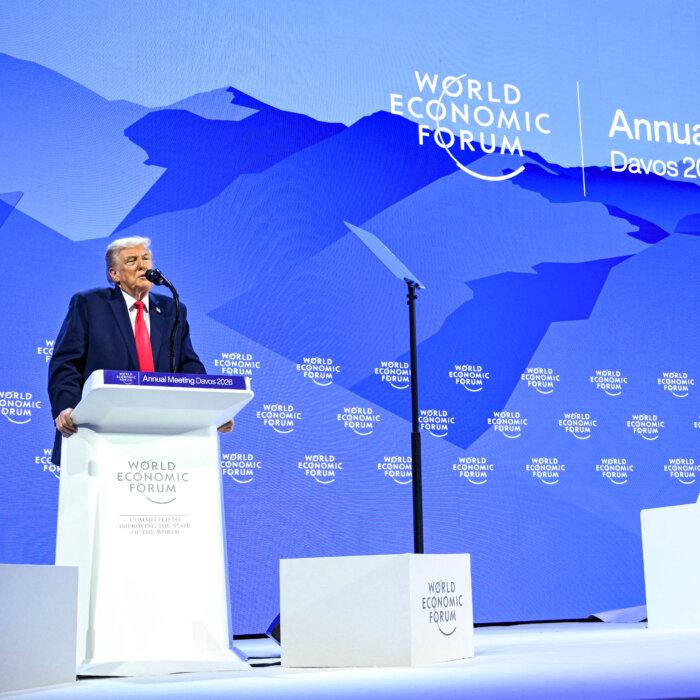
In his Davos speech, the prime minister said a “rupture” in the rules-based international order is being caused by a “system of intensifying great power rivalry.” Carney said that these dominant powers exempt themselves from the rules of the international order when it is in their interest and pressure other countries into economic integration in order to gain an advantage. Carney did not directly name the “great powers” or distinguish between them.Carney said this geopolitical and economic reality requires Canada to become more self-reliant, while also seeking out other middle powers to form new alliances with. He referenced the late Czech president and anti-communist activist Václav Havel, who wrote that the previous communist regime in his country was maintained from the ground up by small rituals such as a shopkeeper displaying a sign in the window supporting the system out of conformity, despite not believing in it.
Poilievre also said Carney’s reference to Havel was ironic, given that Havel was an opponent of “totalitarian communism” and Carney only days earlier had announced his plan to establish deeper ties with the Chinese regime.
“It was with irony that the Prime Minister quoted Vaclav Havel, one of the great heroes of the 20th century fight against totalitarian communism, less than a week after launching a ‘strategic partnership for a new world order’ with the Chinese communist regime,” Poilievre said.
Threats
Poilievre has said Canada needs to be more focused on and prepared for security threats from countries such as China, Russia, and Iran, including calling for the Liberals to immediately deport senior figures of Iran’s Islamic Revolutionary Guard Corps from Canada and increasing sanctions on the regime in Tehran.The Tory leader has said the Chinese Communist Party (CCP) is a grave security threat to Canada and needs to be kept at arm’s length from any trade, investment, or critical-infrastructure decisions, adding that Canada should reduce its economic dependence on China and block CCP-linked firms from gaining access to sensitive technology, supply chains, or strategic assets.
Instead of turning toward closer ties with China, Poilievre’s Jan. 22 response emphasized his belief in the need to face the reality of Canada’s interdependence with the United States. While Poilievre said he understands it’s “tempting” for some Canadians to want to cut ties with the United States during current economic tensions, he said it’s just not economically realistic.
“I know it’s tempting to say our relationship with America is over forever. But here is the reality: We still live next door to the biggest economy and military the world has ever seen. We sell 20 times more to the U.S. than to China. 1 in 10 Canadian jobs rely directly and indirectly on trade with America,” Poilievre wrote, adding that while growing and diversifying trade was the right move, remembering the enduring nature of the U.S.-Canada trade relationship is essential.