Conservative Leader Pierre Poilievre is calling on Prime Minister Mark Carney to cut government spending and cap the deficit at $31 billion, a level announced in former Prime Minister Justin Trudeau’s last fiscal update, ahead of the government’s release of its spring economic update.
“You promised to shrink the bureaucracy, but in your first 11 months as Prime Minister, it grew by 7.4 per cent,” Poilievre said in the letter. “Consultant spending is up too, and far from spending less, the overall cost of day-to-day operating spending is up 9.1 per cent in under a year.”
There should be “no deficit,” Poilievre said in his letter, noting Ottawa would be on track to achieving a balanced budget if he were prime minister.
To cut spending, the Tory leader is calling on the federal government to scrap its $90 billion Alto rail project as well as the $742 million gun buyback program.
He is also calling for the government to cut back on external consultants, federal bureaucracy, foreign aid, corporate welfare, taxpayer-funded handouts to “fake asylum claimants,” and tax havens. He said that removing these policies could reduce deficits, inflation, and taxes for Canadians.
Path to Balanced Budget
A report last week by public policy think tank the C.D. Howe Institute called for a clear path back to balanced budgets in the government’s upcoming fiscal update.The update should contain a “realistic assessment of economic and fiscal conditions” as well as targets to restrain spending and tax reforms that encourage consumption and investment, the report said.
The think tank called for the economic update to commit to lower spending in non-priority areas where it has “ballooned over the past decade,” and to outline a clear track for a balanced budget over four years, including “credible measures” to achieve it.
New Policies
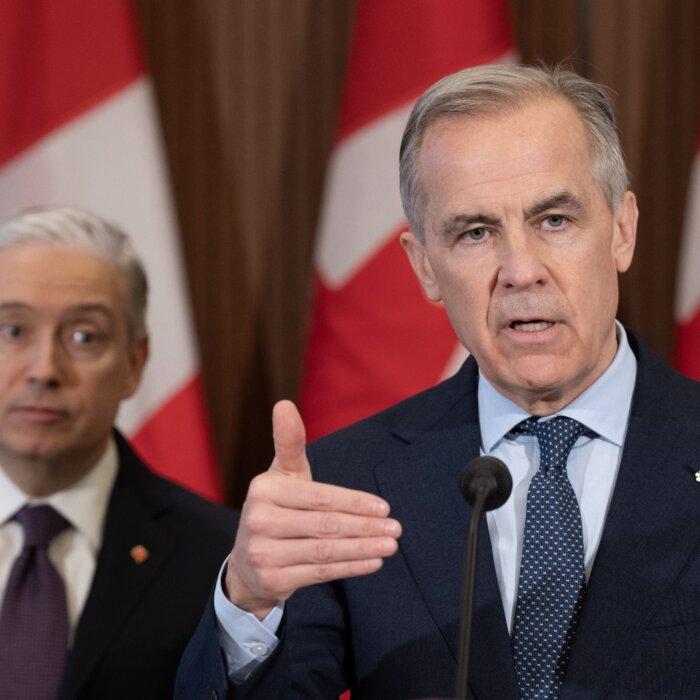
Finance Minister François-Philippe Champagne, in a video posted on social media on April 26, said the spring economic update is the government’s plan to keep “momentum,” after increasing investments and trade exports and after signing 20 trade and defence agreements with other countries over the last year, while “making life more affordable for Canadians today and for years to come.”“Bringing down everyday costs is at the heart of that plan,” Champagne said.
“This is our moment to build in Canada, to invest in Canada, to choose Canada and one another. I look forward to sharing how we will do that with Canadians on April 28,” he added.
The fiscal update also comes amid economic uncertainty worsened by the war in Iran, which has caused trade disruptions, oil price increases, and inflation. It also comes ahead of the July review of the Canada-United States-Mexico Agreement.