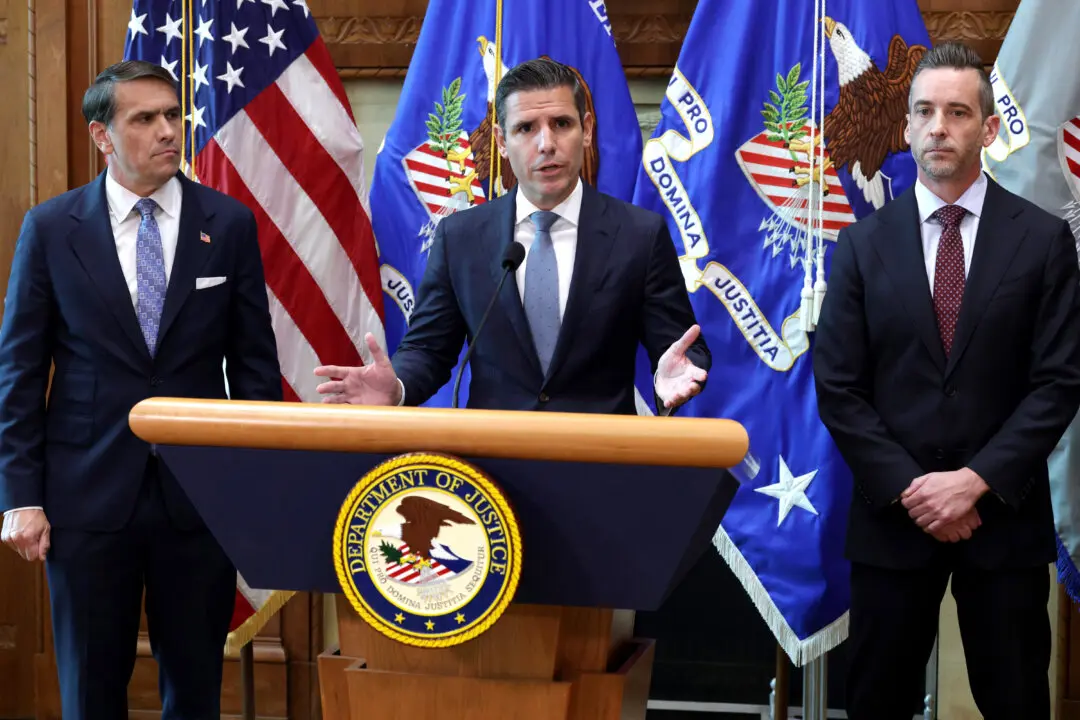
The Pentagon has revealed details on how it bombed Iran’s Fordow nuclear site, in a June 26 press conference.
Fordow, which is housed under a mountain, was one of the three nuclear sites bombed by the United States on June 21.
“If you want to know what’s going on at Fordow, you better go there and get a big shovel because no one’s under there right now,” said Defense Secretary Pete Hegseth at the briefing.
U.S. B-2 bombers dropped six massive ordinance penetrators (MOPs) on Fordow. The first uncovered the main shaft, while the next four entered the main shaft, moved down into the facility, and let off explosions. The sixth MOP was a flex bomb, in case one of the bombs did not do its job.
“The weapons were released on speed and on parameters,” said Joint Chiefs Chairman Dan Caine. “The weapons all guided to their intended targets and to their intended aim points.”
The bombs, he said, ripped through Fordow’s open tunnels and destroyed critical hardware.
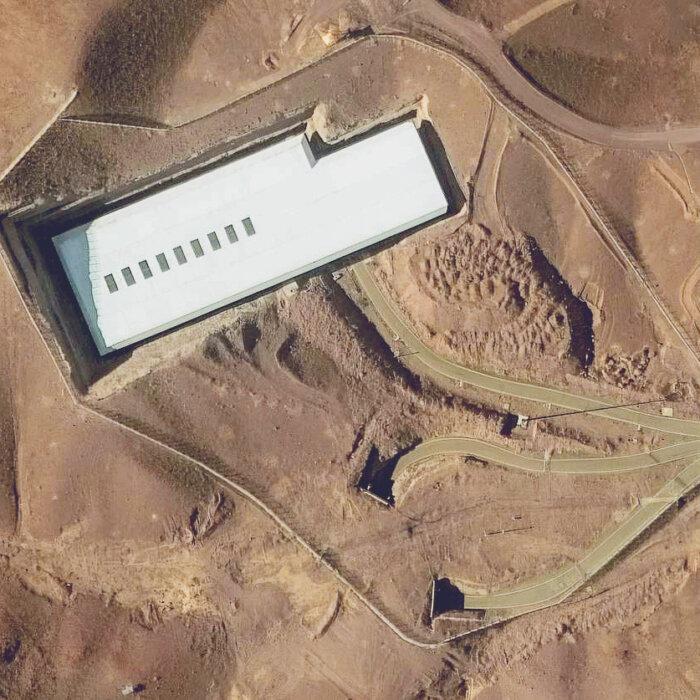
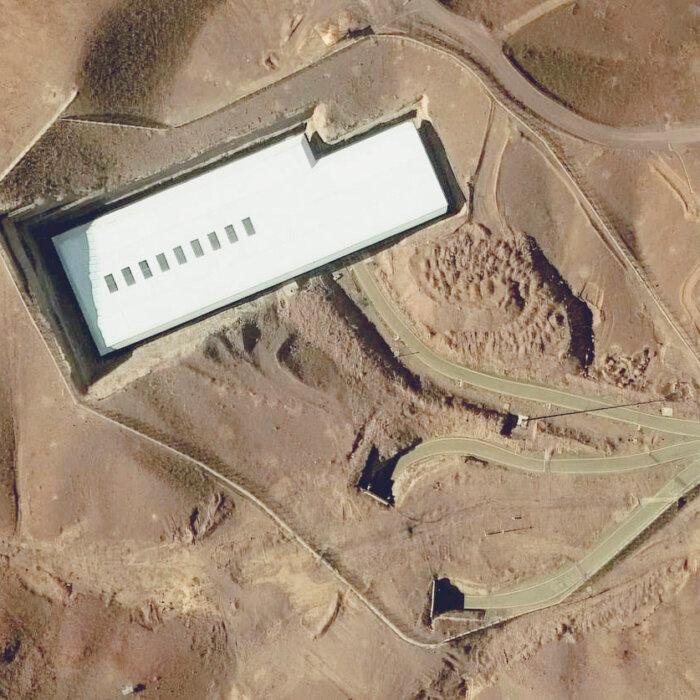
“The majority of the damage we assessed, based on our extensive modeling, was a blast layer combined with the impulse extending from the shock,” said Caine.
Caine did not say what the damage was, as damage assessments are done not by the Pentagon but rather by the intelligence community.
The report also said that “Iran’s stockpile of enriched uranium was not destroyed” and that “the intelligence assessed enriched uranium was moved out of the sites, prior to the U.S. strikes.”
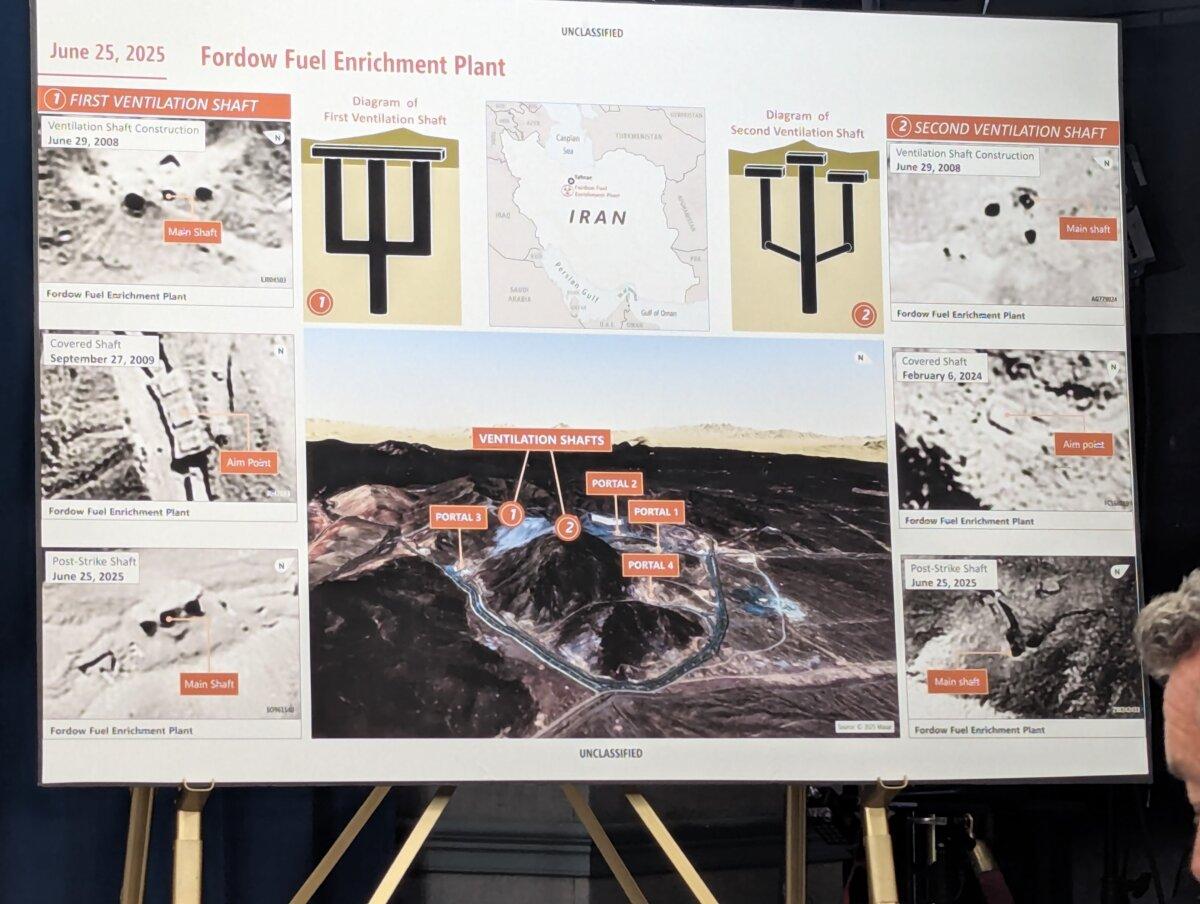
During the press conference, Hegseth emphasized that the report was “preliminary.” He cited numerous primary sources, such as U.S. and Israeli intelligence, stating that the strikes destroyed Iran’s nuclear sites at Fordow, Natanz, and Esfahan.
President Donald Trump has criticized the DIA report.
“Great statements just came out from the Israeli Atomic Energy Commission and from Iran, as you know, that it was complete, total destruction,” Trump said on June 25.
“And, CNN turned out to be fake news. As always. I swear they have no credibility. That’s why they have no viewers. But we’re going to read it to you if you haven’t seen it.”
CNN has stood by its reporting.
“However, we do not believe it is reasonable to criticize CNN reporters for accurately reporting the existence of the assessment and accurately characterizing its findings, which are in the public interest.”