



Over the past three decades, parents and voters in Canada have seen their influence over education decline as school boards have grown larger and decision-making has become more centralized, a new study says.
The report makes the case that the ongoing overhaul of school boards in provinces such as Ontario may present an opportunity for governance reform.
“Across Canada, the school system is groaning under the weight of its own bureaucracy,” wrote the study’s author Paul W. Bennett. “Centralized control, layered administration, and top-down governance have hollowed out the very institutions meant to serve students, families, and communities.”
The report argues that when decision-making is centralized in ministries and school districts that are not directly involved in classroom teaching, the education system becomes disconnected from the specific needs of local communities.
“The reality is that regional school districts with elected trustees are simply too big and more distant than ever from students, parents, teachers, and communities,” says the author.

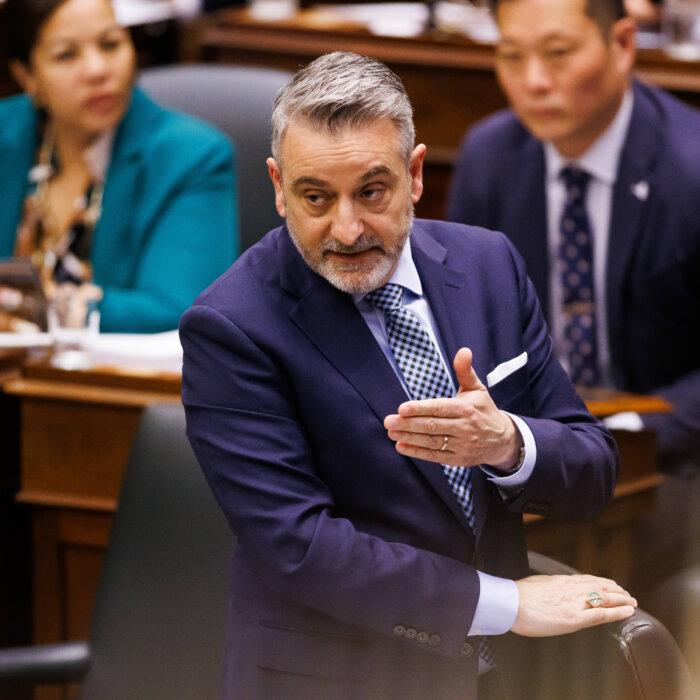
The report says that the current governance model limits elected trustees’ ability to represent their constituents, and that confusion over how “hands-on” they can be underlies many of the problems facing school boards today, such as trustee misconduct, financial mismanagement, and internal conflict.
School Boards and Student Enrolment
The report notes that the number of school boards has declined in every province, while student enrolment numbers have remained relatively stable. It points to Ontario, where the number of public and separate school boards has fallen by 98 percent since 1961—from about 3,700 to 72 today.All other provinces have also seen a decline in the number of school boards over time, the report says, particularly since the 1990s, when a trend toward amalgamating and consolidating regional boards began to emerge. In 1994, the number of school boards in large provinces such as Quebec, Ontario, and Alberta exceeded 120, dropping to fewer than 75 a decade later.
By 2024, the number of school boards continued to decline in provinces such as Alberta, Saskatchewan, and the Atlantic provinces, with the exception of New Brunswick. Saskatchewan saw the largest drop since 1994, falling from 119 school boards to 27.
In terms of local representation, data suggests that Manitoba had the most “local” school boards in 2024, with one board for every 5,645 students. Saskatchewan ranked second, at 7,543 students per board that year, followed by Prince Edward Island with 11,680 students per board.
However, it kept its constitutionally-protected francophone school board, the Conseil Scolaire Acadien Provincial, which remains the only elected school board in the province today.
Newfoundland and Labrador had the second-fewest local school boards in 2024 after Nova Scotia, according to the study, with one board for every 32,505 students. Ontario followed closely with one board per 31,409 students.
Ontario’s Education Overhaul
The study cites Ontario’s recent school governance reform as an example of efforts to increase school boards’ public responsiveness. It notes it also reflects a broader trend of phasing out elected trustees.Education Minister Paul Calandra has said he is considering eliminating the role of school trustees, saying there may be better ways to address the needs of parents and students.
The Jan. 5 study warns that eliminating trustees could, by default, lead to a “takeover of school boards,” but notes that ongoing restructuring may also provide a chance to address long-standing governance issues.
A ‘Made-in-Canada’ Alternative
Bennett says one way to address the declining democratic representation of parents and voters is to replace regional boards with autonomous school councils composed of parents, educators, and community representatives—an approach known as school-based management.He calls this a “made-in-Canada” model, noting that Edmonton was an early adopter from the late 1960s through the mid-1990s. The approach removes centralized control and shifts responsibility directly to individual schools.
“The central flaw in the current system lies in governance,” Bennett says. “Provinces cling to structures that vest authority in ministries and school districts, creating distance between those who make decisions and those who live with their consequences.”
He says governance reform is about ensuring that Canada’s education system reflects the voices “of those who know children best–their families, their teachers, and their communities.”
“Instead of top-down mandates imposed by ministries and boards, we need to reclaim bottom-up accountability rooted in communities,” he wrote.
“Students, teachers, and parents would be at the centre, with administrators serving them–not the other way around.”


