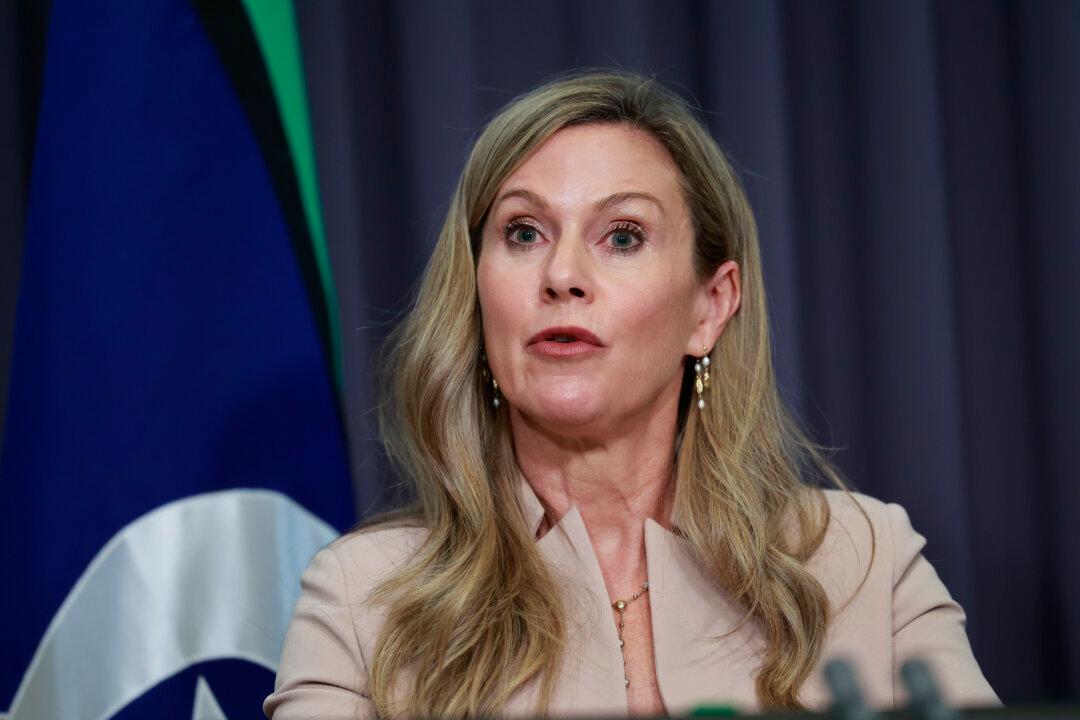
As the final week of the U.N. Global Plastics Treaty negotiations is being held in Geneva, Australian filmmaker and environmental advocate April Howard hopes that firsthand stories from the Pacific will support the negotiators who are pressing for stronger controls on the production, use, and disposal of plastics.
While progress has been made since the treaty was first mooted in 2022, countries including the United States, Saudi Arabia, and Iran, have pushed back against measures to limit plastic production.
They have pushed against production control and want the plastics pollution problem to be addressed entirely through downstream waste management measures instead.
Some countries such as Russia favour voluntary over binding measures, and there’s a lack of consensus around creating a finance mechanism to implement the treaty—notably one that could adequately support developing countries—and the extent to which it should include concessional and private finance.But Howard, producer and co-director of the upcoming documentary “Voices of the Pacific,” who spent the last year travelling to some of the most remote and impacted regions in the Pacific, says the devastating consequences of plastic pollution on communities, cultures, and ecosystems need the strongest possible measures.
At the U.N., she will both shoot footage for an upcoming feature to highlight the problem and show the 30-minute documentary made in the worst-hit areas of the Pacific.
One of those places is Palau, which consists of 340 small islands in Micronesia, many of them remote.
On one such uninhabited island she describes “marvelling at a dawn gathering of thirty green sea turtles grazing in the shallows” before her local guide, Lazarus, a former ranger, took her to the its northern shore.
There, she was confronted with mountains of plastic debris: bottles, caps, fishing ropes, and discarded thongs (also called flipflops and jandals) carried thousands of kilometres by ocean currents.
“Pacific Island nations produce only a tiny fraction of the world’s plastic, yet they are drowning in it,” Howard said.
“Lazarus has turned the waste into haunting installations, not as art for art’s sake, but as a desperate cry for help. There’s nowhere to store it, nowhere to send it. It just keeps coming.”
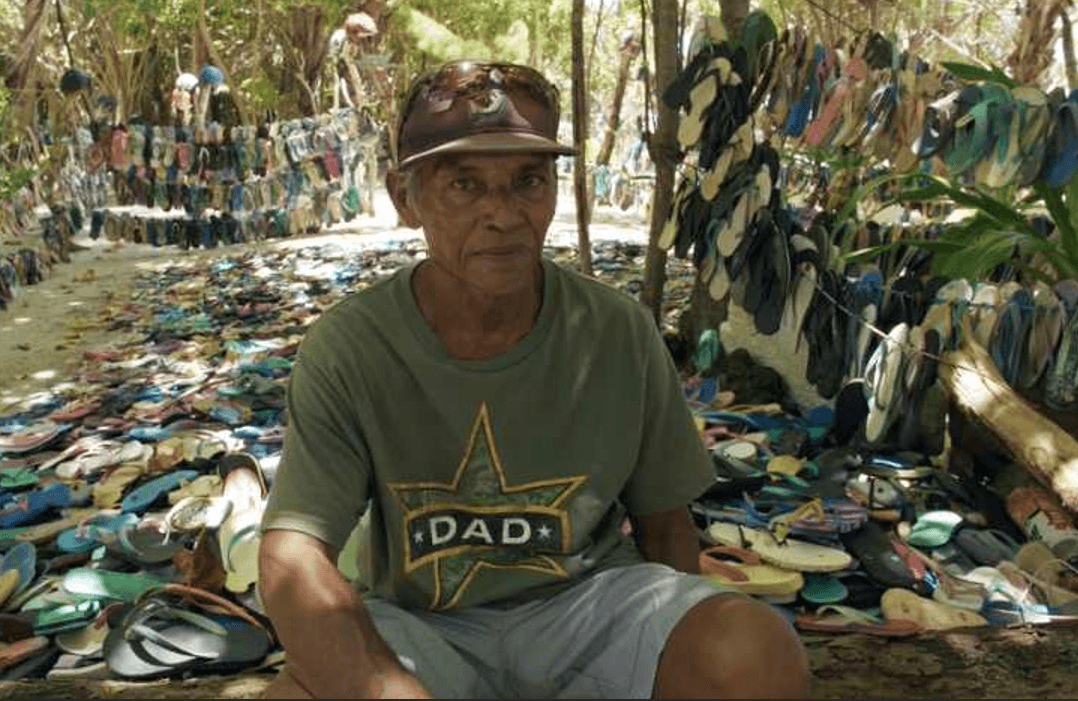
Lazarus explained that the plastic started to arrive in the early 2000s. Back then, there were only a bottle or two, but now it’s a completely different story.
Howard says the giant installation is a “statement of defiance and desperation, made up of thousands of bottles, caps, and what he calls slippers. There are other things as well, including strips of rubber he bends into the shape of a heart in the sand.”
Goal of the Mission
While countries like Fiji have led calls for a treaty addressing the entire life cycle of plastics, Howard says her mission in Geneva and beyond is to share what she has seen, to help people everywhere grasp the scale of the crisis, and to encourage both government and individual action.
The Fijian delegation initially invited her, and while there, she also intends to meet with the Minderoo Foundation, which helped bring British broadcaster David Attenborough’s film “Ocean” to the big screen.
“I have gained insight that people feel powerless, but we’re not,” Howard said. “Every choice, every email, every conversation adds up and supports our Pacific brothers and sisters and ourselves.
“In the negotiating rooms, there are two sides,” she explained. “One is working to protect oceans, wildlife, and people for all 8.1 billion of us. The other is resisting change to protect profits, even as plastic infiltrates our food, water, and air.”
Scientific research has linked plastics and the 16,000 chemicals they contain to serious health risks, including cancer, endocrine disruption, and fertility issues. Microplastics are now found everywhere, from ice caps to the deepest ocean trenches, and even in human bloodstreams.
Where Trillions of Plastics Gather
Howard hopes her film and her presence in Geneva will help galvanise people to lobby their governments for stronger measures.
“This isn’t just a Pacific problem. It’s all of ours,” she said. “Every piece of plastic we use has an impact somewhere. If we all start making changes at home, in our communities, and by pushing for real political action we can turn the tide.”
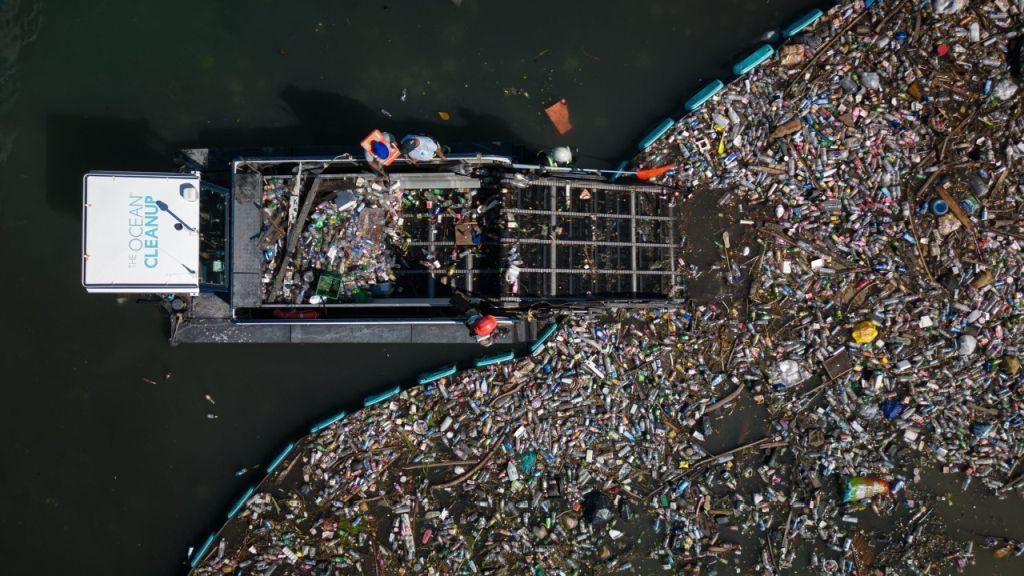
The Pacific has been particularly badly affected by plastics, which have found their way into the sea.
It’s also home to the “Great Pacific Garbage Patch” (GPGP)—estimated to contain over 1.8 trillion pieces of plastic that weigh about 100,000 tonnes, equivalent to 250 pieces of debris for every human in the world.
Ocean Cleanup, which is leading the fight against plastic that’s still afloat, says it'd be a mistake to think of the GPGP as “an island of trash.” Rather, it resembles a plastic soup, with areas of higher plastic concentration, which it calls “hotspots.”
By actively tracking where plastic hotspots form, the project can direct its vessels to these areas more efficiently.
It estimates cleaning the world’s oceans of plastics will cost $7.5 billion over 10 years.
But for Pacific islands like Palau, only on-the-ground efforts will save their beaches and wildlife from being buried beneath an ever-growing pile of plastic.