The International Crimes Tribunal (Bangladesh), based in the capital of Dhaka, passed sentence on Hasina and her close aide, former Home Minister Asaduzzaman Khan, for crimes against humanity over the way that deadly force was used against protesters.
Both Hasina and Khan are in India after fleeing there in August 2024, and were sentenced in their absence. Since India has so far refused to extradite the pair, it is considered unlikely that they will be executed.
A former police chief was sentenced to five years in prison after a plea bargain in which he became a state witness against 78-year-old Hasina, who is from a political family dynasty.
‘In Good Faith’
Hasina argued that she and Khan “acted in good faith and were trying to minimize the loss of life.”“We lost control of the situation, but to characterize what happened as a premeditated assault on citizens is simply to misread the facts,” she said on Nov. 17 in a statement denouncing a verdict that she called “biased and politically motivated.”

“I mourn all of the deaths that occurred in July and August of last year, on both sides of the political divide,“ Hasina said. ”But neither I nor other political leaders ordered the killing of protesters.”
Hasina, 78, will not be allowed to appeal the verdict unless she surrenders or is arrested within 30 days of the judgment.
Hasina was ousted on Aug. 5, 2024, and Bangladeshi Nobel Peace Prize laureate Muhammad Yunus took over as the head of an interim government three days after her fall.
The ruling was announced in a live broadcast that lasted for several hours, while the families of some of those killed or injured during the uprising waited for hours for the verdict of the panel of three judges.
Some of those in the packed courtroom cheered when Justice Golam Mortuza Mozumder announced the death sentence.
Exile in India
In a media statement issued on Nov. 17, the Bangladeshi Ministry of Home Affairs urged neighboring India to send both Hasina and Khan back soon.India’s foreign ministry in its own statement acknowledged the verdict but did not say whether it would hand the pair over to Dhaka, with its failure to extradite them so far causing diplomatic tensions.
“As a close neighbor, India remains committed to the best interests of [the] people of Bangladesh, including in peace, democracy, inclusion and stability in that country. We will always engage constructively with all stakeholders to that end,” the statement from New Delhi reads.
Yunus said after the verdict, “No one, regardless of power, is above the law,” adding that the use of lethal force against young people and children, who were exercising their right to protest, violated laws and the basic bond between government and citizens.
The Bangladesh Nationalist Party, or BNP, headed by Khaleda Zia, Hasina’s archrival and former prime minister, welcomed the verdict.
BNP Secretary General Mirza Fakhrul Islam Alamgir said in a Facebook post that the verdict was not merely a judgment on Hasina’s crimes, but a “burial of all forms of dictatorship on this country’s soil.”
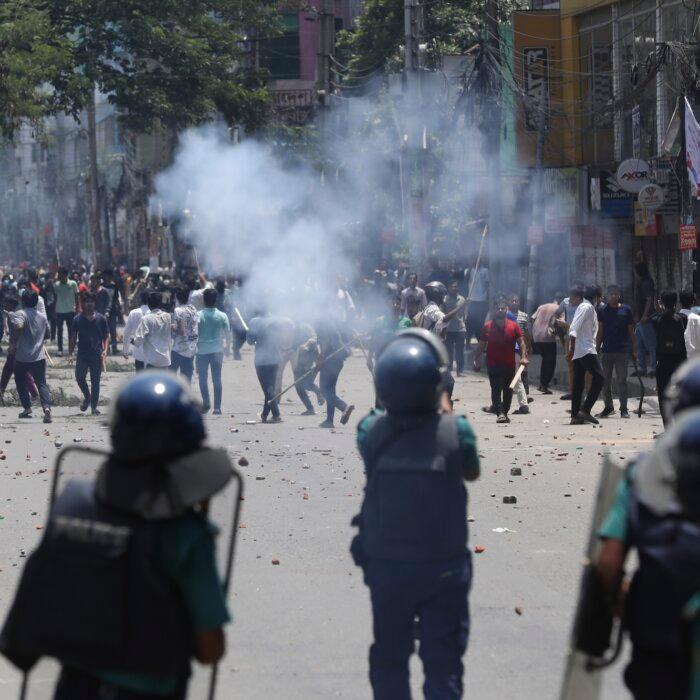
The country was on standby for violence to erupt with the verdict. There have been close to 50 arson attacks, mostly targeting vehicles, and dozens of crude explosions reported nationwide over the past week.
Two people were killed in the arson attacks, according to local media reports.
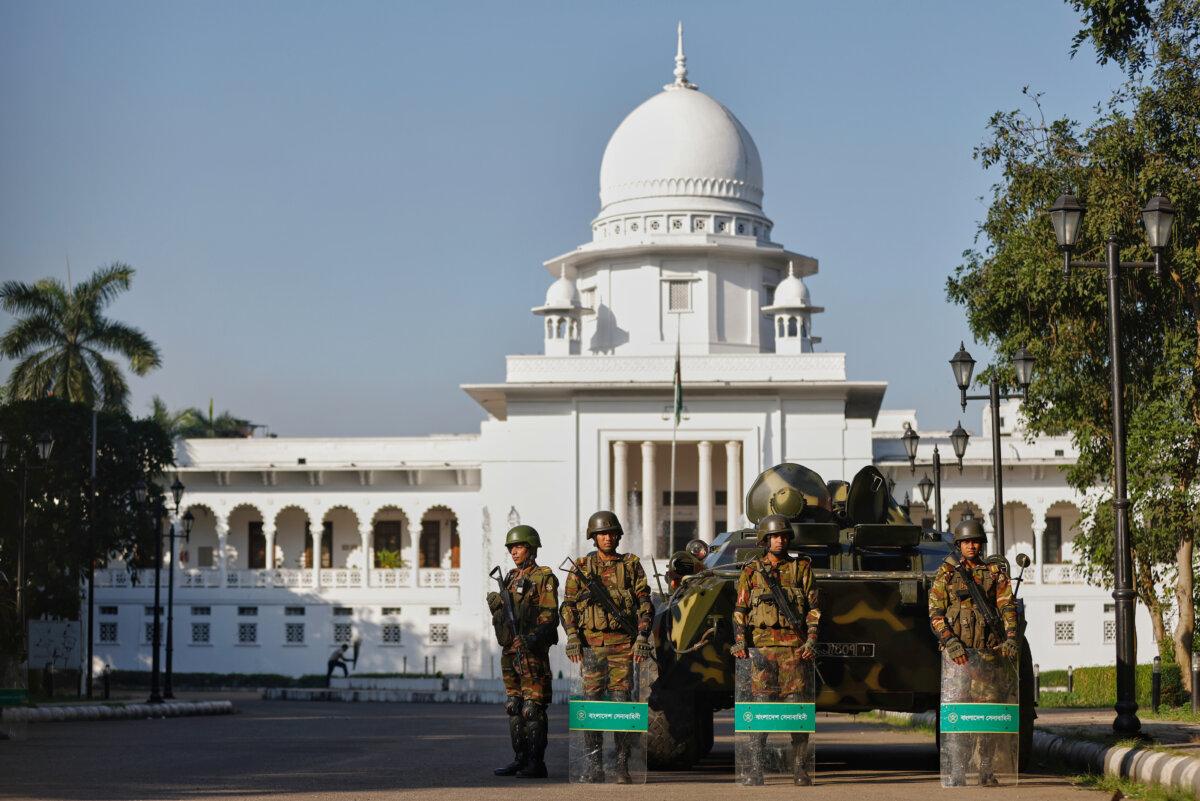
Paramilitary border guards and police were deployed in Dhaka and many other parts of the country after authorities at the Supreme Court requested the presence of soldiers around the court ahead of the ruling.
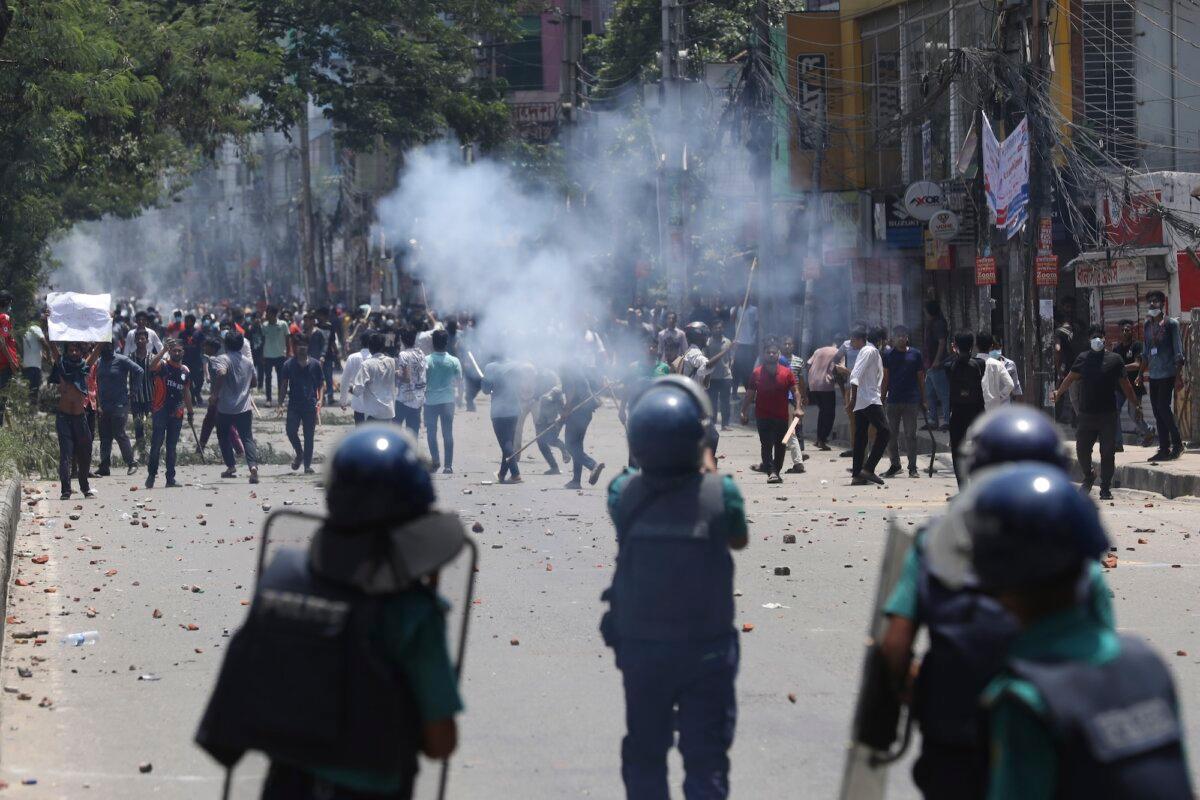
While the judges were announcing the verdict, police outside the court charged holding batons and used stun grenades to disperse people in the crowd, some of whom had burned tires on the streets.

‘Kangaroo Court Verdict’
Her son, Sajeeb Wazed, currently in the United States, took to social media to brand the Nov. 17 judgment a “kangaroo court verdict.”Hasina’s father was Sheikh Mujibur Rahman, a former political prisoner in Pakistan and independence hero of Bangladesh. Some of her opponents gathered outside his former home—now a museum—a few miles from the courtroom.
The protesters brought two excavators, with the apparent aim of demolishing the building, which was damaged and looted during protests in 2024.
The summer 2024 uprising began with weeks of student-led protests voicing discontent over a quota system for allocating government jobs, which critics said favored those with connections to Hasina’s party.
Life Marred by Brutality
Hasina’s life story has been marred by brutality. Except for her husband, Abdul Wazed Miah, her children, and her sister, Sheikh Rehana, her remaining family was murdered during the Aug. 15, 1975, Bangladeshi coup d'état, which saw the assassination of her father, mother, young brothers and 15 others in the so-called “midnight murders.”Hasina, her husband, and sister were visiting Europe at the time of the assassination, and took refuge in the house of the Bangladeshi ambassador to West Germany, before taking up an offer of political asylum from then-Indian Prime Minister Indira Gandhi.
The surviving members of the family lived in exile in New Delhi for six years, with Hasina barred from entering Bangladesh by the military government of Ziaur Rahman.
After she was elected president of the Bangladesh Awami League in 1981, Hasina returned to the country and received a welcome from thousands of Awami League supporters.