Health Canada says it has revised regulations for precursor chemicals and manufacturing equipment used in the production of illegal synthetic drugs like fentanyl and methamphetamine as another step to strengthen border security and disrupt the illegal drug trade.
The amended regulations under the Controlled Drugs and Substances Act mandate compulsory reporting of suspicious transactions related to precursors.
Licensed companies are required to implement “reasonable measures” to prevent the diversion of such chemicals to illegal markets or uses, the publication says. Health Canada will also limit the availability of drug manufacturing equipment such as pill presses and will require import registration for certain component parts.
Canada’s drug legislation lists a number of chemicals such as those used in pharmaceuticals, fragrances, and flavouring agents that can also be used as precursors to make illegal drugs like fentanyl and methamphetamine.
Minister of Health Marjorie Michel said the new measures will help address two major issues: drug trafficking and addiction.

“This will help to ensure that these remain in legal distribution channels and are not diverted to illegal drug production,” she said in a Dec. 18 press release.
The amendments will also assist in disrupting the production of illegal drugs by criminal organizations and will ensure that border enforcement officials possess the necessary tools to prevent the unlawful importation of drug manufacturing equipment, Health Canada said in the statement.
Most overdose deaths in Canada are linked to illegally produced fentanyl, a summary of the new regulations says. It adds that police have reported an uptick in illegal domestic manufacturing, along with the unauthorized importation and diversion of chemical ingredients and equipment.
“Organized crime groups are continually evolving their illegal drug operations in attempts to evade the strict controls established under the CDSA and its regulations,” the summary says. “The amendments will help disrupt illegal domestic drug production by organized crime groups, not only decreasing the risk that these harmful drugs are present in Canada, but also decreasing the risk that they would be illegally exported to other countries.”
Law enforcement agencies across the country have cracked down on fentanyl trafficking since U.S. President Donald Trump first threatened Canada with a 25 percent tariff on all of its goods not covered by the United States-Mexico-Canada trade agreement if the country didn’t stem the flow of illegal drugs into his country.
Border Seizures
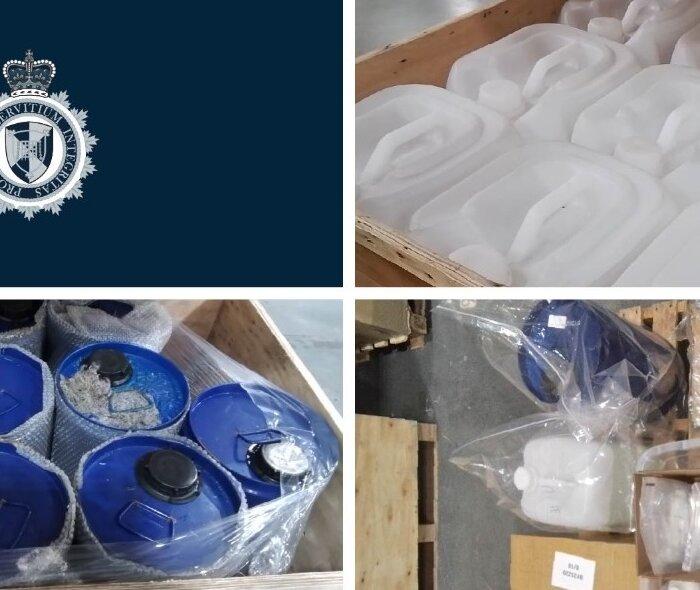
The Canada Border Services Agency (CBSA) has also been intercepting drugs and the chemicals used to make them.One example occurred this spring when Canadian border officials confiscated 500 litres of fentanyl precursor propionyl chloride from containers that were shipped from China, en route to Calgary.
The agency noted that while it confiscated a lower volume of fentanyl than other drugs, it is more potent.
“A few grains can be enough to kill you,” the agency said. “It is a dangerous drug that is 20 to 40 times more potent than heroin and 100 times more potent than morphine. This makes the risk of accidental overdose very high.”