Ottawa is arranging charter flights and reserving hundreds of seats on commercial airlines to help more than 2,000 Canadians who are seeking to leave the Middle East amid the Iran war.
Foreign Affairs Minister Anita Anand said during an evening press conference on March 4 that more than 106,000 Canadians and permanent residents in the Middle East have registered with the Registration of Canadians Abroad service amid a conflict triggered by U.S. and Israeli airstrikes on Iran on Feb. 28.
The registered Canadians are spread across more than a dozen countries, but 85 percent of those seeking assistance are concentrated in five: 1,171 in the United Arab Emirates (UAE), 237 in Qatar, 164 in Lebanon, 93 in Israel, and 74 in Iran. In total, 2,035 people have asked the government for help leaving the region.
Anand said the options available for Canadians wishing to leave the Middle East depend on a range of factors, and urged Canadians in the region who have not yet registered to do so immediately.
“The situation is volatile and is changing by the hour,” she said. “In some countries, the airspace is open, in others it is partially open, and in others it’s fully closed.”
Global Affairs is securing blocks of seats on commercial airlines or is trying to arrange seats on charter flights operated by Canada or its allies in areas where the airspace remains open, Anand said. She urged Canadians in countries with closed airspace to shelter in place.
Some assistance is being offered to help Canadians travel by land to airports that are still open, she said, but added that “any ground transportation carries risk.”
“I understand that being in a building such as a hotel while missiles are flying overhead is terrifying,” she said. “It is however often the safer option. While we have no indication of roads being targeted by Iranian missiles, when they are intercepted overhead, debris can fall on the road below.”
“Canadians should, no matter which country they are in, only travel when it is safe to do so and follow local advice,” she added.
Flights Out
Anand originally said early on March 4 that Canada was not providing any charter services and advised Canadians in the area to “prepare departure plans that do not rely solely on government of Canada assistance.”The situation had evolved by that evening when Anand announced she had told her officials to finalize contracts for charter flights for Canadians currently in the UAE where a limited amount of airspace is open.
“This charter is contingent upon receipt of the necessary approval to use their airspace, which we have already requested, and I personally am involved in these requests at a diplomatic level,” Anand said. “Flights will be available on a cost recovery basis to Canadians, and the number of flights will be tailored to demand.”
Anand told reporters she anticipates charter flights carrying Canadians will take off from the UAE within 72 hours. An additional 200 seats on commercial flights have been reserved to help Canadians leave Lebanon within three days, she said.
A flight took off from Beirut early March 4 with 75 seats reserved by the federal government for Canadians, most of which were filled, she said. Empty seats were offered to British and Australian residents as part of a reciprocal agreement designed to aid in the evacuation of each other’s citizens from the area.
The airspace over Qatar has been closed, but Qatar Airlines is arranging bus transport for 200 ticket-holding Canadians to an airport in Saudi Arabia for a flight, Anand said.
Israeli airspace also remains closed, Anand said, but added that the Israeli government is providing a bus service to Egypt, where passengers can organize travel to airports that are operational.
Helping the 74 Canadians in Iran who have requested help in leaving is difficult, Anand said, because Canada has no diplomatic relations with Iran and has declared the Islamic Revolutionary Guard Corps, a branch of the Iranian Armed Forces, a terrorist organization under Canadian law.
She said Canadians wishing to flee Iran can receive help from consular officials in nearby countries like Armenia, Azerbaijan, Israel, Jordan, Turkey, and Turkmenistan, after they cross the border.
British, French Flights
Other countries are exploring ways to help their citizens flee impacted areas of the Middle East.Britain said a charter flight departed Oman late March 4 to bring back some of the thousands of UK nationals in the Gulf region. The UK Foreign Office said more than 130,000 British nationals in the Middle East had registered their presence with the government since the weekend, though officials said not all are trying to leave.
France’s President Emmanuel Macron said this week that two flights airlifting its citizens were on their way to Paris, while Italy has organized repatriation flights for Italian nationals to Rome and Milan.
U.S. Secretary of State Marco Rubio said on March 3 that the State Department was considering various options, including military transport flights, to evacuate its citizens from nations impacted by the conflict.
Anand rejected suggestions during the March 4 press conference that Canada wasn’t doing as much as other Western countries to help its citizens.
“We’ve been at this for days to ensure that we have options in place for Canadians,” she said. “I will also point to my continued conversations with my counterparts in the Gulf region in the Middle East, where I am specifically requesting that Canadians can leave their countries by any means possible.”
Ottawa is urging Canadians to avoid travelling to large parts of the Middle East, as Iran continues to retaliate against an offensive by the United States and Israel.
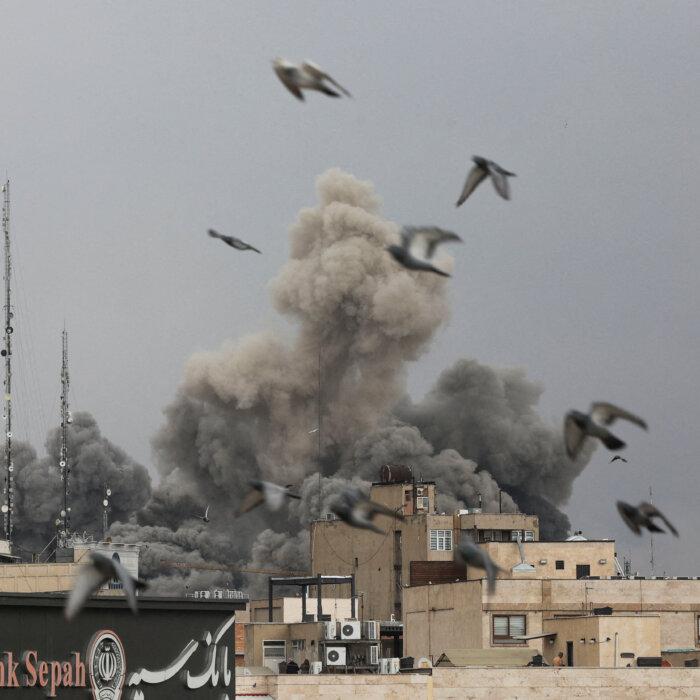
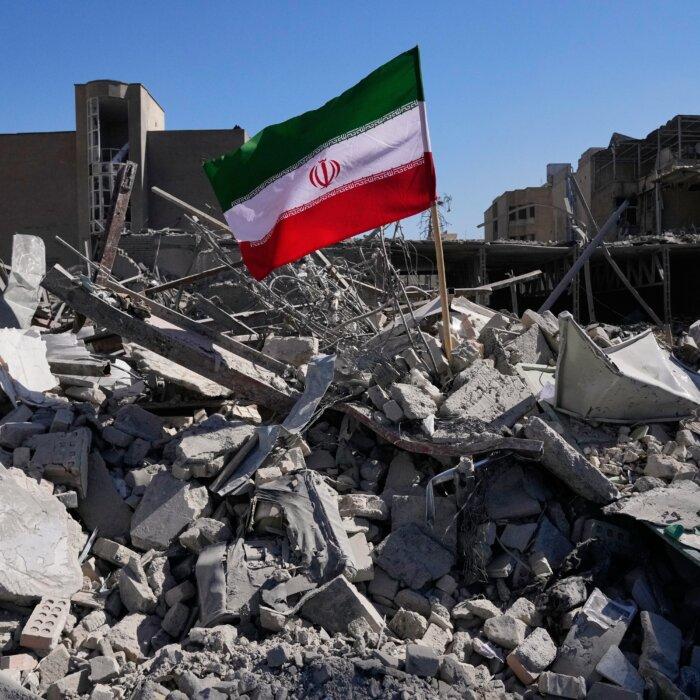
The war erupted on Feb. 28 as the U.S. and Israel launched major strikes on Iran, and Iran responded with strikes against Israel and U.S.-related military installations in nearby Arab Gulf countries.
Lebanon was dragged into the war earlier this week when Hezbollah fired rockets and drones into northern Israel, triggering Israeli retaliatory airstrikes on various parts of the country.
The Canadian Press and The Associated Press contributed to this report.