This copy is for your personal, non-commercial use only. Distribution and use of this material are governed by our Subscriber Agreement and by copyright law. For non-personal use or to order multiple copies, please contact The Epoch Times Reprints.
Pat Morris of the OPP waits to appear as a witness before the Public Order Emergency Commission in Ottawa, on Oct. 19, 2022. The Canadian Press/Sean Kilpatrick
Drug cartels and Chinese fentanyl producers are using Canada as a “critical node” in their global trafficking of illicit drugs, capitalizing on “corrupted” public and private companies and employing First Nations land to broaden their reach, the head of intelligence for the Ontario Provincial Police (OPP) says.
Canadian logistics and supply chains have been jeopardized by criminal organizations operating with “unprecedented sophistication,” alongside foreign adversaries attempting to destabilize Canada through organized crime groups, OPP intelligence chief Pat Morris told the House of Commons public safety committee on Nov. 18.
Morris told MPs on the committee that the OPP and other law enforcement agencies are dealing with numerous threats from foreign adversaries, transnational drug cartels, organized crime groups, and terrorist and extremist entities like India’s Bishnoi Gang.
“Sophisticated criminal organizations, Mexican cartels, South American trafficking networks, Chinese production operations and transnational criminal organizations in general are using our country as a critical node in global supply chains,” he said.
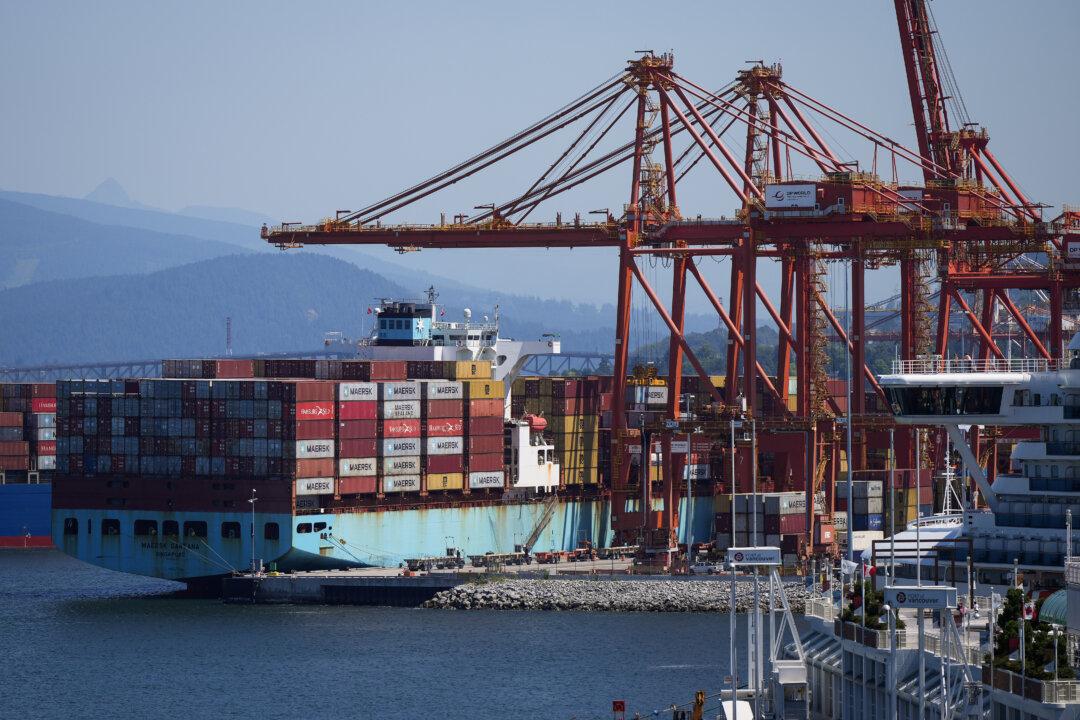
Organized crime groups have embedded themselves inside legitimate supply chain operations and logistics operations in Canada, buying off officials, port workers, and others in order to move people, guns, and illicit drugs, Morris said.
“They have cultivated relationships with corrupted public and private sector employees, including port workers, warehouse supervisors, transportation, and licensing officials,” Morris said. “They understand Canadian supply chain vulnerabilities and they exploit them methodically.”
He said vast quantities of drugs and weapons, large amounts of laundered money, and large numbers of human trafficking victims are being moved across borders by criminal networks, taking advantage of loopholes and blind spots in Canada’s immigration, border, and financial systems. Morris pointed to the OPP’s recent seizure of 46 kilograms of fentanyl, the biggest in provincial police history, as an example of the substantial quantities of illicit substances being trafficked in Canada.
He added that First Nations land in Canada, particularly near the U.S. border, is being used to move illegal products and warned that this could spread to Ontario’s Ring of Fire critical mineral zone if there isn’t more attention paid to the crisis.
Morris pointed to the OPP’s Project Panda, an investigation that uncovered more than 25,000 kilograms of contraband tobacco, more than 616 kilograms of cannabis, 3.1 kilograms of psilocybin, and 15 firearms earlier this year, which police say was being trafficked by a non-indigenous crime network operating via Six Nations of the Grand River indigenous territory south of Brantford, Ont.
Border Security Bills C-12, C-2
Morris was testifying before the public safety committee on Bill C-12, the government’s latest proposed border security legislation, where he also spoke on the associated Bill C-2, which is in second reading in the House of Commons.
Morris said that while many of the changes proposed in Bill C-12 are welcome, the “most sophisticated investigative technique in organized crime today,” that of “effective reasonable lawful access,” should be added back. This would give Canadian law enforcement greater authority to surveil and intercept encrypted communications employed by criminals. It was removed from Bill C-12 to address privacy concerns, whereas Morris said Bill C-2 contains the lawful access updates that are necessary.
“The No. 1 thing that I think needs to be in this legislation, which I do think has many positive attributes, is lawful access,” Morris said.
“What we would ask for is the ability to utilize software, commonly known as ‘on-device, investigative techniques.’ We have the capacity technologically and investigatively to do so. What we do not have is the legislative environment to make it effective, to be able to implement it and be able to utilize it effectively.”
He cautioned that Canada’s legislative environment has been “slow to adapt” to match the pace of technological innovation related to public safety, thus hampering the ability of authorities to disrupt organized crime, including Chinese fentanyl distribution networks and Mexican cartels.
Morris said that while he understands privacy concerns, granting these powers is just the modern form of what’s necessary to stop crime and would be “no greater abrogation of privacy than we had in the 1980s to acquire [evidence] through probes or other forms of electronic intercept.”
OpenMedia, an organization that advocates for a “surveillance-free internet” and opposes Bill C-2, said the legislation “threatens the privacy of every person in Canada by granting sweeping new powers to police and intelligence agencies to access and share our personal data—even without evidence of any wrongdoing.”
OpenMedia and several dozen other organizations and individuals sent a joint letter in June to Prime Minister Mark Carney, several cabinet ministers, and opposition party leaders. The letter, titled “Joint Call for the Withdrawal of Bill C-2,” said it would “enable a massive expansion of domestic surveillance.”
The Liberal government had tabled Bill C-2 in June aiming to enhance border security, including provisions for “lawful access” granting authorities more ability to crack encrypted communications. However, Ottawa divided that border security legislation into two separate bills when it presented Bill C-12 on Oct. 8, omitting several of the “lawful access” provisions in the hope that the new bill would be easier to pass.
Bill C-12 has been at the committee stage since passing second reading in the House of Commons on Oct. 23.
Ottawa’s border plan was introduced in December 2024 amid pressure from incoming U.S. President Donald Trump, who said Canada failed to stem illegal immigration and fentanyl trafficking across the Canada-U.S. border. Trump imposed tariffs on Canada in response.