This copy is for your personal, non-commercial use only. Distribution and use of this material are governed by our Subscriber Agreement and by copyright law. For non-personal use or to order multiple copies, please contact The Epoch Times Reprints.
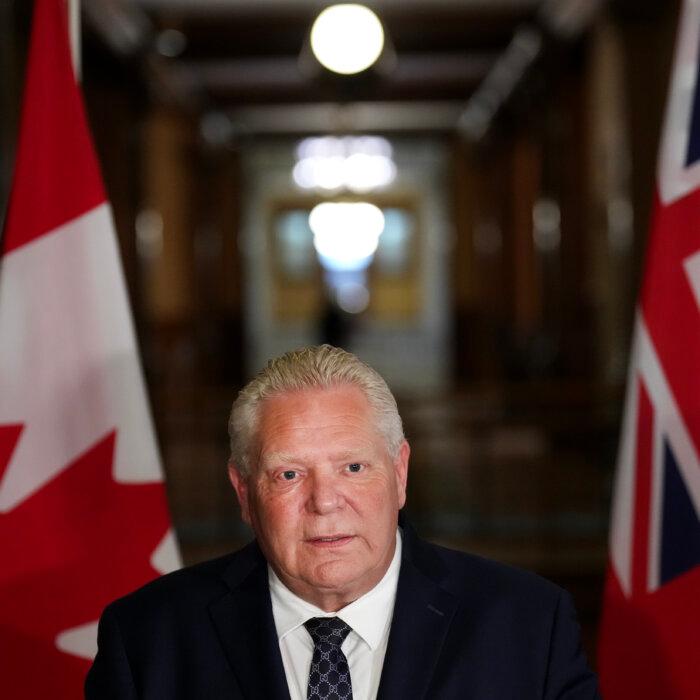
Ontario Premier Doug Ford says trade negotiations with the United States are the responsibility of the federal government, which aligns with similar comments made by Prime Minister Mark Carney after Ontario’s anti-tariff advertising campaign led U.S. President Donald Trump to stop trade negotiations with Canada.
“He is the prime minister. I’m the premier. When it comes to national issues—making a deal with the U.S. and anyone else—that falls on [Carney’s] lap,” Ford told reporters on Nov. 4.
“I’m there to support him, suggest ideas, along with every other premier in the country.”
Ontario’s advertising campaign, which aired on U.S. television networks, featured audio from former U.S. President Ronald Reagan’s 1987 address to the nation in which he praised free trade, including with Canada.
In his address, Reagan announced he was imposing tariffs on Japan at the start of the address, but that part was not included in Ontario’s ad. Reagan described this move as “steps that I am loath to take,” and accused Japan of engaging in unfair trade practices involving semiconductors.
Trump said he was terminating all trade negotiations with Canada on Oct. 23 in response to the ad, which he said misrepresented Reagan’s radio address and was meant to interfere with an upcoming U.S. Supreme Court hearing on his administration’s use of tariffs.
Trump also threatened to hike tariffs on Canada by an additional 10 percent on Oct. 25 after Ford decided to not immediately pull the ads. Ford said he would pull the ads on Oct. 27 so that trade talks could resume, after the ad campaign continued during the World Series baseball games between the Los Angeles Dodgers and the Toronto Blue Jays that weekend.
Carney told reporters on Nov. 1 that airing the ad wasn’t “something I would have done,” and noted that “the federal government is responsible for the foreign relationship with the U.S. government.” He also said he told Ford not to run the ad when he saw the ad before it was released.
Ford told reporters on Nov. 3 that Carney had also phoned him several times during his trip to Asia, asking Ford to remove the ad, but Ford told Carney he still wouldn’t pull it until Monday, Oct. 27.
Ford said Carney was not “angry at all” about his decision not to pull the ad immediately. He also said, “I fully understand the position [Carney’s] in,” when it comes to negotiating with Trump and that he didn’t believe Carney showed weakness for apologizing to Trump over the ad.
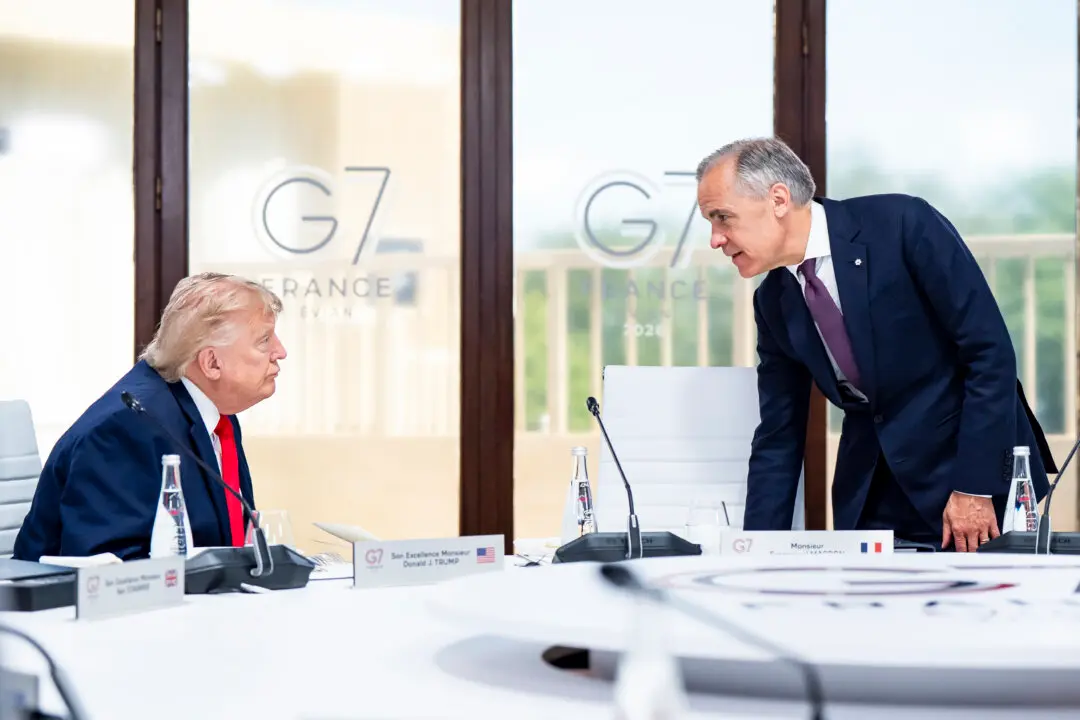
Carney confirmed on Nov. 1 that he apologized to Trump about the ad campaign while at the Asia-Pacific Economic Cooperation summit. Trump had said the day before that Carney had apologized to him when the two leaders talked during a dinner event in South Korea that was hosted by the country’s president with other world leaders on Oct. 29.
Meanwhile, Ford told reporters on Nov. 3 that he would not apologize to Trump for airing the ads, adding that the U.S. president is trying to “destroy” the province of Ontario and Canada’s steel, aluminum, and automobile sectors. He said the $75 million ad campaign made 12.4 billion impressions worldwide, was discussed on the floor of the U.S. Senate, and reignited discussions on how U.S. tariffs on Canada are “a tax on American people.”
Ford said the ad was meant to get “Reagan Republicans” to fight with “MAGA Republicans” to stop the tariffs. He also said he wanted to get the message out to Americans that tariffs are harming workers and businesses. He said Ontario had achieved its goal, “having reached U.S. audiences at the highest levels.”
BC Ads
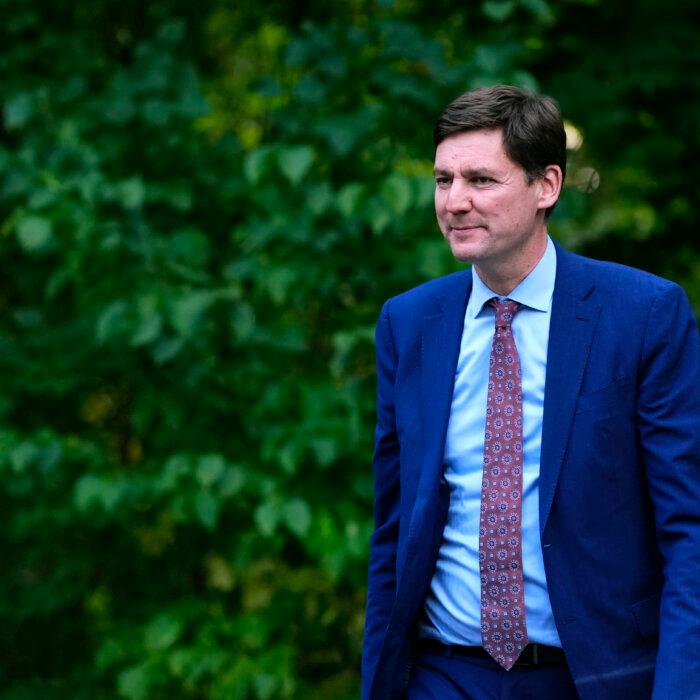
B.C. Premier David Eby had said in an Oct. 24 post on X that his province would also be running ads opposing U.S. tariffs on Canada, saying Americans needed to hear how tariffs raise prices.
However, on Nov. 3 Eby said his province wouldn’t go ahead with airing anti-tariff ads in the United States as previously planned, but would instead coordinate with Ottawa on any ads that may be aired going forward.
“We did have a conversation about the advertisements today, and you know, one of the things that was crucial for me to communicate was that we needed an integrated, coordinated approach with the provincial and the federal government,” Eby said.
“Going forward, we’re going to ensure that our communications are aligned when the time comes to speak with the Americans.”
Chandra Philip, Matthew Horwood, and Paul Rowan Brian contributed to this report.