



Students begin to learn Latin at the school in Grade 5. The academy offers the only public, non-sectarian classical program in Canada, with a curriculum guided by the wish to preserve the wisdom of past generations, drawing on the insights of influential thinkers from the Eastern and Western traditions.
“We want our students to understand that our ancestors were no less intelligent, ingenious, empathetic, kind, courageous than we are, and in fact, they may have virtues that we lack, and so we can learn from them,” Ford told The Epoch Times. “We want them to understand that we are standing on the shoulders of giants.”
At the core of the academy’s philosophy is the belief that education should not merely prepare students for future careers, but more importantly, cultivate individuals who live according to virtue and wisdom, Ford says.


The Alberta Classical Academy opened in 2022 and has since expanded to three locations, two in Calgary and one in Edmonton. Its first Calgary campus enrolled just under 300 students in its first year, and the school has grown steadily, says Ford, with approximately 1,300 students enrolled across all three campuses this year and a waitlist of about 3,000 students last year.
A Sense of Beauty
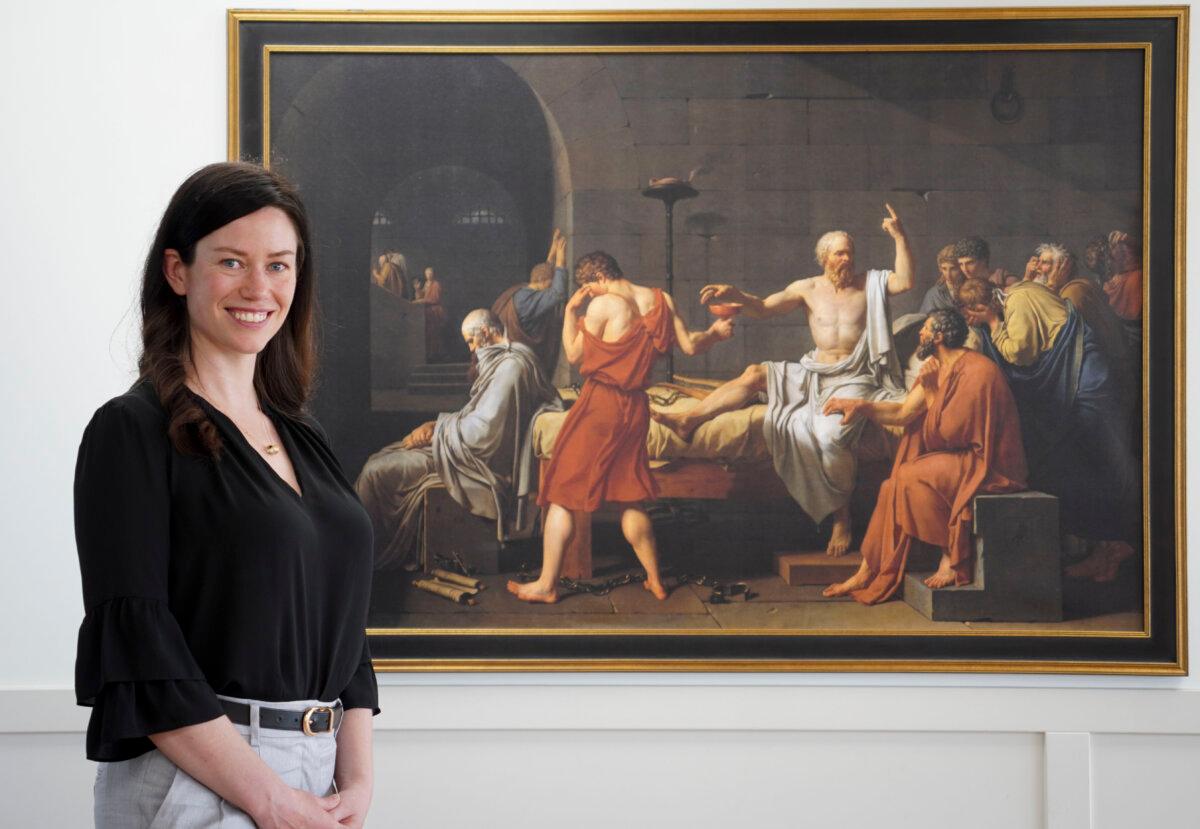
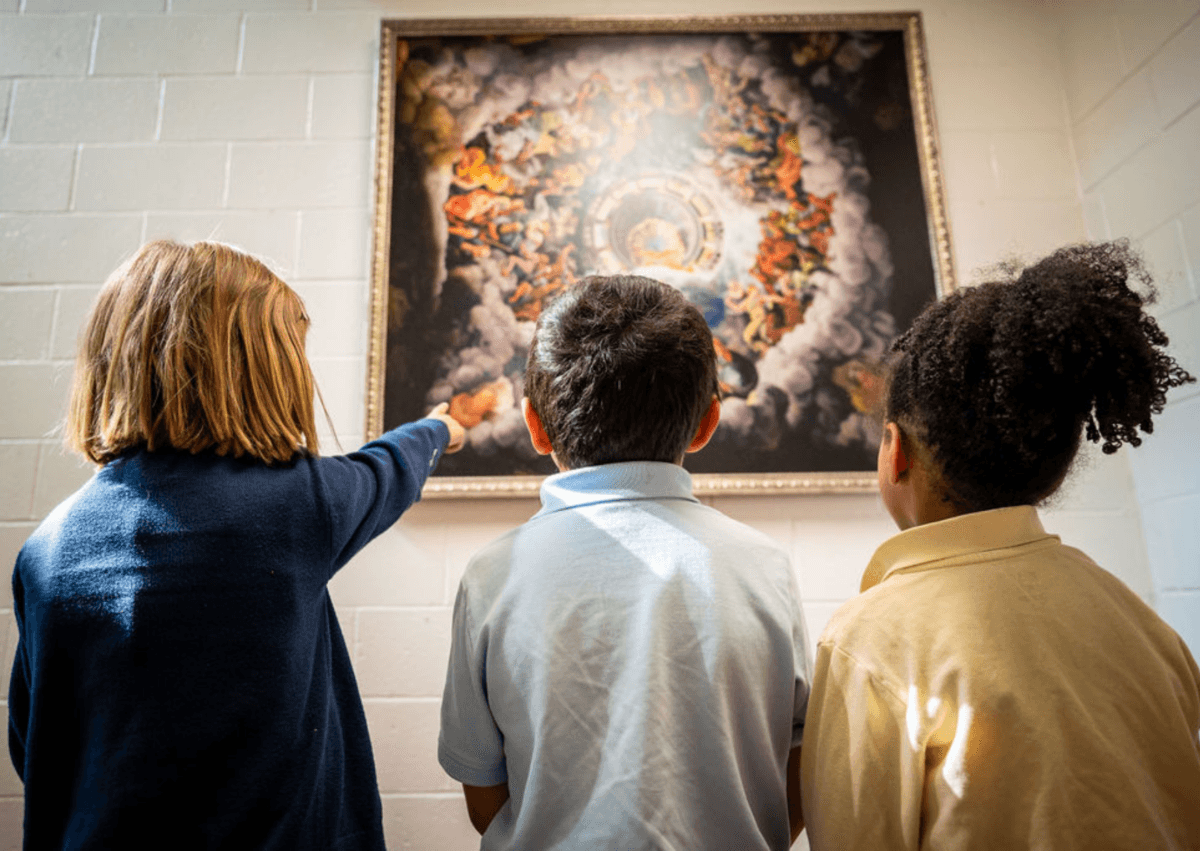
Strolling through the school’s hallways is like stepping into a classical art gallery.Reproductions of renowned works such as Michelangelo’s “The Creation of Adam,” Botticelli’s “Primavera,” Jacques-Louis David’s “The Death of Socrates,” and Shen Zhou’s “Lofty Mount Lu” line the walls, offering students daily exposure to the masterpieces of both Eastern and Western art.
That aesthetic sense is also nurtured through exposure to beautiful language in the form of classic poetry, she says. Students regularly recite poems, which she notes benefits them beyond memory development.
“We want them to have beautifully furnished inner worlds to which they can retire and feel revived and refreshed when they are faced with the tumult of the workaday life,” Ford said.
“When you memorize poetry when you are young, I think it imprints itself in you, on your mind, on your soul and your character, and it’s something you can always turn to as a source of consolation, of wisdom, of inspiration.”
“We talk about the true, the good, and the beautiful,” he told The Epoch Times. “We know innately that we should be teaching the best of what has been thought and said, and some of the great works of art and literature.”
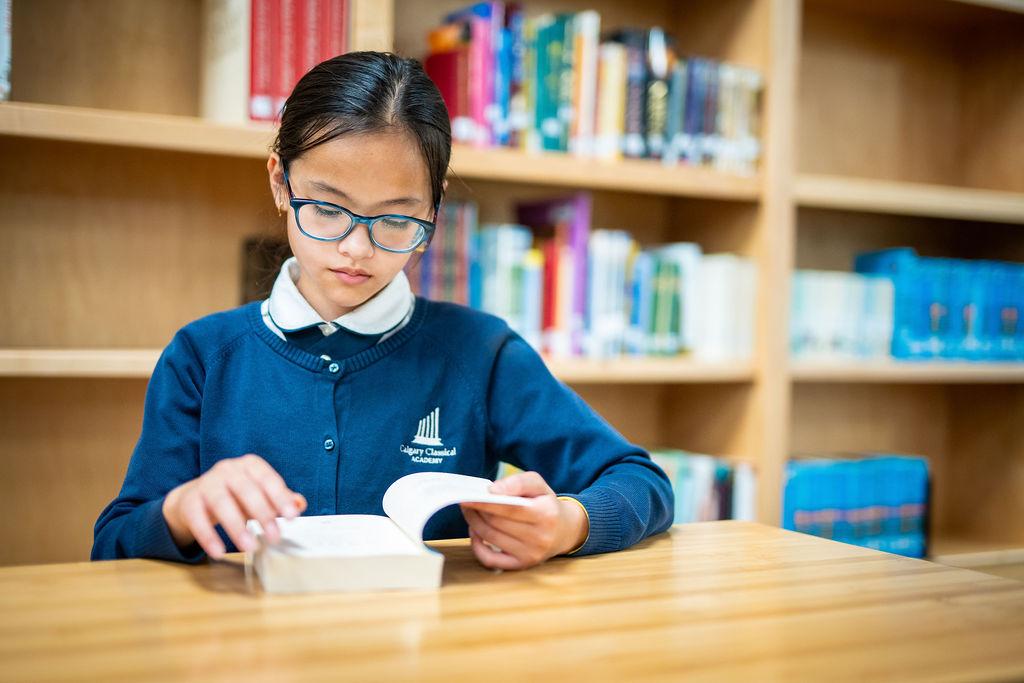
Similar standards of beauty guide the academy’s library book selections, Ford says. Books are chosen based on their “literary, aesthetic, and moral” value, with many older, enduring works added to the collection through the efforts of the library team.

“We tend to have a lot of older children’s books and classic texts, things that have stood the test of time and been appreciated by multiple generations,” Ford said.
She notes that some contemporary children’s books feature illustrations that are “crude” or “cartoonish,” which she says may be influenced by the belief that children’s books should look as though they were illustrated by children.
Assessing Virtue
One of the ways in which the Alberta Classical Academy differs from other schools is that it includes virtue assessment on student report cards. Hertzsprung says this reflects the school’s belief that character development is just as important—if not more so—than the academic skills taught in each subject.Teachers assess students’ virtue based on their observations of how they behave. “We look at the outward acts. So how can you tell if someone is benevolent? Well, you'll see it in their actions in class or around the school,” Hertzsprung said.
“We always say [that] actions speak louder than words. So if you are courageous, if you are benevolent, if you practice fortitude, those things become evident in your actions.”

Uniforms
Students are required to wear school uniforms at the Alberta Classical Academy. In Grades 5 to 10, girls typically wear tartan kilts, cross-ties, and crested blazers, while boys wear tartan ties and blazers.Students are expected to maintain neatly brushed or styled hair that is natural-looking and conservative in colour and cut. Girls may wear minimalist, conservative jewelry such as simple stud earrings or pendant necklaces, but no more than one of each item. Natural-looking makeup is permitted beginning in Grade 9.
One of the benefits of wearing uniforms, Ford says, is that it creates a “level playing field” for students in their outward appearance, regardless of their socioeconomic, ethnic, or religious background.
She adds that by following uniform and grooming policies, students develop habits of propriety and etiquette, learning to take care of their appearance—not out of vanity, but as a sign of respect for themselves and others.
“It also takes the emphasis off of, let’s say, trends or fads, or the use of clothing as a way of expressing yourself,” Ford said.
Timeless Skills, Languages
The academy emphasizes traditional skills such as handwriting and the ability to conduct research using reference libraries rather than the internet. It maintains a strict low-tech policy, discouraging laptop use and prohibiting smartphones on campus.“We think our students should learn handwriting, they should learn to think for themselves, and they should learn how to research, and also not just to rely on other people’s summaries,” Ford said.
She noted that the rise of artificial intelligence has made it harder for students to develop basic skills, as reliance on the technology grows. This, she says, makes the preservation of those timeless skills even more necessary.
The academy’s passion for preserving traditional knowledge and skills also extends to languages. Ford says there are several reasons why Latin is taught as a mandatory subject in Grades 5 to 8.
On the other hand, Latin is a “very ordered case-based language,” says Ford, making its acquisition a process similar to studying math, which requires discipline, attention, and trains the student to “think clearly.”
In addition, Latin can give students access to knowledge that might otherwise be out of reach.
“We think it’s really important that students be able to link with previous generations and see themselves as just one link in a chain that binds together the past and the future.”


