The Organisation for Economic Cooperation and Development (OECD) has found Australian industries are less and less competitive, falling behind the United States.
In a newly released survey, the OECD praised the Australian government’s attempts to turn the economy around following the COVID-19 pandemic, but warned that “a sustained consolidation effort” is needed at both national and state levels to reduce budget deficits.
The OECD found competition had weakened over the past two decades, with a small number of companies dominating across many sectors.
“One way to measure this is the proportion of sales accounted for by the four largest firms in each industry,” the report said.
“By this measure, industry concentration in Australia is notably higher than in the United States and has been rising over the past two decades.
“Fewer entrepreneurs are starting new firms, leading to less experimentation and innovation, while falling exit rates suggest that unproductive firms survive longer, reducing the resource reallocation necessary for a dynamic economy.”
Australia’s Economic Challenges
It its latest economic survey (pdf) of Australia, the OECD said Australia was still running a large budget deficit, with long-term costs likely to rise due to its ageing population and climate change.“The general government deficit increased in 2024- 25 and is planned to increase further in 2025-26,” the report said.
According to the federal government’s most recent forecast, budget deficit is expected to reach $36.8 billion (US$25.2 billion) in 2025–26.
“While this has helped to support the economy during a period of weak private demand, fiscal adjustment will be needed to narrow the deficit.”
Meanwhile, wage growth is still recovering from the aftermath of the COVID-19 pandemic.
“Real wages fell markedly from late 2021 through mid-2024 as nominal wage growth lagged behind inflation, weakening growth in household consumption. With inflation having fallen back, real wages are now recovering and consumption growth is picking up,” the OECD said.

Weak Productivity Growth
Productivity growth is also a major concern for Australia as it has dropped significantly in the past three decades.“Growth in Australian labour productivity—measured as GDP per hours worked—was robust during the mid-1990s to early-2000s, averaging around 2.5 percent, in part driven by deep microeconomic reforms, including those associated with the Hilmer National Competition Policy Review,” the report said.
“In the mid-2000s, productivity growth began to slow and over the decade prior to the onset of the pandemic, average annual productivity growth was 1.1 percent.”
And by 2020-2024, productivity was in negative territory, standing at around minus 0.3 percent.
Other notable challenges facing Australia’s economy included high living costs and housing affordability.
“Taking into account purchasing power parity, the price level for a representative basket of household goods and services is well above the OECD average,” the report said.
“Home ownership is expensive, with the median mortgage burden as a share of disposable income higher than any other OECD members save France and Luxembourg.”
The report recommends addressing accommodation affordability by reducing planning barriers and increasing housing supply, particularly in major cities; transitioning away from stamp duty on property purchases in favour of land taxes; and reducing tax concessions on housing, such as negative gearing and the capital gains discount, in order to ease price rises.
And while Australia’s carbon emissions are on track to reach the country’s 2030 target, primarily due to reductions achieved in electricity generation, the OECD noted that reaching net zero by 2050 will require the country to cut down transport and agricultural emissions.
OECD Report a ‘Powerful Endorsement’ of Labor Policies: Treasurer
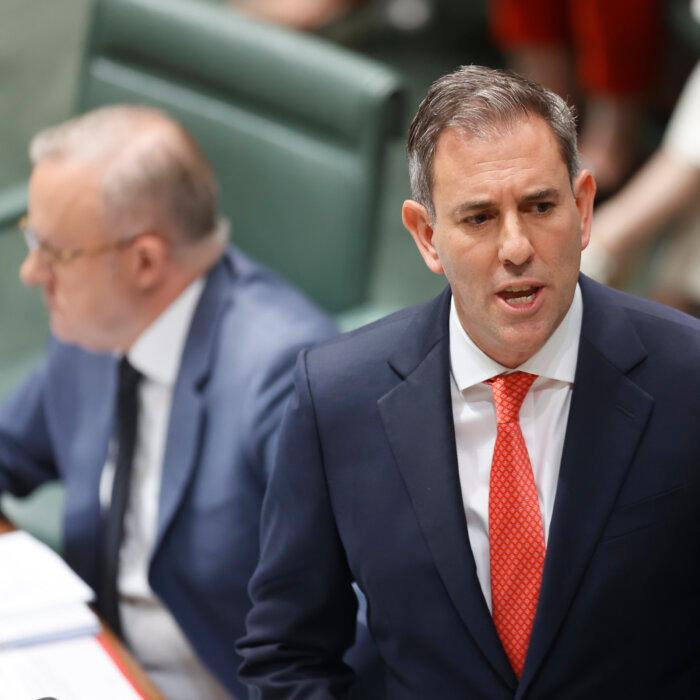
Meanwhile, Chalmers has described the report as a “powerful endorsement” of Labor’s economic management and reform agenda.“The report says that without Labor’s economic management, including cost of living support to households, Australia might have experienced a recession in 2023–24–which is what took place in other countries like the UK, New Zealand and Germany,” he said in a statement.
“It commends the government’s reforms to transform Australia’s energy system, to make Australia’s economy more competitive and to make the Reserve Bank more effective.”