A recent report from the Organisation for Economic Co-operation and Development (OECD) is calling on Canada to reduce the amount of financial support it gives to the dairy, chicken, and egg industries, saying the practice inflates domestic prices and disrupts competitive trade.
The system, established in the 1970s, establishes production quotas calculated by measuring domestic demand and limits imports by setting high tariffs on imports that would surpass the established limits in order to keep supply stable, and assure a fixed income for producers.
The OECD is an international organization comprised of 38 member nations founded in 1961 that researches and analyzes data and issues policy recommendations which it says is done in order to assist governments in improving the wellbeing of their economies and societies.
The report observes that government backing of Canada’s agricultural sector accounted for 8.2 percent of gross farm receipts at a consistent level between 2022 to 2024, with a much larger proportion of the government support going to dairy, poultry, and eggs. Farm receipts serve as a measure of farm revenue.
Although the OECD average of government support for agriculture sits at 13.2 percent, the report says that Canada’s outsized support of dairy, poultry, and eggs are acting as an anti-competitive market force that raises prices in Canada and interferes with trade.

“These forms of protection hinder market responsiveness and discourage innovation in those sectors,” the report reads. “Reforms should be undertaken, involving larger production quotas and gradual reduction of price support for greater efficiency and diversification into higher value products.”
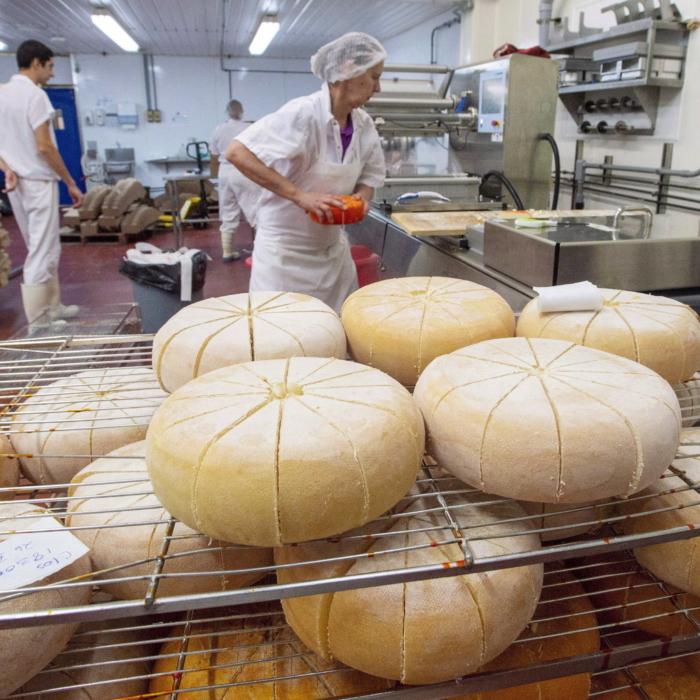
Canada has strict laws against selling dairy, chicken, turkey, and egg products without first obtaining quota permission from Ottawa. This leads to some producers discarding milk when they produce in excess of the allowed amount. Dairy producers discard up to 300 million litres of milk per year, according to rough estimates from food industry experts.
The OECD report also noted that milk received “particularly high single commodity transfers” in 2022-2024, amounting to 28 percent of commodity gross farm receipts.
Canada applied average tariffs of 14.4 percent on incoming agricultural products, according to the OECD report, noting that Canada has the power to levy tariffs of up to 250 percent on U.S. dairy imports that exceed a set quota established in the United States-Mexico-Canada Agreement.
U.S. Secretary of Commerce Howard Lutnick said in July that until Canada opens its market, the 35 percent tariffs applied on Aug. 1 will continue, although neither Lutnick nor Trump have specifically asked for the supply management system to be lifted.
Prime Minister Mark Carney has said that any potential changes to the supply management system will not be included in trade talks with the United States. Organizations such as the Dairy Farmers of Canada say the program is necessary for the security of Canada’s food supply and “food sovereignty.”