The New South Wales (NSW) budget, delivered on June 23, reveals the state government is projected to record a $2.3 billion (US$1.59 billion) deficit in 2026–27, more than double the figure forecast in the half-yearly update.
However, NSW Treasurer Daniel Mookhey has forecast a return to surplus, projecting it at $1.1 billion in 2027–28, rising to $1.8 billion in 2028–29 and $1.9 billion in 2029–30.
Key Areas of Government Spending
The NSW government is expected to set aside $116.7 billion for the state’s four-year infrastructure program, aimed at replacing ageing assets, providing the power and water connections needed for new homes, and delivering essential infrastructure such as schools and hospitals.The budget also includes $11.9 billion for health infrastructure, including the construction of a new hospital at Rouse Hill in Western Sydney and the redevelopment of Bankstown Hospital.
The budget also allocates $9.2 billion to build and upgrade more than 260 schools, including $4.1 billion to be spent in Western Sydney, providing capacity for 30,000 additional students. New high schools will also be built in Austral and Bella Vista, and $2.3 billion will go toward building and upgrading schools in regional areas.
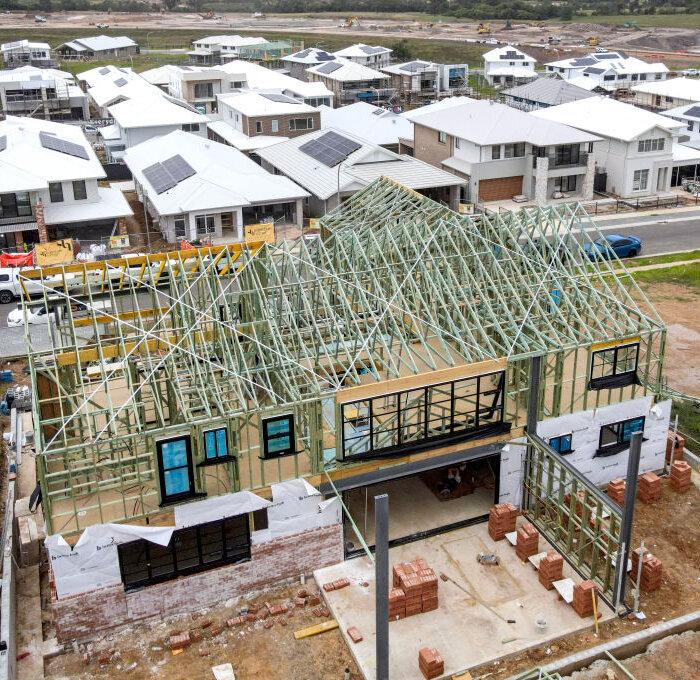
The government will spend $32 million over four years to modernise the building approvals system and speed up the deployment of modular housing, with a new modular housing factory to be created in partnership with business.
There is also an initial $31 million to support the delivery of 8,500 new homes in the Bays West precinct, along with $52 million to establish the Development Coordination Authority, which is intended to streamline planning decisions across government agencies and help the state meet its target of 377,000 new homes by July 2029.
A further $450 million is allocated for build-to-rent dwellings for essential workers.
Public transport will also receive a boost, with $6.5 billion allocated over 10 years for thousands of new electric buses and upgraded depots to support them. In addition, $2.1 billion will be spent on maintaining and improving the reliability of the Sydney Trains network.
Opal fares will be frozen at 2025 levels for the year, and frustrated commuters will be dealt with by a new passenger care and support team.
Support for Jewish Community
Six months on from the Bondi Beach terror attack, the budget includes $8.3 million in support for the Jewish and Bondi communities.Waverley Council will get $2 million to help install a permanent memorial, while another $2 million will go toward community forums, school-based support, and trauma-informed programs.
The Jewish Board of Deputies will receive a $1 million grant to provide additional community support, and $500,000 will be allocated over the next six months for the Community Security Group’s 24-hour security operations centre.
The package also includes $2.6 million for the Sydney Jewish Museum to create more modern anti-Semitism exhibitions.
The state’s firearms registry will receive nearly $42.8 million to strengthen checks and licence processing, while NSW Police will receive $94.3 million to create a specialised armed response command with a 24/7 operations centre and rapid response vehicles.
NSW has also been hit by three Reserve Bank interest rate rises since early 2026, leading to an $8.4 billion deterioration in property-related tax revenues.