Nobel Peace Prize Winner Machado Says Maduro’s Exit Inevitable

Machado has described the Maduro government as a criminal structure funded by trafficking networks.
Nobel Peace Prize Winner Machado Says Maduro’s Exit Inevitable
Nobel Peace Prize laureate and Venezuelan opposition leader María Corina Machado speaks during a press conference with Norwegian Prime Minister Jonas Gahr Stoere (not pictured), a day after the award ceremony, in Oslo, Norway, on Dec. 11, 2025. Leonhard Foeger/Reuters
|Updated:
0:00
Nobel Peace Prize laureate María Corina Machado said on Dec. 12 that Venezuelan President Nicolás Maduro would leave power, whether through a negotiated handover or otherwise, stressing that her priority was to achieve a peaceful transition.
Machado, one of Venezuela’s most prominent opposition figures, made the remarks in Oslo after defying a travel ban imposed by the Maduro government and arriving in Norway on Dec. 10, hours after a Nobel Institute ceremony presented her award that was collected by her daughter.

She had spent 11 months in hiding in Venezuela before leaving the country.

“Maduro will leave power, whether it is negotiated or not negotiated,” Machado told a press conference in Oslo on Dec. 12. She added that her focus remained “an orderly and peaceful transition” for Venezuela.

A former presidential candidate barred from holding office by Venezuelan authorities, Machado has also said that policies pursued by U.S. President Donald Trump had been decisive in weakening Maduro’s grip on power.

“Because before, the regime thought it had impunity. ... Now they start to understand that this is serious, and that the world is watching,” she said in comments to reporters on Dec. 11.

US Role and Pressure on Caracas

Relations between Washington and Caracas remain tense, with the United States leading a campaign to disrupt what it describes as criminal networks linked to the Venezuelan government.
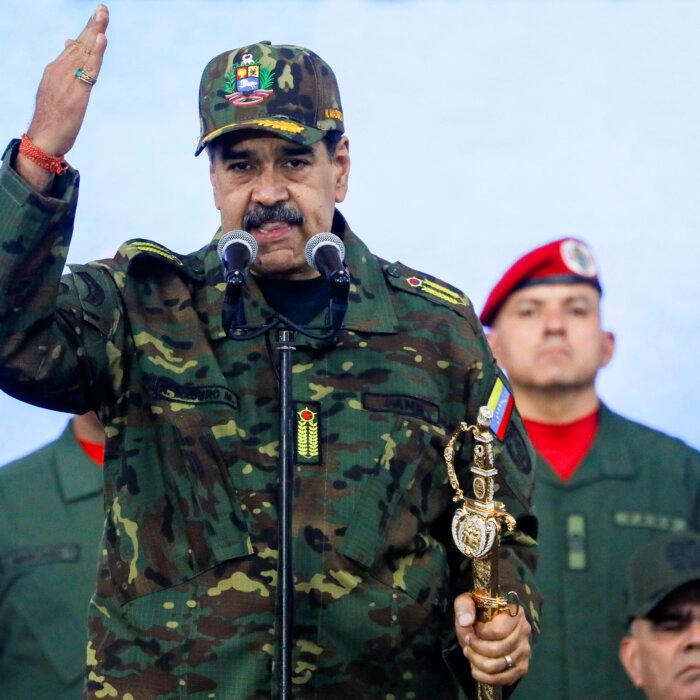
U.S. officials accuse Maduro and his allies of profiting from drug trafficking, corruption, and sanctions evasion, allegations the Venezuelan government denies.

On Dec. 11, the U.S. Department of the Treasury announced sanctions against three family members of Maduro and six businesses, as well as the oil tankers they operate, accusing them of helping move Venezuelan oil in violation of U.S. restrictions.

“Nicolas Maduro and his criminal associates in Venezuela are flooding the United States with drugs that are poisoning the American people,” said Treasury Secretary Scott Bessent.

The sanctions followed the U.S. seizure of an oil vessel on Dec. 10 and came after a series of military strikes targeting boats that U.S. authorities say were involved in drug trafficking operations in the Caribbean.

“Under President Trump’s leadership, Treasury is holding the regime and its circle of cronies and companies accountable for its continued crimes,” Bessent said.

White House press secretary Karoline Leavitt, speaking at a press briefing on Dec. 11, confirmed that the seized vessel was being processed by U.S. authorities.

“The vessel is currently undergoing a forfeiture process,” Leavitt said, adding that the United States intended to seize the oil aboard.

Maduro has repeatedly accused Washington of seeking to overthrow him and seize Venezuela’s vast oil reserves.
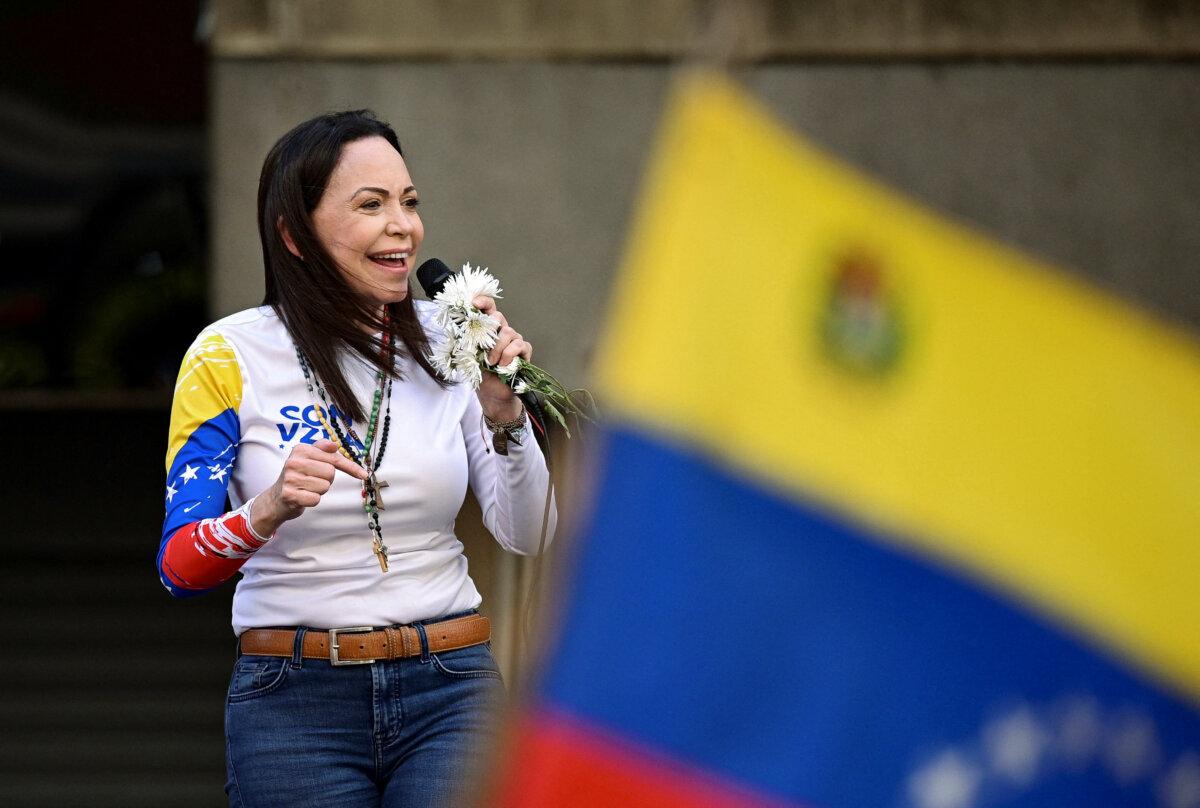
Venezuelan opposition leader María Corina Machado addresses supporters at a protest ahead of the inauguration of President Nicolás Maduro for his third term, in Caracas, Venezuela, on Jan. 9, 2025. (Gaby Oraa/Reuters)
Venezuelan opposition leader María Corina Machado addresses supporters at a protest ahead of the inauguration of President Nicolás Maduro for his third term, in Caracas, Venezuela, on Jan. 9, 2025. Gaby Oraa/Reuters

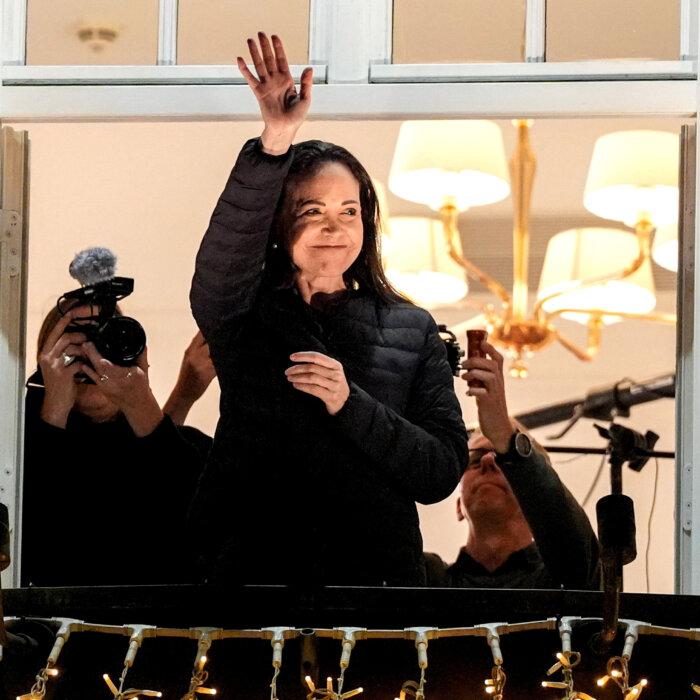
Machado has framed the Maduro government not simply as an authoritarian regime but as a criminal enterprise sustained by illicit activities.

Speaking to the BBC in an interview aired on Dec. 11, she said drug trafficking and human trafficking were central to how the government finances itself.
“We need to address this regime not as a conventional dictatorship, but as a criminal structure,” Machado told the BBC, repeating her call for the international community to help Venezuela “cut those inflows” of criminal resources.

Return to Venezuela

Despite her high international profile, Machado said she planned to return to Venezuela once she believed conditions allowed.

Speaking to reporters in Oslo on Dec. 11, she said the timing of her return would be dictated by security concerns rather than political developments.

In the BBC interview on Dec. 11, Machado was explicit about her intentions and the dangers involved.

“Of course I’m going back,” she told the BBC. “I know exactly the risks I’m taking.”
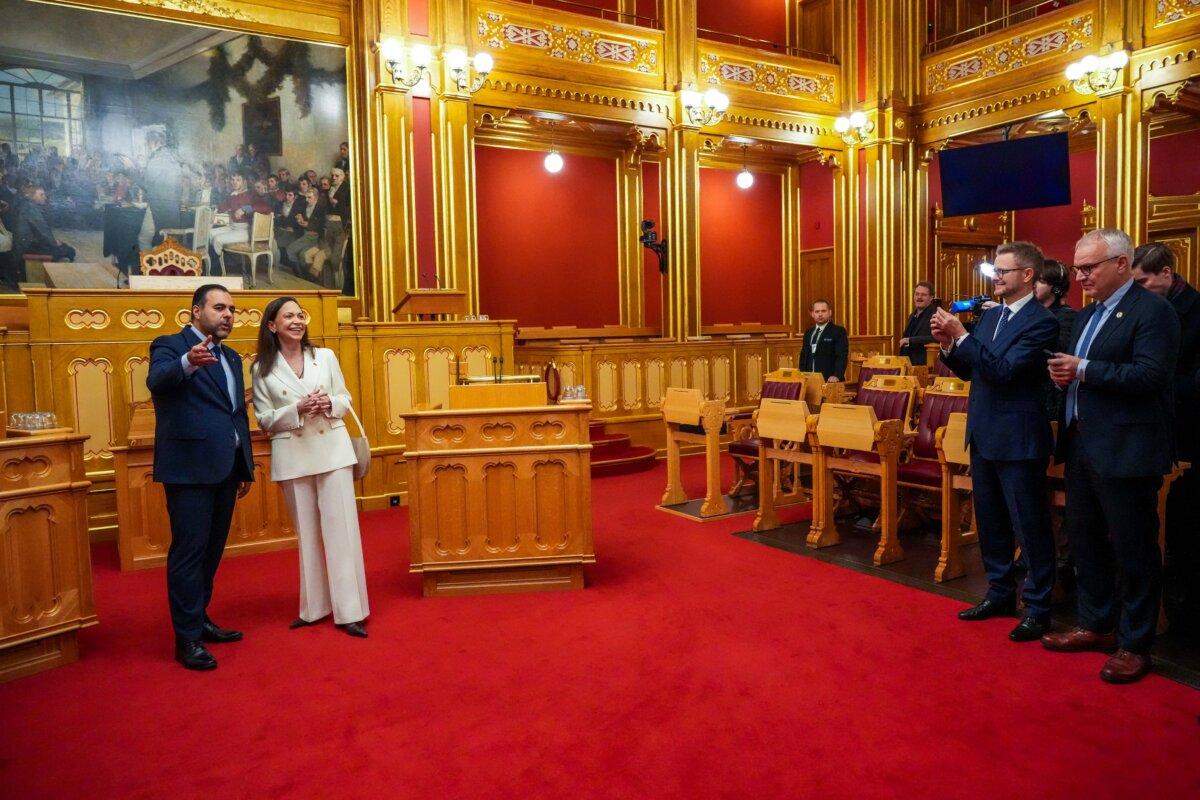
Nobel Peace Prize winner María Corina Machado visits the Storting with the President of Norway's Parliament (Storting) Masud Gharahkhani in Oslo, on Dec. 11, 2025. (Ole Berg-Rusten/NTB/AFP via Getty Images)
Nobel Peace Prize winner María Corina Machado visits the Storting with the President of Norway's Parliament (Storting) Masud Gharahkhani in Oslo, on Dec. 11, 2025. Ole Berg-Rusten/NTB/AFP via Getty Images

She said she was determined to be where she could have the greatest impact.

“I’m going to be in the place where I’m most useful for our cause,” Machado said. “Until a short time ago, the place I thought I had to be was Venezuela, the place I believe I have to be today, on behalf of our cause, is Oslo.”

The Nobel Committee has faced questions about whether Machado’s outspoken stance could be seen as endorsing confrontation.

In the awards ceremony, on Dec. 10, Norwegian Nobel Committee chairman Jorgen Watne Frydnes said, “Ms Machado has appealed for international attention, support and pressure—not for an invasion of Venezuela.”

“She has urged people to stand up for their rights using peaceful, democratic means,” he added.
Google LogoMark Us Preferred on Google
Evgenia Filimianova
Evgenia Filimianova
Author
Evgenia Filimianova is a UK-based journalist covering a wide range of international stories, with a particular interest in foreign policy, economy, and UK politics.