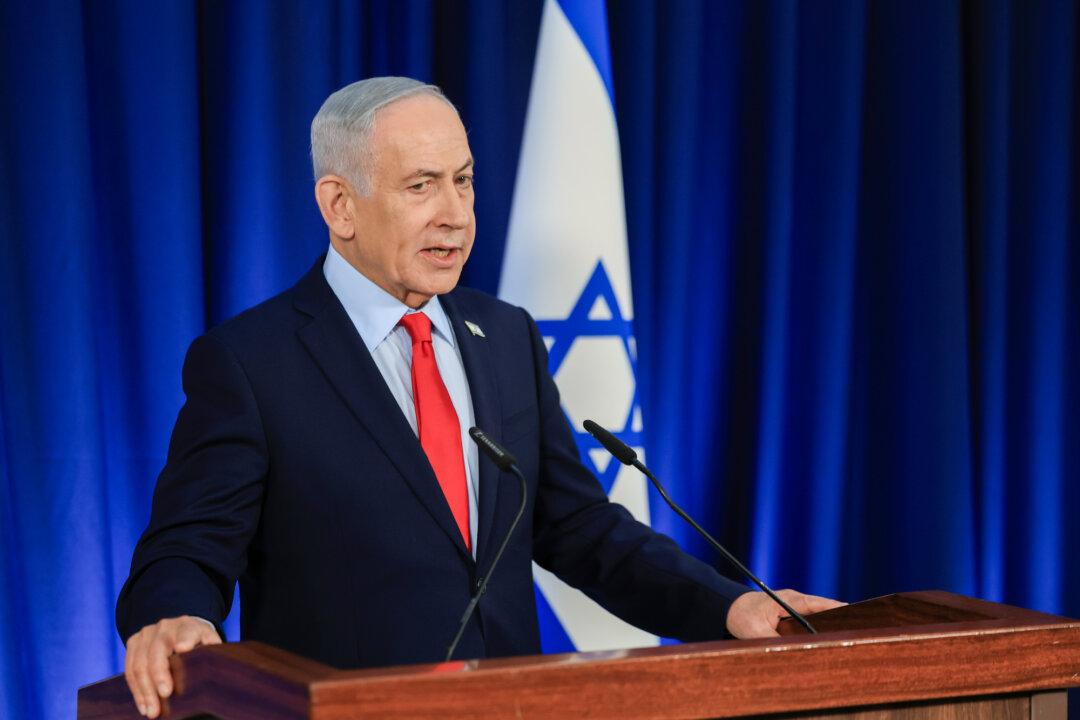
Speaking to reporters following meetings with U.S. Trade Representative Jamieson Greer on Sunday and U.S. Commerce Secretary Howard Lutnick on Monday morning, Sefcovic said the discussions remained a review of current bilateral ties rather than negotiations.
He and 27 EU trade ministers are scheduled to continue talks with the U.S. delegation on Monday.
The trade pact says both sides will explore ways to protect their domestic markets from global steel overcapacity while maintaining reliable supply chains, including the possible use of tariff-rate quotas.
When asked whether a “breakthrough” on the steel tariffs could emerge from this week’s meetings, Sefcovic said, “Today, it’s not about negotiations; this is about the stock-taking exercise.”
He also told reporters in Brussels the meetings were about the “political assessment of the EU-U.S. bilateral relations.”
EU Steel Defenses
Brussels last month proposed sweeping measures to protect the bloc’s steel industry from a surge of diverted imports. On Oct. 7, the European Commission proposed cutting the EU’s tariff-free quota for steel to 18.3 million metric tons a year, nearly half the previous level, with all additional imports facing a 50 percent tariff.The measure would affect suppliers including China, India, Turkey, and the United Kingdom. The plan aims to shield Europe’s steelmakers from market distortions caused by global overcapacity.
Sefcovic said the EU’s focus on overcapacity aligned with U.S. concerns.
“We also recognize that more work lies ahead, especially on steels and derivatives, where we seek both to reduce tariff and to confront global overcapacity together,” he said on Monday.
Energy and Investment Talks Advance
Sefcovic said the EU and the United States were making progress on other aspects of their trade agenda, including energy security.He reiterated the bloc’s commitment to $200 billion in U.S. energy purchases, including increasing U.S. liquefied natural gas (LNG) imports from 45 percent to 60 percent of EU demand.
Sefcovic said the EU had sharply increased its investment flows into the United States this year.
“EU investments into the U.S. has also climbed nearly 154 billion euros since January,” he said, adding that contracts were being negotiated “on the purchase of more than $40 billion of chips for European economy.”
The EU–U.S. talks also covered long-term planning.
“We discussed the forward-looking agenda, including critical minerals, where we share the goal of securing reliable supplies while strengthening our respective industrial base,” Sefcovic said.
He added that EU ministers would also examine relations with China and review free-trade negotiations with India, the United Arab Emirates, and other Asian partners.