



Alberta Premier Danielle Smith says the new agreement with Ottawa on energy policies marks a shift from a difficult decade of obstacles to resource development and will allow Alberta’s oil and gas sector to grow, contributing to nationwide prosperity.
Seven of Nine
The MOU removes or changes seven of the nine Trudeau-government policies that Smith had previously asked to be removed, saying they serve as barriers to the development of the energy sector in her province.One of the changes is the agreement to adjust the ban on oil tankers off B.C.’s coast so that the oil from a future Alberta–B.C. pipeline can be shipped to Asian markets.
Another change is the removal of the oil and gas emissions cap, which Alberta and Saskatchewan have said in effect acts as a limit on production.
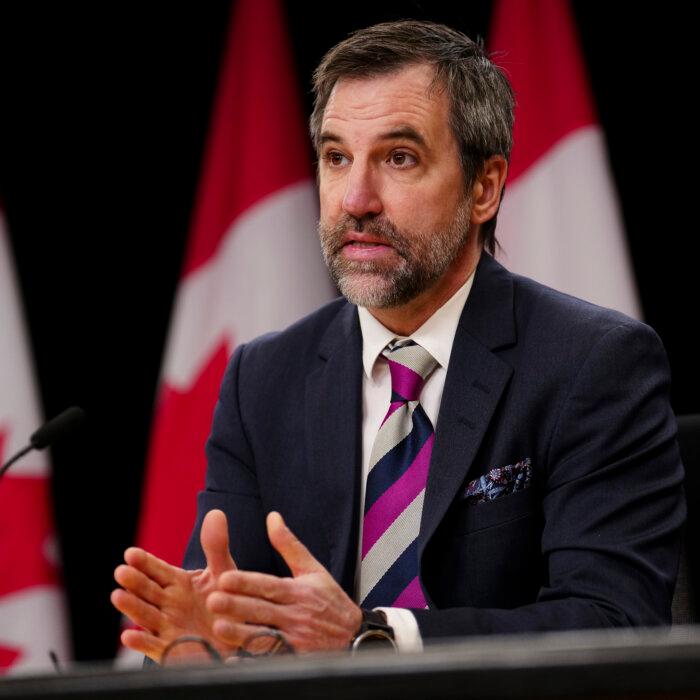
The MOU exempts Alberta from the Clean Electricity Regulations, which imposes net-zero emissions targets on the electricity grid. Alberta and Saskatchewan have been opposed to the proposed regulations since they rely heavily on natural gas for electricity generation.
The MOU also calls for negotiations toward a “cooperation agreement” on the Impact Assessment Act by April 1, 2026. Known previously as Bill C-69, the act has been dubbed the “no more pipelines act” by the government of Alberta due to the regulatory requirements it imposes on major projects such as pipelines.
Other commitments include lifting federal restrictions on energy companies’ advertising of their environmental initiatives, allowing the province oversight over its industrial carbon tax, and working with Alberta to remove restrictions for its export of oil and gas.
She added that the agreement is the “first step” to change the federal policies she says “depressed” the province’s economy over the past decade.
As part of the MOU, Alberta has agreed to increase the industrial carbon tax in the province, and reduce methane emissions from the energy sector by 75 percent from 2014 levels by 2035. The MOU also makes the proposed pipeline project conditional on the development of the Pathways Alliance carbon capture project to reduce emissions.
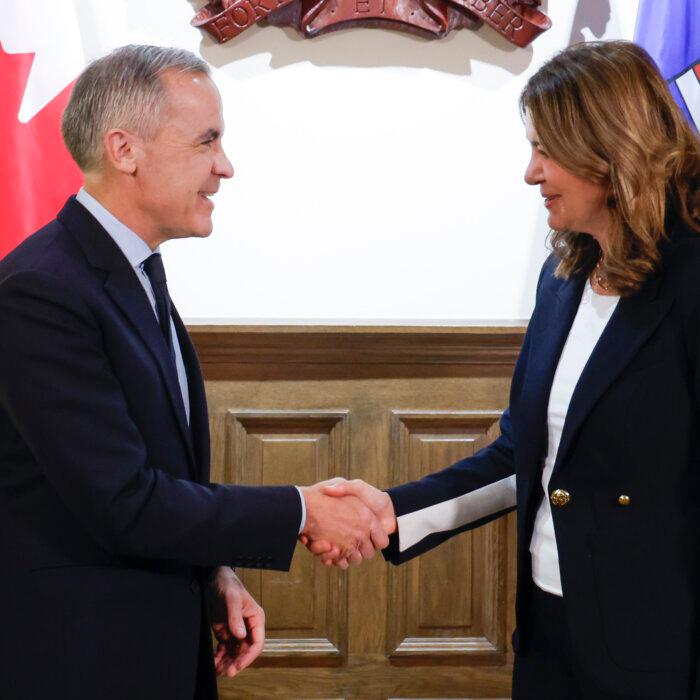
Smith spoke positively about her working relationship with Carney, saying that while they may not agree on everything, they share the goal of promoting prosperity for both Alberta and Canada.
Talks With BC
Regarding B.C.’s opposition to the Alberta–Ottawa deal, Smith said there will be a formal consultation process but noted that the MOU does not give B.C. the power to veto the agreement.“I think that there obviously has to be trilateral discussions with British Columbia to find areas of common ground,” she said.
B.C. Premier David Eby is strongly opposed to the lifting of the tanker ban off the West Coast, citing environmental concerns, and says the proposal for a pipeline without a private proponent acts as a “distraction” from other projects in his province.
“We need to make sure that this project doesn’t become an energy vampire,” Eby said on Nov. 27. “That it cannot draw limited federal resources ... away from the real projects that will employ people [and] provide the country with money that we desperately need.”
President of Coastal First Nations-Great Bear Initiative Marilyn Slett has said that the First Nations she represents are opposed to lifting the oil tanker ban.
“It was clearly affirmed by the courts that this is not British Columbia’s decision to make,” Smith said. “That being said, we understand that there’s a process we have to go through,” she added, noting that that province understands “indigenous partnership is key to that.”
When asked how the agreement would proceed amid opposition from some First Nations, Smith noted that not all indigenous communities oppose the project, with some supporting initiatives she says could bring prosperity to their people.
“As you can see, there are some leaders of some Nations that are in this room [who are] supportive as well, and that’s the nuance that happens ... there’s just different opinions on things,” Smith said.
She added that her indigenous relations minister, Rajan Sawhney, is working on initial engagement that will “ultimately lead to a more formal consultation process, beginning with the spirit of goodwill.”
‘Trust but Verify’
When asked if her government trusts Ottawa to follow through on the deal, given that the pipeline’s construction is still many years away if a private proponent comes forward, Smith said her province will “trust but verify,” holding Ottawa accountable to its commitment.“Although I am not blind to the fact that the people of Alberta have had the rug pulled out from underneath them too many times to count over the past 10 years, I also know that a new relationship and a new beginning needs a starting point grounded in good faith,” Smith said.
Carney said the agreement is an example of “cooperative federalism.”
“We’ve agreed in partnership and in a spirt of trust,” Carney said on Nov. 27. “We look at this as the start of a process. We’ve created some of the necessary conditions for this to happen, but there’s a lot more work to do.”


