This copy is for your personal, non-commercial use only. Distribution and use of this material are governed by our Subscriber Agreement and by copyright law. For non-personal use or to order multiple copies, please contact The Epoch Times Reprints.
Need to Use Frozen Russian Assets ‘Increasingly Urgent’: German Chancellor
Friedrich Merz has been vocal in his support of the idea of using Moscow’s assets immobilized within the EU to fund Ukraine’s war effort and reconstruction.
German Chancellor Friedrich Merz said on Nov. 28 that the need to use frozen Russian assets to fund Ukraine’s war effort was “increasingly urgent.”
He noted that he hoped European Union nations would soon reach an agreement on the issue during a press conference with Slovenian Prime Minister Robert Golob in Berlin.
“I see the need to do this as increasingly urgent,” Merz said.
“Ukraine needs our support. Russian attacks are intensifying. Winter is approaching, or rather, we are already in winter. And in this regard, I hope that we can come to a joint solution within the European Union.”
Golob echoed these sentiments, saying that the frozen assets “are the most powerful weapon the EU has at its disposal to achieve peace in Ukraine,” according to Slovenian outlet Delo.
Russian assets worth up to $250 billion have been frozen in the EU since the United States and its allies banned transactions with Moscow’s central bank and finance ministry after Russia invaded Ukraine in February 2022.
So far, the EU has taken only interest generated from the immobilized Russian assets.
Discussions within the EU are underway to find a way to use the frozen assets to further finance Kyiv’s defense and the country’s reconstruction without directly confiscating them, because of legal constraints.
The precise details of how the assets would be used have yet to be finalized, but Merz set out his ideas for the plan in September, suggesting that the EU give Ukraine an interest-free loan of almost 140 billion euros (approximately $160 billion).
Although many within the bloc have thrown support behind the idea, others, including Luxembourg, Belgium, and Hungary, as well as organizations such as the European Central Bank, have voiced concerns.
Chief among the objectors is Belgium, which is home to Euroclear, a financial market infrastructure group that holds the majority of frozen Russian assets in the EU.
Last month, Belgian Prime Minister Bart De Wever said he would remain opposed to the loan until he secured three guarantees from the EU: the full mutualization of risk, that every member state would help foot the bill if the money had to be repaid, and that every country that had immobilized Russian assets would move together.
On Nov. 27, the Financial Times reported that De Wever had written a letter to European Commission President Ursula von der Leyen, saying that moving ahead with the idea could derail any peace deal.
“Hastily moving forward on the proposed reparations loan scheme would have, as a collateral damage, that we as EU are effectively preventing reaching an eventual peace deal,” he wrote.
The commission, which acts as the EU’s executive branch, confirmed on Nov. 28 that it had received De Wever’s letter and that intensive discussions were taking place, including with Belgium.
“These are uncharted waters, so it’s legitimate to ask questions, to share concerns, and we are really doing our utmost to address those concerns in a satisfactory manner,” Commission chief spokesperson Paula Pinho said, responding to a question as to whether Belgium was trying to add further conditions before it assents to the loan.
Discussing the issues raised by Belgium in Berlin, Merz said he had spoken to De Wever and understood his concerns but said that “the use of Russian frozen assets is necessary,” Delo reported.
He also said any decision to use the assets must be taken unanimously.
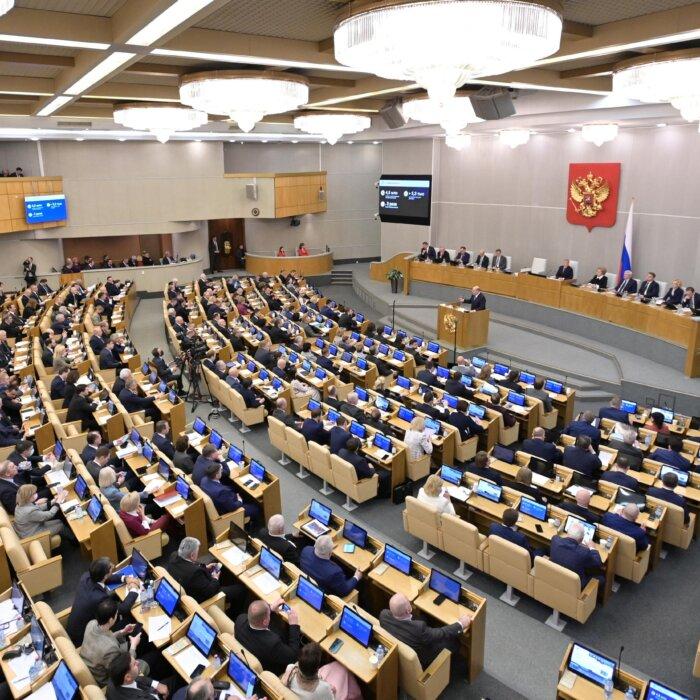
Russia has repeatedly stated that using any of its frozen assets to fund Ukraine would be considered “theft” and intimated that it would respond in kind should the EU attempt to move ahead with its plan, with the Russian Duma passing a resolution on Nov. 20 calling for action against Belgium, Euroclear, and “unfriendly investors” if the assets are used.