More than half of Canadians say the country’s public school system has gone off course over the past two decades, and support a return to traditional teaching methods and discipline practices, according to a recent poll.
Twenty-three percent said it was headed in the “right direction,” while the remainder had no opinion, according to the latest school system survey report released by SecondStreet.org on March 31.
The survey was conducted online among 1,659 Canadian adults between Feb. 27 and March 1. Bacchus Barua, research director of the think tank, said the responses suggest Canadians “want to go back to the way things were” in the K-12 system of the early 2000s.
‘Traditional Responses’
The think tank noted that the latest poll results build on its past opinion research, including a 2024 survey that found Canadians were particularly concerned about “a lack of accountability and discipline” in public schools.In terms of disciplinary measures, 72 percent of respondents in the newest poll said they support reverting to more “traditional responses” to student misconduct, including sending misbehaving students to the principal’s office, phone calls home, and suspensions. In comparison, 12 percent opposed these measures, while 16 percent were unsure.
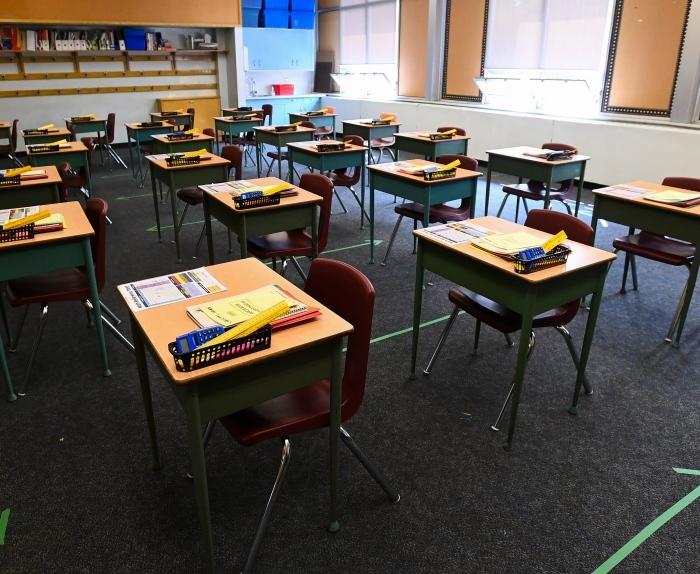

A higher proportion (74 percent) believe teachers should have the authority to reduce a student’s marks on assignments submitted late—a practice that “varies considerably” across the country, SecondStreet.org noted.
‘Back to Basics’
The poll also indicated there were even more respondents (77 percent) in favour of abandoning the “no fail” policies, which allow students to move up a grade regardless of their performance. About one-in-ten (12 percent) disagreed with such a move, while 11 percent didn’t have an opinion.“In other words, most Canadians believed students should be able to demonstrate their ability to understand core subject matter (reading, writing, math) in order to move on to the next grade,” the report said, noting opposition to “no fail” policies is strongest in Atlantic Canada (83 percent) and weakest in Prairie provinces of Saskatchewan and Manitoba (68 percent).
Second Street also noted ongoing shifts in Canadians’ attitude toward curriculum and teaching methods. It found that 56 percent of those surveyed think schools should “get back to basics” and use traditional methods to teach core subjects such as reading, writing, and mathematics.
One traditional teaching method highlighted in the report is the phonics-based system, which requires children to understand the relationship between letters and sounds and to decode words by sounding them out. The new teaching methods, on the other hand, often teach students to recognize words by “remembering what they look like, or using visual cues like pictures,” according to the report.
Support for a back-to-basics approach was highest in Ontario (60 percent) and lowest in Quebec (50 percent), SecondStreet.org wrote.
It added that “a notable difference” was observed between households with children and those without in their support for back-to-basics approaches, with the former at 51 percent and the latter at 59 percent.
“The majority of respondents in both groups still supported a shift to traditional measures,” the report said.