



Canadian border officers have arrested a man after seizing more than 40 firearms, various firearm parts, and thousands of rounds of ammunition at a Windsor, Ont., address, as part of a firearms smuggling investigation linked to Canada’s southern border.
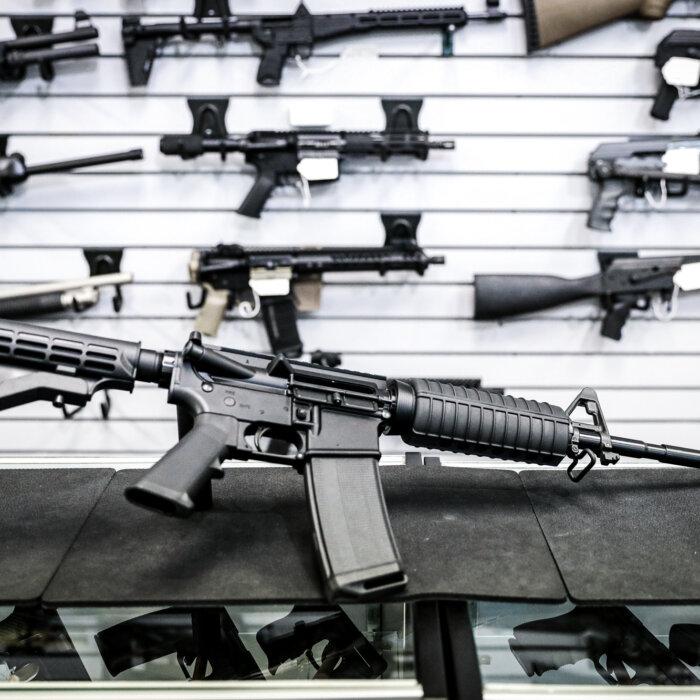
Hengwei Zhong, a 30-year-old Windsor resident, has been arrested and charged in connection with the seizure of 48 firearms, 30 prohibited conversion devices, several firearm parts, 175 ammunition storage devices—of which 104 were prohibited—and nearly 17,000 rounds of ammunition, the Canada Border Services Agency (CBSA) said in a Sept. 29 news release.
The seizure followed the execution of a search warrant on July 17 at a Windsor address that resulted from an investigation launched earlier this year by the CBSA’s Ontario Firearms Smuggling Enforcement Team.
The probe began after border officers in Windsor, Toronto, and Montreal intercepted four parcels from the United States containing firearm parts and tools used to manufacture guns, all destined for the same Windsor address.
“Illegal weapons are a significant threat to public safety and stopping them from getting onto our streets is critically important,” said Public Safety Minister Gary Anandasangaree, commenting on the CBSA’s seizure.
“This investigation demonstrates our strong commitment to securing our borders and preventing criminals from getting their hands on illegal weapons. Canadians are safer because of CBSA’s work.”
Zhong was charged under the Customs Act and Criminal Code with one count of smuggling a controlled or regulated device, one count of smuggling a prohibited device, one count of unauthorized importation of a prohibited device, one count of attempt to manufacture a firearm, two counts of possession of a prohibited device without a licence, three counts of improper storage of a firearm, and three counts of possession of a firearm at a place other than indicated on a licence.
Zhong was scheduled to appear in court on Sept. 29, the CBSA said.
Last year, 90 percent of firearms seized at the Canadian border came from the United States, according to Ottawa.
Citing the need to curb gun crime, and firearm smuggling and trafficking, Canada in 2023 adopted former Bill C-21, which included measures such as increasing the maximum penalty for firearm trafficking, smuggling, and related offences from 10 to 14 years in prison.
The legislation also codified the national firearm ban into law, which Ottawa says is necessary to stop individuals from transferring handguns or importing new handguns into the country. However, the ban has faced opposition, with the Conservatives saying it targets law-abiding firearm owners instead of criminals.
Meanwhile, a survey conducted earlier this year found that 55 percent of Canadians believe the most effective way for Ottawa to reduce gun crime is by targeting illegal firearm smuggling from the United States, rather than pursuing the ban and buyback program.
Cross-border crime has received increased attention in recent months after U.S. President Donald Trump imposed tariffs on Canada citing concerns over border security. Canada has taken measures to boost border security, including a $1.3 billion border plan.
It has also introduced Bill C-2, also known as the Strong Borders Act, which intends to amend multiple acts and implement other changes to increase border security. The bill has faced criticism by the Opposition over its possible impact on Canadian’s Charter rights.


