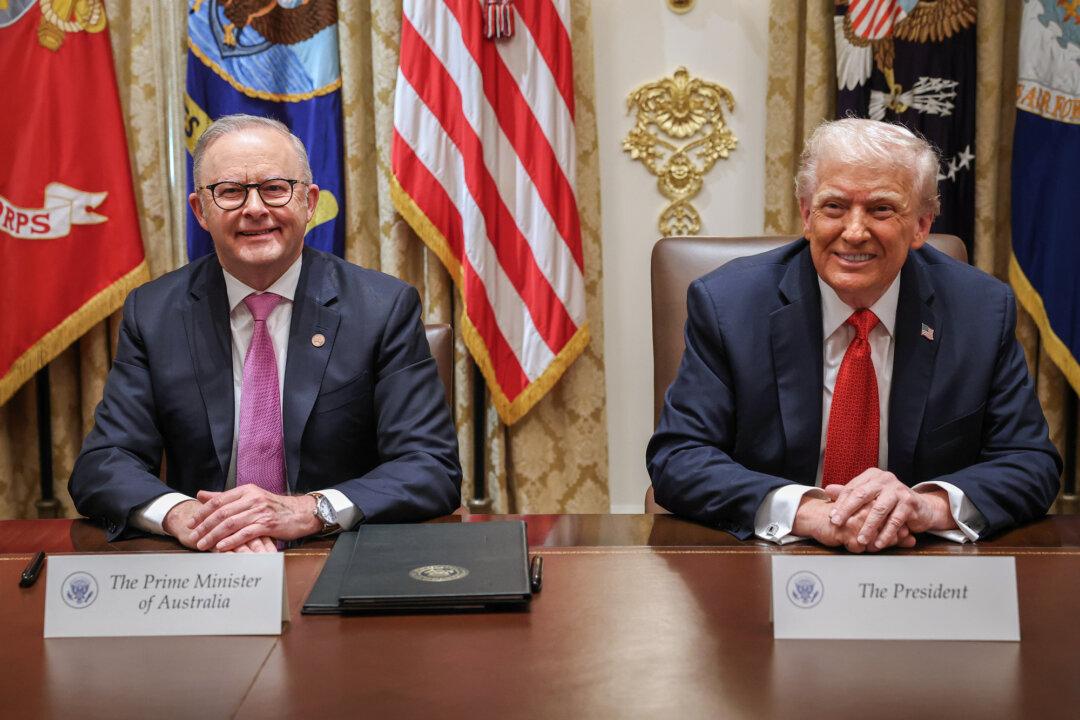
U.S. President Donald Trump has weighed in on Australia’s decision to lift restrictions on U.S. beef imports, vowing to sell “so much” of it down under.
The president also hinted at expanding U.S. beef sales into other nations.
“After many years Australia has agreed to accept American beef,” he wrote on Truth Social.
“For a long time, and even though we are great friends, they actually banned our beef. Now, we are going to sell so much to Australia because this is undeniable and irrefutable proof that U.S. beef is the safest and best in the entire world.”
“The other countries that refuse our magnificent beef are on notice,” he said, in reference to countries like the UK and Argentina that previously barred U.S. meat imports on similar biosecurity grounds.
Trump lauded it as the “golden age of America.”


“All of our nation’s ranchers, who are some of the hardest working and most wonderful people, are smiling today, which means I am smiling too,” he said.
“Let’s keep the hot streak growing.”
Australia banned the import of fresh beef from the United States in 2003 after a single case of mad cow disease was detected in America.
In 2019, that ban was finally lifted, but only for cattle proven to be born, raised, and butchered in the United States—a situation that proved difficult given U.S. producers often source cattle from Canada and Mexico.
Now, after an announcement on July 24, Australia will now allow the import of American, as well as Canadian or Mexican cattle, as long as the animals are imported legally and slaughtered on U.S. soil.
Earlier, U.S. Trade Representative Jamieson Greer joined Agriculture Secretary Brooke Rollins in celebrating the move to drop restrictions on U.S. beef imports.
Greer called it a “historic win for U.S. ranchers.”
“Yesterday’s decision by Australia marks a major milestone in lowering trade barriers and securing market access for U.S. farmers and ranchers.
“President Trump is taking decisive action to confront unfair trading practices, and Australia’s decision to unlock market access for U.S. beef is a direct result of his leadership.”
Greer said his office would continue to engage with American trade partners to “break down unfair trading practices and ensure that Americans are not fenced out of key markets.”
Agriculture Secretary Rollins claimed U.S. beef was the safest and healthiest in the world.
“It’s absurd that non-scientific trade barriers prevented our beef from being sold to consumers in Australia for the last 20 years,” she said.
“Gone are the days of putting American farmers on the sidelines.
“This is yet another example of the kind of market access the president negotiates to bring America into a new golden age of prosperity, with American agriculture leading the way.”
Australian Meat Industry Not Concerned
Industry body Meat and Livestock Australia (MLA) was relaxed about the developments, confident that Australian beef could hold its own against U.S. competition.“More than 99 percent of beef available in Australian supermarkets, pubs, and restaurants is Australian beef,” MLA Managing Director Michael Crowley said.
Nationals Call for Independent Review
Meanwhile, Nationals Party Leader David Littleproud issued a statement calling for an independent review into the decision, saying it has “more questions than answers.”“The government still hasn’t released the protocols to be put in place, despite this apparently being a long, scientific process,” he said.
“I am suspicious about the speed of this decision and the secrecy of this decision.”
The letter also called for clarity around whether biosecurity measures placed on U.S. beef imports would be equal to those required of Australia by the United States.
“The United States uses cattle from Mexico and Canada in their supply chain, which poses a potential risk to our industry,” shadow trade spokesman Kevin Hogan said.
“The U.S. Beef Imports Review has undergone a rigorous science and risk-based assessment over the past decade,” she said.
“The Department of Agriculture, Fisheries and Forestry is satisfied the strengthened control measures put in place by the U.S. effectively manage biosecurity risks.”