“We are going to be dealing with some version of this regime in the aftermath of this conflict,” Brookings Institution Foreign Policy Studies Director Suzanne Maloney said, noting that since seizing control of the nation in 1979, the regime has had no shortage of hard-line zealots ready to assume leadership.
But she predicted if a hard-liner such as Mojtaba Khamenei succeeded the ayatollah who led Iran for 37 years, there’s little chance Iran will cede to U.S. and Israeli demands, stop launching missile and drones at its Persian Gulf neighbors, or that a popular uprising will unseat a regime that in January massacred 7,000 “and probably many fold more” of its own citizens.
“Whatever ‘rump’ version of the Islamic Republic emerges from this conflict, it will be less secure, more fraught with division,” Maloney said. “Potentially, that will make it weaker, but also make it more dangerous, both toward its own people and toward its neighbors.”
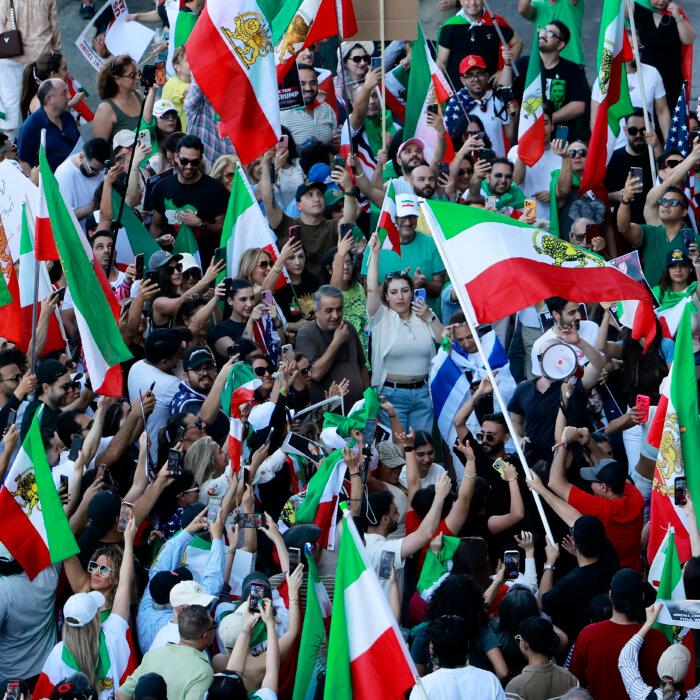
That is “a terrible outcome,” especially after President Donald Trump “incited protesters, giving them hope that help would be on the way,” said Philip Gordon, former national security advisor for Vice President Kamala Harris and an assistant secretary of state during the Obama administration.

But, he added, “doing a deal with the remnants of the regime might also be the most realistic or best achievable outcome” without the United States launching a massive ground invasion.
The Iranian regime “has a deep bench that goes far beyond Ali Khamenei,” agreed Jeffrey Feltman, also a former Obama administration assistant secretary of state who later served as U.N. under secretary general for political affairs.
“What they studied was exactly what I saw in person,” he said. Khamenei’s “whole identity and the identity of the Islamic republic he represented was wrapped up in enmity about the United States. [Analysts] got it right about who this person was.”
But, Feltman continued, “I do not believe killing Ali Khamenei was decisive in what’s going to happen in Iran” because, among other factors, there is no organized opposition capable of challenging the regime other than, perhaps, under-armed Kurds in Iran’s Khorasan Province.
Therefore, said Mara Karlin, a former assistant secretary of defense in the Biden administration, what happens now “gets a little bit trickier as we think about the next phase and what else can actually happen.”
While Iran’s ballistic missile arsenal is limited following its June 2025 12-Day War with Israel and U.S. forces that targeted Iran’s nuclear enrichment sites, she said Tehran has an ample supply of Shahed 136 drones and is using them with increasing effect despite aerial assaults aimed at eliminating them.
Next Phase Tactics
The Iranian regime will continue to lash out at United Arab Emirates, Oman, Bahrain, Qatar, Kuwait, Jordan, and Saudi Arabia while targeting Israel and U.S. forces in Syria and Iraq, including in Erbil, the capital of Iraqi Kurdistan, where soldiers from the Iowa National Guard have been attacked by Shia militia.“Their playbook is quite diverse and well-developed over the course of the past 47 years,” Maloney said, including terror attacks not only in the region but in Europe and the United States.
Tehran over the decades has learned “retaliation, especially where it imposes economic costs on countries with greater resources and greater opportunities than Iran might have, is quite effective in persuading the United States and other parties to drive towards a solution” other than its destruction.
Maloney said the Gulf states will continue to bear the brunt of Iranian attacks.
“They want to make their neighbors, who they see as complicit in these attacks, forced to pay for these strikes,” she said.
She said she expects this will be the primarily strategy, “but we can’t rule out wider radicalization, the possibility of lone wolf attacks.” Sympathizers with the Islamic Republic may engage in terrorism, she said, leading to a “messy devolution of this conflict.”
“These attacks are despicable, condemnable, but they’re not surprising because you have a desperate regime whose only hope is to raise the costs and, right now, the Gulf countries have a lot more to lose than Iran does because Iran has already been decimated.”
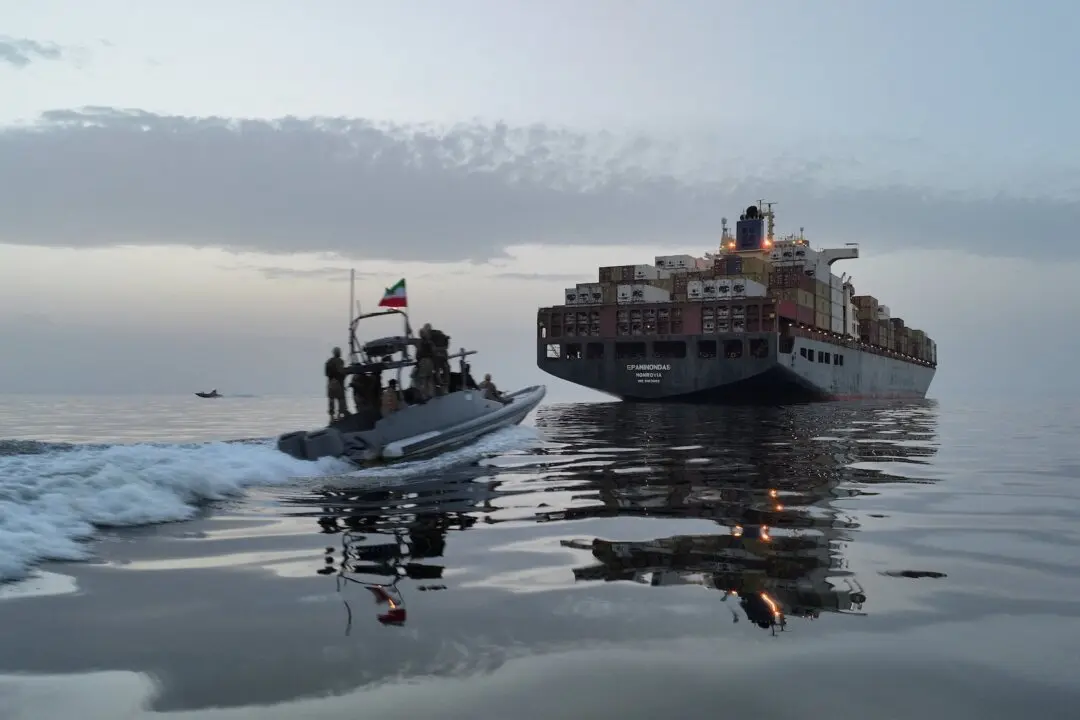
All four panelists said Iran will continue to menace the Hormuz Strait, where 20 percent of the world’s oil leaves the Persian Gulf.
How to ensure the strait remains open “gets to be a very, very interesting problem in military analysis,” said forum moderator Michael O’Hanlon, director of foreign policy research at the Brookings Institution, noting while “sinking the Iranian Navy is well within the capacity of the United States,” it doesn’t take much firepower to block a waterway.
“The IRGC putting mines out into waters via speed boats—a more covert or small-scale kind of operation—could be hard to prevent entirely,” he said, speculating that if U.S. ground forces are dispatched, securing the Iran side the of strait could be their mission.
“I don’t think we’re going to march on Tehran with the U.S. Army,” O’Hanlon said, “but I could imagine some coastal presence inside of Iran to try to prevent the IRGC from threatening the Strait of Hormuz.”
Karlin disagreed. “It is almost inconceivable that the U.S. will send in ground troops,” she said. “Ground troops mean you’re getting ready for a lot of casualties. It’s just really, really hard to imagine President Trump wanting to do that. You are purchasing that country at that stage, right? You are now owning it.”
All argued Trump needs to better clarify what they called shifting justifications for a “war of choice” and to tell Congress and the American people what, exactly, the war aims to accomplish.
“The administration owes it to the public,” Karlin said. “Americans are dying. If this continues, more Americans will die. We just need to understand what that’s for.”
Conversely, Iran’s plan is pretty clear, Feltman said. “Iran’s goal here is to cause as much pain to as many countries as possible, to put pressure on the White House to back off,” he said. “And the fact that Trump has kept the goals vague … it means he has an opportunity to decide when to declare victory.”