IDAHO FALLS, Idaho—With a third advanced nuclear reactor prototype in less than a month set to reach criticality next week, United States Energy Secretary Chris Wright projects that as many as five more first-of-kind reactors, including several that could fit in a pickup truck bed, will be federally cleared for commercial development in 2026.
“One of the big goals,” Wright said at Idaho Falls’ Mountain America Center during the Department of Energy’s June 25 “Celebration of the Golden Era of Nuclear Power,” “is to get seven or eight of these reactors ‘critical’ by the end of this year. And there’s more that will come after that.”
Many more, and soon, concurred Idaho National Lab (INL) Director Dr. John Wagner and Assistant Secretary of Nuclear Energy Ted Garrish, who noted the 10 advanced reactor demonstration projects unfolding on eastern Idaho’s high desert—mostly “micro-reactors” seeking to be licensed as mass-produced, “plug-in” portables—are drawing “incredible inquiries” from potential buyers worldwide.
“The next big success for us is going to be selling these reactors,” Garrish said. “It is not unheard of that we’re going to have 50 or 100 of these” new reactors ordered “over the next year to two. I mean, these are going to go like hotcakes.”
So much so, Wright agreed, that nuclear energy technologies emerging at INL will soon “be a major export,” drawing cheers from the 4,000 laboratory staff, contractors, and investors attending what he dubbed “the Nuclear Woodstock,” expressing “a little bit of enthusiasm today for what’s going on.”
And why not? he asked.
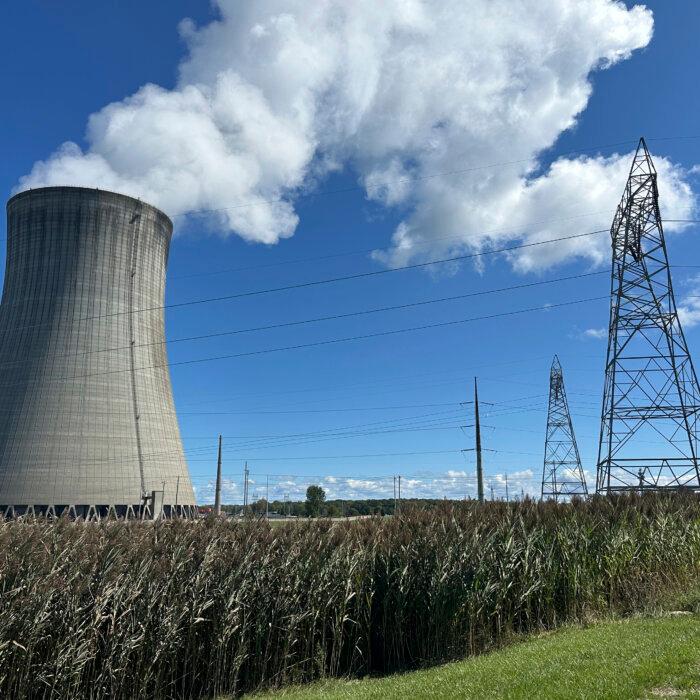

In less than 14 months, Wright said, “Young, hard-driving, passionate Americans” had met President Donald Trump’s challenge to license three new nuclear reactor prototypes by July 4, 2026, dismissed by many as “crazy bold goals that would lead to disappointment.”
Instead, he said, “That bold American spirit that built the United States of America and made us what we are today? It is in this room today.”
“This is a goal that people thought was not possible,” Wagner said. “What we are witnessing is not one milestone; it’s a cascade. A cascade that is happening now. That’s why we’re here today, not just to mark what has happened, but to celebrate what is happening.”
The Mission
The DOE unveiled the “great reactor race” in August 2025 with the “most aggressive nuclear-deployment timelines in American history” in an effort to license 10 new reactors by 2030–including three by July 4, 2026.
That would quadruple the nation’s nuclear energy capacity by 2050, goals outlined in Trump’s four May 2025 “Nuclear Renaissance” executive orders.
The Trump administration has earmarked $300 billion in federal financing, and there is rare bipartisan Congressional support for nuclear energy development, but the “nuclear renaissance” the president seeks isn’t “just about new reactors and new fuel,” Undersecretary of Energy Kyle Haustveit said.
“It’s about renewing America’s ability to build new things and solve new problems and lead the world in providing the energy that fuels modern life.”
The United States maintains the world’s largest nuclear power industry with 94 reactors operated by 21 power companies at 54 sites across 28 states.
It produces nearly 20 percent of the nation’s electricity and directly employs 70,000 Americans who support 250,000 jobs while contributing more than $60 billion annually to the nation’s gross domestic product and paying $12 billion a year in federal, state, and local taxes, according to the Washington-based Nuclear Energy Institute.
But since 1990, while 18 reactors have been retired, only two new ones—Southern Nuclear Operating Company’s Georgia Power Vogtle 3 and 4 plants—have been built in the United States, largely because of costs, regulatory entanglements that can take more than a decade to get a reactor from concept to development, and public perception in the wake of Three-Mile Island, Chernobyl, and Fukushima nuclear accidents.
U.S. companies are developing more than 30 reactor designs of varying sizes and types, such as portable and small modular reactors; reactors fueled by electric-pressurized water, low-uranium, molten salt, and recycled fuel.
They are cooled by sodium and liquid metal; fracked a mile deep to pipe steam to the surface, they are among innovations spurred by successive administrations and Congress—in rare bipartisan accord—in deregulating and subsidizing the nation’s nuclear energy industry to meet a projected 25 percent increase in electricity demand by 2030, and a more than 70 percent increase by 2050.
But under the Energy Reactor Pilot Program authorized by Trump in his “nuclear renaissance” executive orders, the pace of development and investment is accelerating, with 10 companies developing “first mover” nuclear energy innovations.
Others can sign onto DOE’s new launchpad project to demonstrate prototypes.
Qualifying for the programs gains developers access to INL, an 890-square-mile sagebrush sprawl west of the Snake River where atomic power was first used to create electricity in 1951, and specifically to the Materials and Fuels Complex below Big Southern Butte, a 40-minute drive from the lab’s administrative offices, where those first-movers are in residence.
With 6,500 laboratory staff and contractors at INL, known locally as “The Site,” there has never been a better time and place to utilize expertise with investment than right now in Idaho, Lt. Gov. Scott Bedke said.
“We’re not here today to commemorate a golden era that came and went. We are here to declare that one is just beginning,” he said.
Good Bet
Antares Nuclear’s Mark 0 solid-state micro-reactor became the first to meet Trump’s challenge when it reached criticality at INL’s Materials and Fuels Complex on June 4, marking the first time since 1973 a new non-lightwater reactor was licensed in the United States.
The shipping container-sized prototype, which utilizes sodium heat pipes for cooling without relying on external power, could produce up to 20 megawatts of electricity, enough to power 15,000 homes, by 2027, and is primarily designed by the Torrance, California, start-up for military use and remote mining projects.
Valar Atomics became the second to gain criticality for a new reactor design when its Ward 250 modular high-temperature gas reactor sustained generation on June 18 at its San Rafael Energy Lab in Emery County, Utah.
The Hawthorne, California-based developer’s micro-reactor could generate up to 5 megawatts of electricity, enough to power 5,000 homes, and be transportable by flatbed truck or, as it was from Torrance to San Rafael, in a C-17.
Aalo Atomics of Austin, Texas, is set to become the third to reach criticality when its 50 megawatt electrical sodium-cooled Aalo Pod achieves that status between July 1 and July 3 at INL.
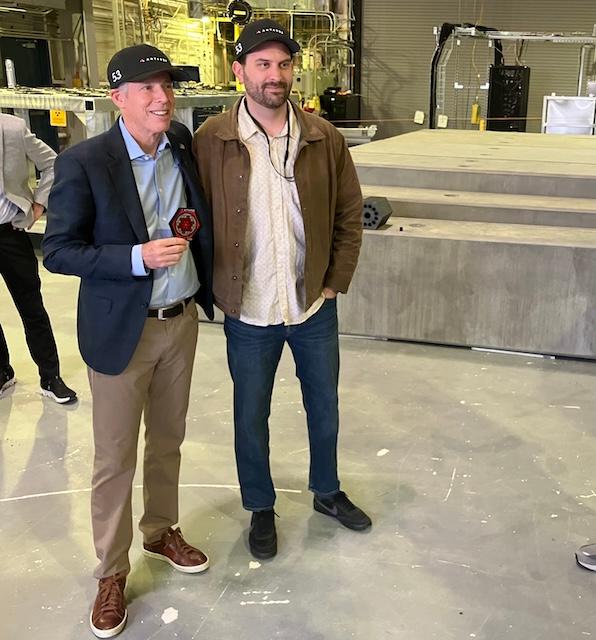
Wright, who confessed being “emotional” while touring the Materials and Fuels Complex, was “very, very thrilled” to sign Aalo’s authorization to proceed with its criticality demonstration while at its site.
“I’m going to bet,” he said. “I’m not even a better, but my bet is 100 percent success. I can see it in their eyes and see it in their heart. We are going to see success across-the-board and then, we’re going to have new goals.”
“In the past 12 months, this ecosystem rewrote what American nuclear can do, rewrote what is possible, rewrote expectations about what we can achieve in nuclear energy,” INL’s Wagner said.
“Reactors have gone critical. Many more will follow shortly.”
“Years from now, people will talk about this day,” Wright said.