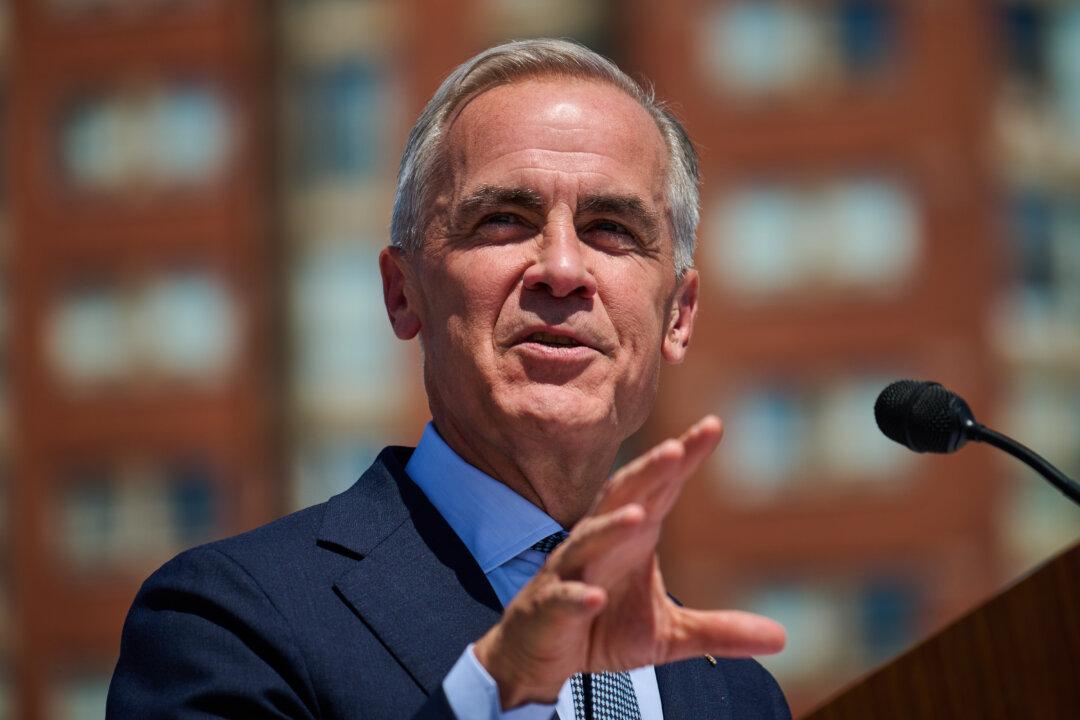
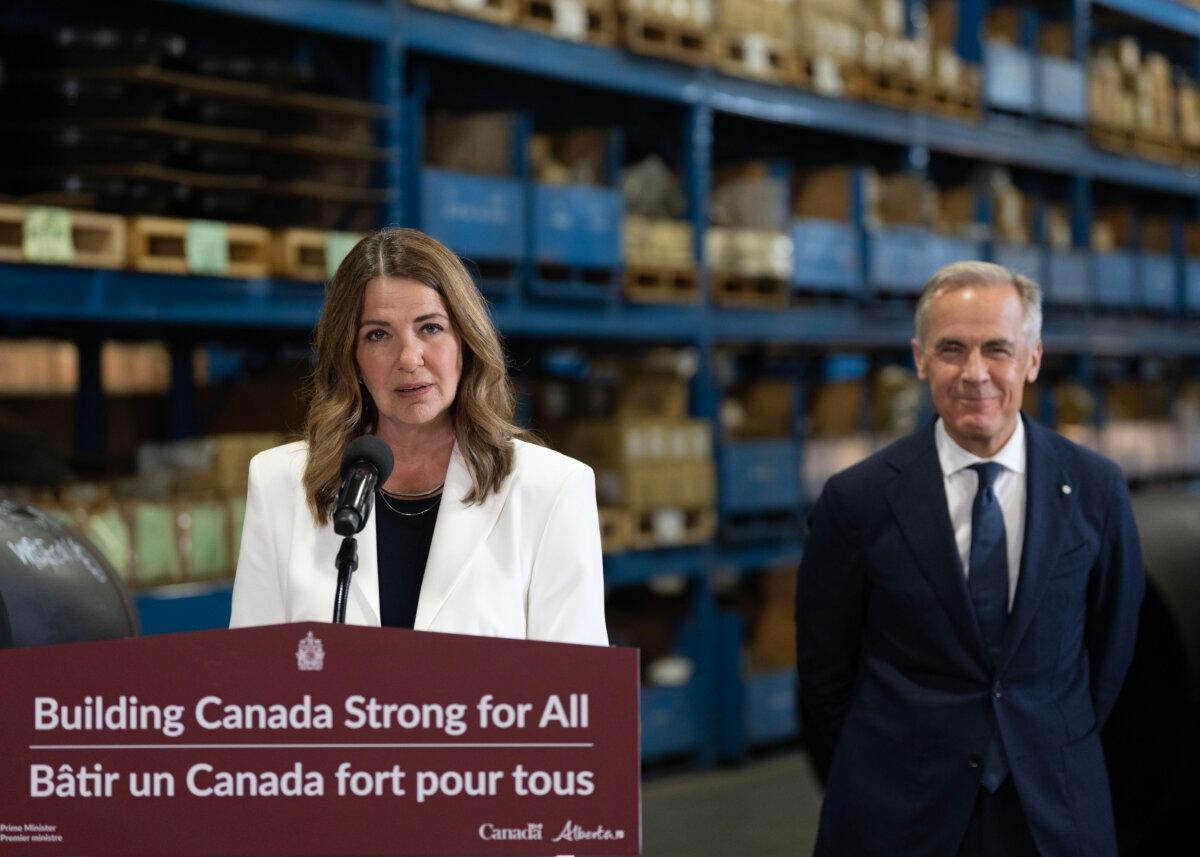
Prime Minister Mark Carney’s July 2 announcement with Alberta Premier Danielle Smith was presented as a major step forward in getting a new oil pipeline built from Alberta to the B.C. coast.
It followed an agreement earlier the same day between the federal government and B.C., which has been opposed to the pipeline project, with Ottawa committing to several initiatives benefiting the province along with major funding.
New Southern Route
The proposed pipeline is meant to carry more than 1 million barrels of crude oil per day from Bruderheim, Alta., near Edmonton to Delta in southern B.C., following mainly along the existing Trans Mountain pipeline corridor that runs through central Alberta and southern B.C.Smith had previously said that a northern route going to destination ports such as Prince Rupert, B.C., or Kitimat, B.C., was preferable for Alberta, due to better shipping economics, shorter distances to access Asian markets, and the ability to use deepwater northern ports for larger oil tankers.
However, B.C. Premier David Eby has long said he opposes any change to the existing oil tanker ban on B.C.’s north coast, and Ottawa’s July 2 agreement with B.C. agreed to keep the ban in place unchanged.
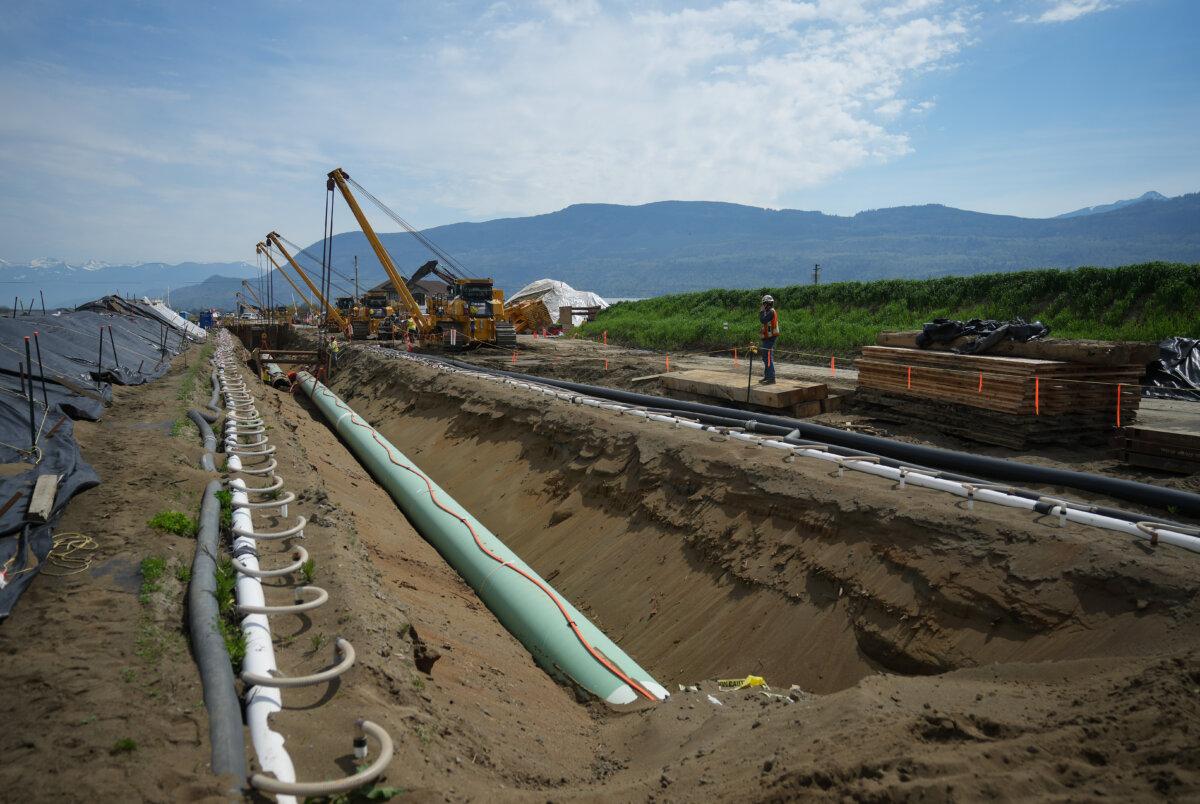
Despite a Nov. 27, 2025, memorandum of understanding (MOU) between Ottawa and Alberta agreeing that the federal government could make adjustments to the oil tanker ban as necessary in the future, Carney has also stated repeatedly that he won’t overrule objections from provinces or indigenous opponents to major projects.
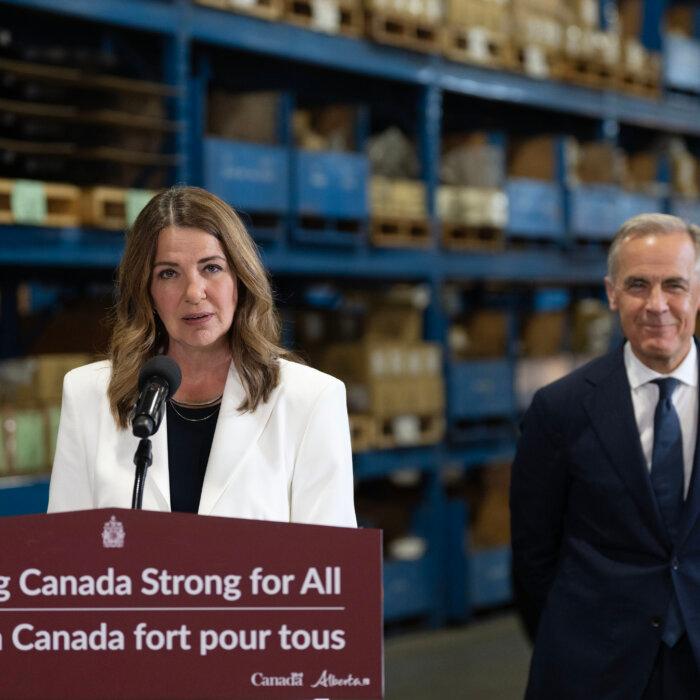
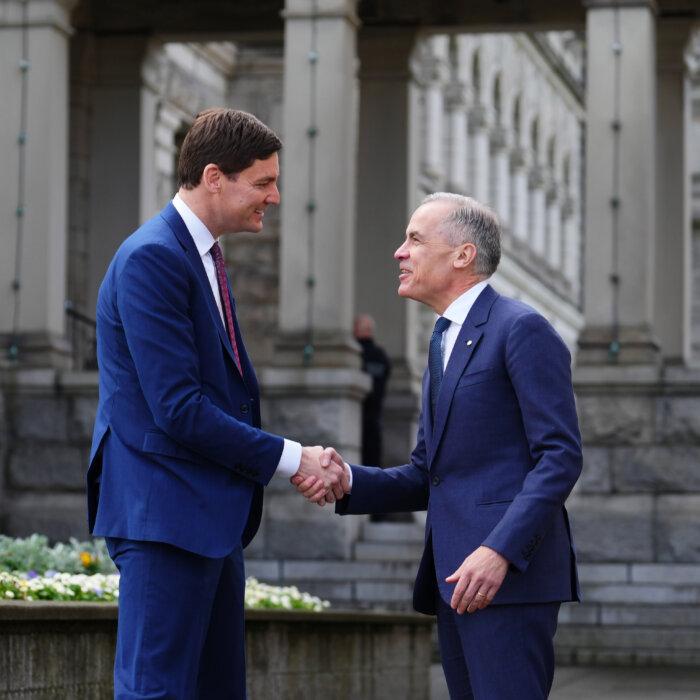
Despite having preferred a northern route, Smith said at the July 2 announcement that the new route has several advantages.
Oil Tanker Ban Stays
The new B.C.–Ottawa agreement commits to keeping the oil tanker ban in place on B.C.’s north coast, saying it will be kept “without alteration, suspension, or narrowing of scope.”The federal Oil Tanker Moratorium Act went into effect in 2019. It prohibits oil tankers with over 12,500 metric tons of crude oil or oil products from loading, unloading, or stopping at ports or marine facilities from the northern apex of Vancouver Island to the Alaska border.
Very Large Crude Carriers
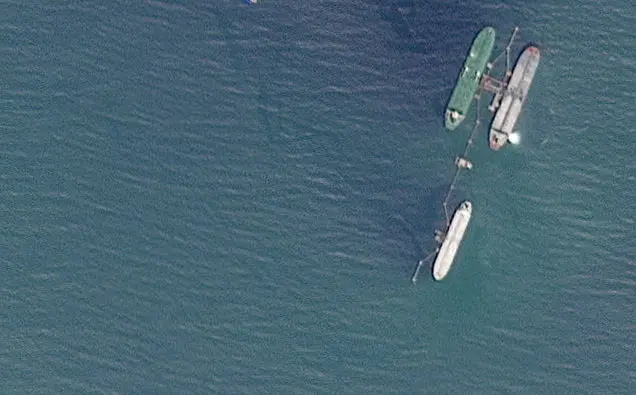
Smith’s July 2 remarks also referenced another part of the calculus for the proposed pipeline and energy economics: Very Large Crude Carriers (VLCCs).VLCCs are large oil tankers that can transport approximately 1.9 million to 2.2 million barrels of crude oil per shipment.
Instead of Trans Mountain’s existing Westridge Marine Terminal in Burnaby, B.C., which loads oil onto Aframax-sized tankers, the proposed pipeline would go to a deepwater port that could handle VLCCs. Aframax-class tankers generally ship a maximum of roughly 750,000 barrels.
Analysts have noted that usage of VLCCs can significantly lower per-barrel shipping prices for long-distance transport of oil to Asia.
If built as described, the project could give Canada a rare and possibly unique crude export terminal, save for Alaska, that can handle fully-laden VLCCs on North America’s Pacific Coast.
Government-Led Pipeline Project
The proposed pipeline would be owned through a new joint venture led by the federally owned Trans Mountain Corporation, the Alberta Petroleum Marketing Commission—a provincial corporation—and Pembina Pipeline Corporation.Trans Mountain Corporation would be responsible for developing, completing, and later commercially operating the pipeline as well as securing the necessary permits and regulatory approvals, land access, and required stakeholder and indigenous engagement.
Pembina would primarily be a strategic adviser providing expertise as the pipeline moves forward.
Carney said the “vast majority” of investment in the new pipeline will come from the private sector and described government backing and incentives as “catalytic” in nature.
Private industry has been reluctant to get involved in the pipeline. Enbridge CEO Greg Ebel saying earlier this year that his company would not be involved in any funding or leadership of a new pipeline to the West Coast due to ongoing regulatory hurdles and uncertainty, though he later softened his stance.On July 2, Smith said government backing is needed because a history of cancelled projects such as Northern Gateway, Keystone XL, and Energy East has left private companies hesitant to move forward.
“We have pipeline companies that have literally spent billions of dollars in recent years on failed regulatory approval process, that’s the environment we’re finding ourselves in,” Smith said.

What BC Gets
In its July 2 multi-billion-dollar cooperative prosperity agreement with Ottawa, B.C. will receive a number of initiative commitments and payouts, including significant federal commitments for a range of infrastructure and resource projects.Ottawa also agreed to pay up to one-third coverage of the cost of replacing the George Massey Tunnel up to a maximum of $3 billion.
Specified federal funding in the agreement amounts to roughly $7.8 billion, along with unspecified totals of funding for several of the other projects that are named.
In addition to agreeing to keep the oil tanker ban in place, Ottawa also said it will negotiate a possible annual royalty payment to B.C. from the pipeline operator and set up a reserve fund for the province and First Nations in case there is an oil spill or environmental harm from the pipeline or tankers.
Ottawa also agrees that First Nations must be fully consulted and offered economic opportunities and possible ownership stakes as well as offerings to buy equity in the pipeline via loan guarantees from the federal government.
What Alberta Pays
The MOU between Ottawa and Alberta last November saw Alberta agree to support indigenous co-ownership, increase its industrial carbon tax, reduce methane emissions, and support the construction of a carbon capture system along with the proposed West Coast oil pipeline.In return, Ottawa agreed to not implement its proposed oil and gas emissions cap, pause clean electricity regulations in the province, and streamline environmental assessments.
In the July 2 agreement with Ottawa, the new route avoids a need to adjust the oil tanker ban while the Oil Sands Alliance will head the Pathways Project, which Carney said will reduce emissions by 16 million tonnes per year by 2035. The cost of the Pathways Project has been estimated at between $16.5 billion and $20 billion.
Carney described Pathways as “the world’s largest carbon capture and utilization and storage project” and said it will be the equivalent of “taking 90 percent of the cars in Alberta off the road.”
Criticism
The pipeline proposal and more recent agreements between Ottawa and the two provinces have drawn criticism from several sources.Heather Exner-Pirot of the Macdonald-Laurier Institute greeted the July 2 announcements with overall positivity, but noted that B.C. is getting “maximum financial concessions.”
“Mark Carney’s announced today that he is keeping the Liberal shipping ban on Canadian oil, while American tankers are free to ship in the same waters,” Poilievre posted on X. “That is a costly and nonsensical decision.”
Poilievre has been broadly critical of Carney’s energy policies, saying he has kept in place many policies that stifle development, such as the industrial carbon tax.
“The opaque and confusing public-private partnership ownership structure means it’s very likely that we, the public, will not only bear the risks and the damages, but also the lion’s share of the costs,” he said.
Big Picture
The announcement of agreements with B.C. and Alberta fits into Carney’s broader energy-focused pivot. It comes after a June 29 “forward guidance” video in which the prime minister said Canada’s emissions would be higher in the next few years than under the Trudeau administration’s plan.Regarding the pipeline and associated economic agreements with B.C. and Alberta, Carney said they will “catalyze well over $200 billion in direct investments in Canada” and create more than 175,000 new jobs across the country.
While Alberta now has a pathway to a potentially viable pipeline with VLCC capacity, as well as a federal partner, it still awaits the completion of regulatory processes, as the Major Projects Office considers its submission for the project to be designated in the national interest by Oct. 1. If so designated, its approval could be sped up to within two years.
B.C., meanwhile, gets the oil tanker ban preserved, negotiation of royalty payments, major infrastructure and economic investments, and continuing leverage as the project moves ahead.
For its part, Ottawa gets to tout a project of national unity and advance the argument that emissions reductions can coexist with major development of conventional energy.
Alberta has given up on the northern route and accepted that Ottawa calls the shots on carbon reduction. B.C. has accepted it does not have the legal jurisdiction to stop an interprovincial pipeline, and Ottawa has acknowledged that the private backing for a pipeline in today’s regulatory climate is lacking.