Australian consumers are becoming less concerned about climate change amid global uncertainty and economic pressures, marking a sharp contrast with other major Asian economies.
A new McKinsey & Company study, which surveyed consumers across Australia, China, India, Japan and South Korea, found that Australians are the most relaxed about climate change in the region.
Specifically, around 12 percent of Australian consumers said they were concerned about climate change in the second quarter of 2026, down from 19 percent in the previous quarter.
By comparison, concern was higher across major Asian economies, with 25 percent of consumers in China, 38 percent in India, 20 percent in Japan, and 23 percent in South Korea identifying climate change as a major issue.
Like consumers in other counties, Australians were most concerned about the rising cost of living, with 60 percent citing it as a concern, up from 51 percent three months earlier.
Other economic concerns were the ability to make ends meet (30 percent), and job security (16 percent). Both figures were slightly higher than in the previous year.
Consumers Pull Back on Spending
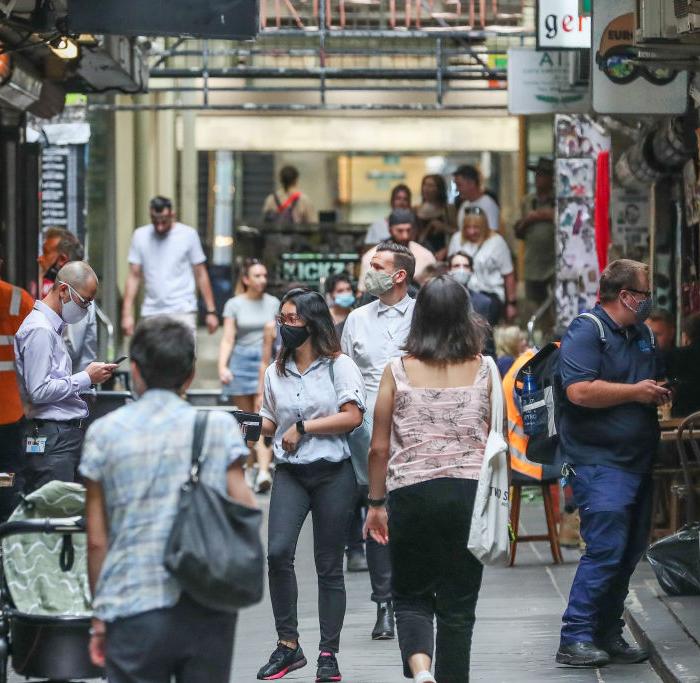
The survey also found that Australian consumers were cutting back on spending across many categories of goods and services, with fuel one of the few exceptions.“Consumers in Australia reported some of the weakest semi-discretionary and discretionary spending intentions ... particularly across apparel, restaurants, travel, home furnishings, and entertainment,” the report said.
“At the same time, they reported the highest net intent in the region to spend on gasoline over the next three months. Rising spending on gasoline may be squeezing discretionary budgets.”
Christmas may be bleak for children, with 39 percent of Australians planning to spend less on toys than in the past. Also facing major spending cutbacks are beauty products (37 percent) and vehicles (32 percent), fast food meals (45 percent) and short-term rentals (49 percent).
Across every spending category covered by the survey, the share of people planning to cut spending significantly outweighed those intending to spend more and, in many cases, exceeded the share expecting no change in their spending behaviour.
The survey also revealed that Australian shoppers were using artificial intelligence to guide their purchasing decisions, with 63 percent using it to compare brands or prices and 51 percent using it for ideas and inspiration.
On the political front, despite widespread media attention, concern about immigration in Australia rose by just 1 percentage point to 23 percent, although the issue ranked much higher here than in the other countries surveyed.
Concern about healthcare costs was cited by 18 percent of Australian respondents, while concern about political polarisation stood at just 8 percent, unchanged from the previous survey.
Meanwhile, 21 percent of Australians said they were concerned about armed conflicts, up from 14 percent three months earlier. The issue was an even greater concern in India, Japan and South Korea, but barely registered in China.