Japan and South Korea have agreed to continue deepening defense ties and have recommitted to the denuclearization of the Korean Peninsula.
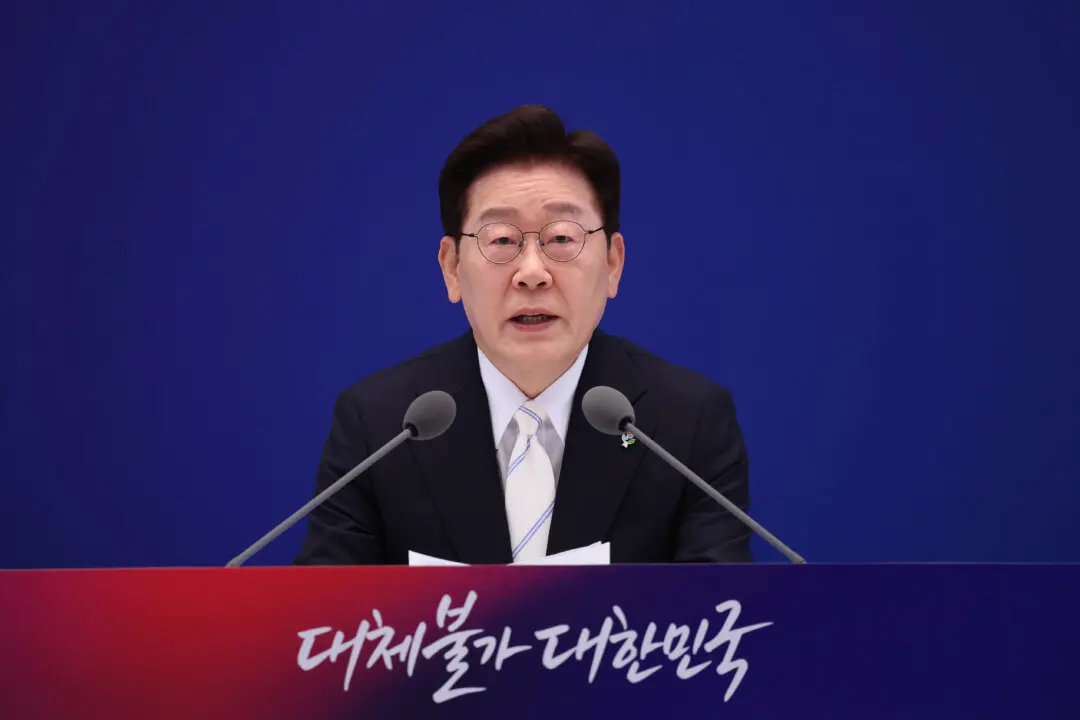
South Korean Defense Minister Ahn Gyu-back on June 28 welcomed his Japanese counterpart, Shinjro Koizumi, to Seoul, where they also agreed to continue cooperation between their respective aerobatic teams to further develop joint search-and-rescue operations and prepare for maritime accident scenarios.
A joint statement from the two ministries said Ahn and Koizumi “agreed to continue cooperating to maintain regional peace and stability in the face of a challenging security environment, to reaffirm their commitment to the complete denuclearization of the Korean Peninsula and the establishment of lasting peace, and to continue Japan–South Korea and Japan–U.S.–South Korea cooperation.”
“The two ministers agreed to strengthen communication and efforts to develop stable and future-oriented Japan-South Korea defense cooperation and exchanges through the enhancement of mutual understanding and trust,” the statement reads.
The meeting follows one between the two ministers held on the sidelines of the Shangri-La Dialogue—an intergovernmental security conference—in Singapore on May 31, during which they discussed a possible bilateral military logistics support pact.
Such an acquisition and cross-servicing agreement would allow neighboring U.S. allies, Japan and South Korea, to share and jointly procure military logistics, such as ammunition, fuel, and food.
With encouragement from Washington, Tokyo and Seoul have been working since 2022 to improve their relationship and build a partnership in the region.
In 2025, Japan’s then-Prime Minister Shigeru Ishiba and South Korean President Lee Jae Myung agreed to closer economic and security ties, with the defense ministers agreeing to work with Washington against the threat posed by North Korea, including its nuclear program and Pyongyang’s growing military ties with Moscow.
However, building relations is challenging due to historical differences between South Korea and Japan—particularly regarding sensitivities surrounding Japan’s colonial rule of the Korean Peninsula between 1910 and 1945 and territorial disputes.
In February, Seoul protested a Japanese event commemorating a group of disputed islands that Japan calls Takeshima but South Korea, which controls the territory, calls Dokdo. South Korea’s foreign ministry said it objected to a Takeshima Day event held by Japan’s Shimane prefecture, calling for the ceremony to be abolished.
Strong US Ties
In recent years, Tokyo and Seoul have sought to address historical grievances and mend their relationship.
In January, Japanese Prime Minister Sanae Takaichi and Lee held a two-day summit in Japan, where they agreed to deepen cooperation amid regional security and diplomatic challenges, particularly with Japan’s increasing tensions with China, and as North Korea advances its nuclear program.
Japan and South Korea have strong ties with the United States, and Lee and Takaichi reaffirmed the strategic importance of their cooperation with Washington in January.
“The importance of Japan–South Korea relations, as well as cooperation among Japan, South Korea, and the United States, continues to grow,” Takaichi said in a joint statement alongside Lee.
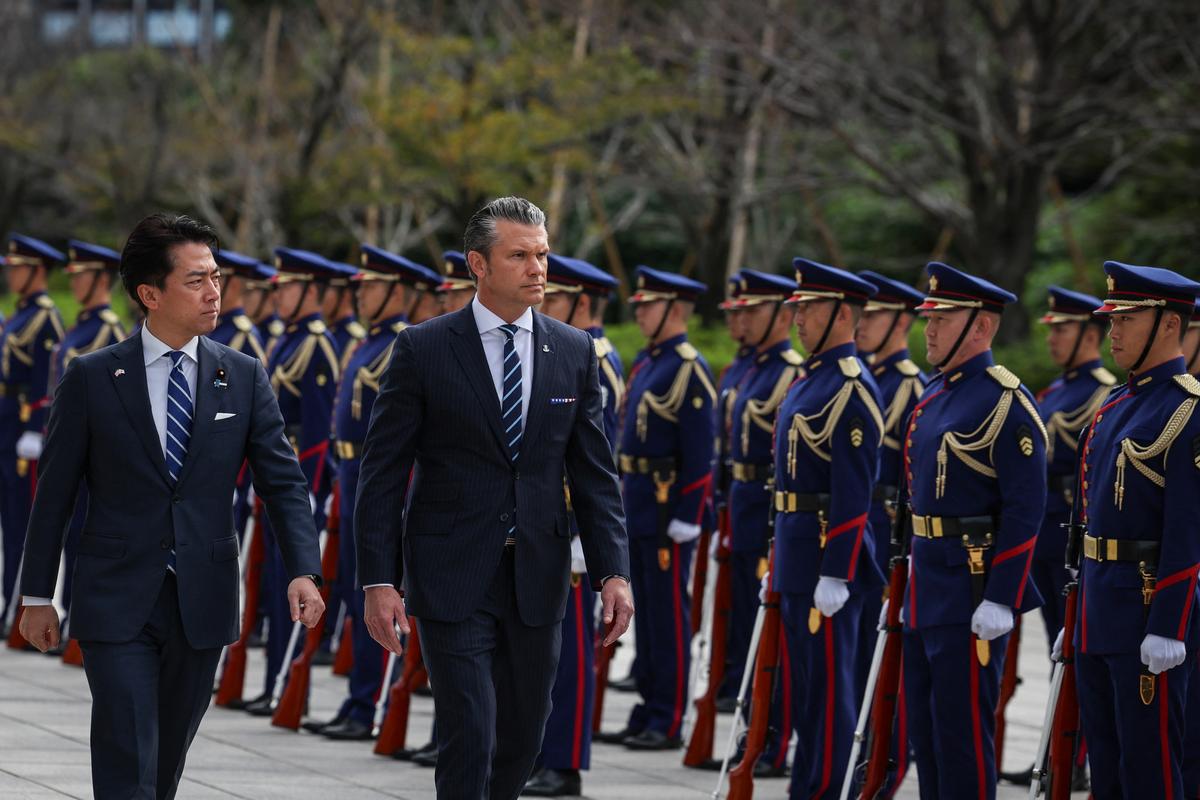
The commitment followed U.S. Secretary of War Pete Hegseth’s meeting with Koizumi on the sidelines of the Shangri-La Dialogue, where the two reaffirmed the role of the U.S.–Japan alliance in preserving peace in the Indo-Pacific region.
During his speech at the Shangri-La Dialogue, Hegseth praised allies in the Pacific for committing to increasing defense spending and taking on greater responsibility for security in the region.
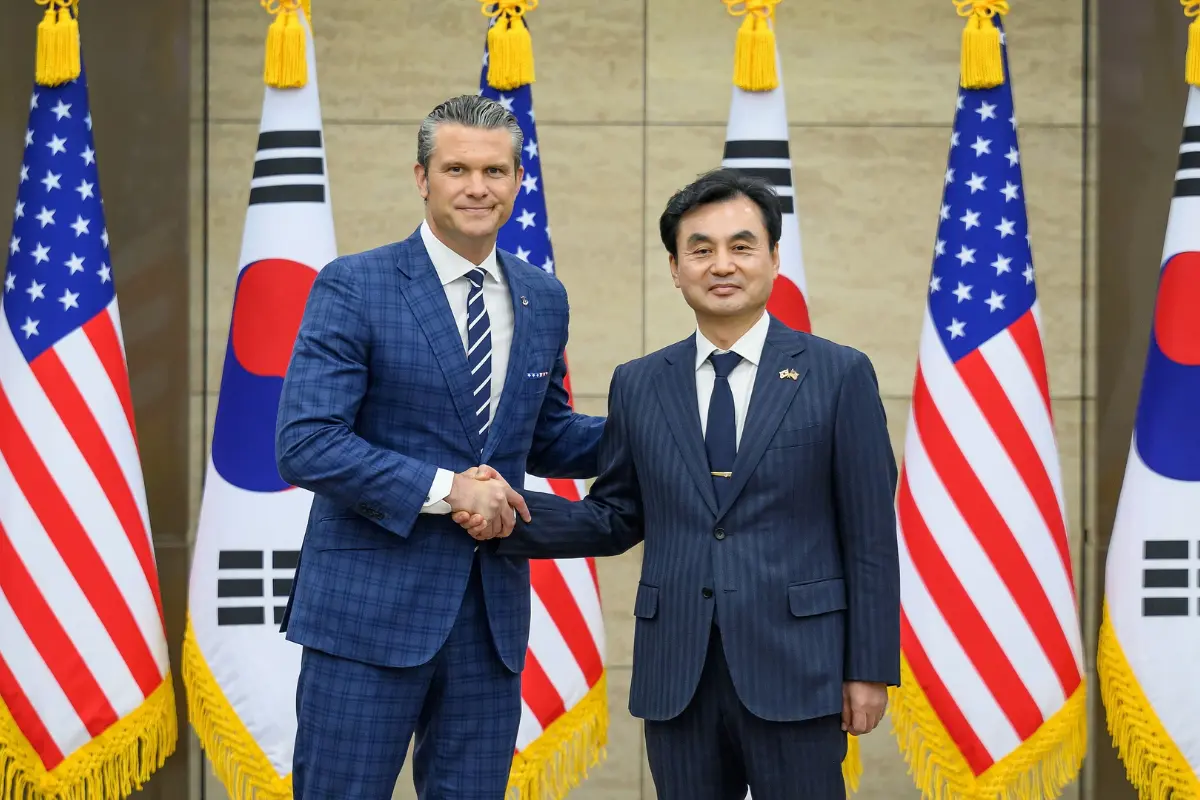
The secretary of war acknowledged Tokyo for its recent decision to accelerate its defense spending, saying on May 30, “We have high expectations of our Japanese allies, and together we can and must each pull our weight to strengthen the US–Japan alliance.”
“If you want to see what burden sharing looks like, consider the Republic of Korea,” Hegseth said of the U.S. ally.
“South Korea has invested consistently in its own defense, not because, because it does not have the luxury of treating war like an academic exercise. They live on the front lines, and so they build real combat power.
“We applaud the pragmatism and leadership demonstrated by Seoul. The region will be far more stable and more secure when other allies and partners follow that path.”
Reuters contributed to this report.