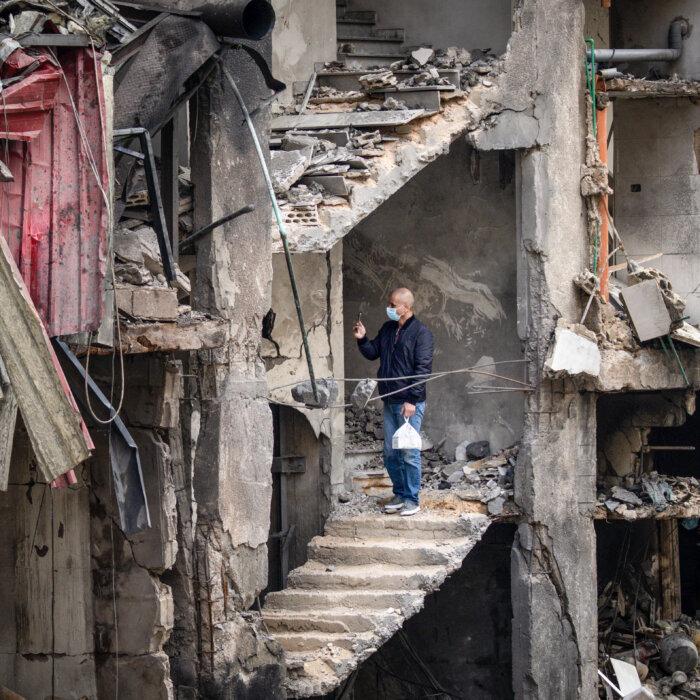
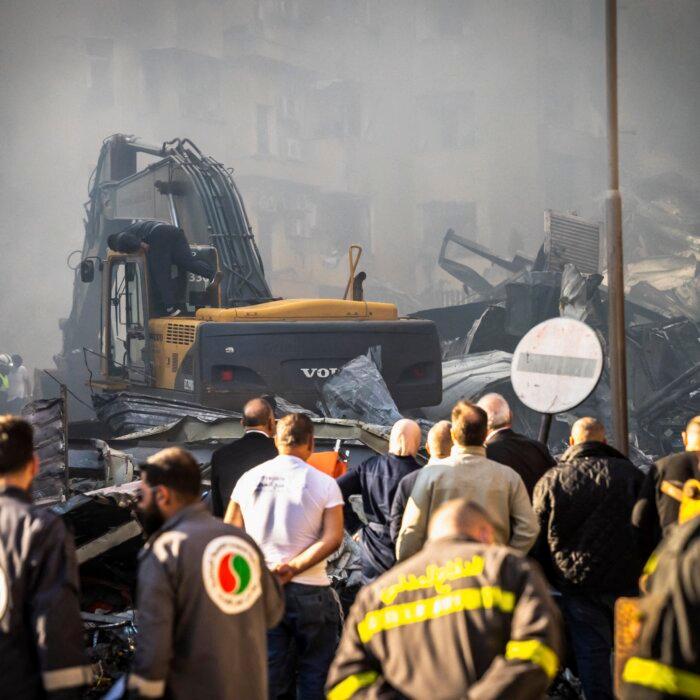
An Israeli strike in the southern Lebanese village of Abbasiyeh killed 7 and wounded others, the Lebanese National News Agency (NNA) reported on April 9, in what the state-backed media outlet called a preliminary toll.
The Israel Defense Forces (IDF) said on April 8 that its fight with the Iran-backed Hezbollah terrorist group in Lebanon is not part of the two-week ceasefire deal with Iran.
“As long as Hezbollah continues to threaten our civilians, we will continue to operate against them,” the IDF said in a post on X.
Israel intensified its attack on its neighbor to the north following the announcement of the ceasefire, with Lebanon’s Health Ministry saying the Wednesday strikes killed at least 182 people and wounded 890 others, bringing the total number of deaths between March 2 and April 8 to 1,739 and the number of wounded to 5,873, NNA reports.
The ongoing attack on Lebanon by Israel is putting a strain on the ceasefire agreement reached between the United States and Iran on April 8, with Washington and Jerusalem insisting the country was not covered by the agreement, but Tehran and Pakistan, which performed a key mediation role and is set to host Iranian–U.S. talks in the coming days, saying otherwise.
“The United States has told Israel that it is committed to achieving these goals, shared by the U.S., Israel, and Israel’s regional allies, in the upcoming negotiations,” the prime minister’s office said. “The two-weeks ceasefire does not include Lebanon.”
The Israeli Foreign Ministry also criticized the Lebanese government for not dealing with Hezbollah, saying in an April 8 post on X that Israel would now “do it instead of them.”
“Hezbollah ministers still serve in the Lebanese government, and the Iranian ambassador remains in Beirut, openly defying their own decisions. It is time to start acting against Hezbollah. In deeds, not words. And if you are incapable of doing so—at least do not get in the way,” the ministry said.
On April 9, Netanyahu announced that the IDF had killed Ali Yusuf Harshi, who is the personal secretary of the Hezbollah terror organization’s secretary-general, Naim Qassem, in Beirut, as well as striking terrorist infrastructure in southern Lebanon.
US Says Lebanon Not Covered
From the American side, U.S. Vice President JD Vance told reporters on April 8 while on a state visit to Budapest, Hungary, that Lebanon wasn’t included in the deal.“I think this comes from a legitimate misunderstanding. I think the Iranians thought that the ceasefire included Lebanon, and it just didn’t. We never made that promise. We never indicated that was going to be the case,” Vance said.
“What we said is that the ceasefire would be focused on Iran, and the ceasefire would be focused on America’s allies, both Israel and the Gulf Arab states. Now, that said, the Israelis, as I understand it—again, I’m supposed to get a full report when I get on the plane—have actually offered to, frankly, check themselves a little bit in Lebanon because they want to make sure that our negotiation is successful. That’s not because that is part of the ceasefire.”
Iran, Pakistan Disagree
Meanwhile, the Iranian regime-backed Islamic Republic News Agency (IRNA) reported in a Telegram post on April 8 that the country’s Supreme National Security Council had said that the agreement included “the cessation of war on all fronts, including ... in Lebanon,” and that Leavitt’s comment “clearly violates the ceasefire.”This feeling was later echoed by Iranian Parliamentary Speaker Mohammad Bagher Ghalibaf, who said in a statement posted to X on April 8 that there had been a “violation of 3 key clauses of the 10-point proposal,” giving most prominence to the situation in Lebanon.
Ghalibaf said that what had been agreed was “an immediate ceasefire everywhere, including Lebanon, effective immediately.”
He further added that the entry of a drone into Iranian airspace and the “denial of Iran’s right to enrichment (of uranium)” made the prospect of a bilateral ceasefire or negotiations “unreasonable.”
European Nations Say Lebanon Should Be Included
European nations have also been critical of Israel’s actions in Lebanon, with British Foreign Secretary Yvette Cooper saying on April 9 that Israel’s attack on the country was “deeply damaging” and risked destabilising the ceasefire between the United States and Iran.“We want to see Lebanon included in the ceasefire,” she told Times Radio. “We want it extended to cover Lebanon, because otherwise that will destabilise the whole region.”
France, too, said that the ceasefire had to include Lebanon.
The ceasefire agreed by Iran and the United States must also cover military actions in Lebanon, French Foreign Minister Jean-Noël Barrot said on April 9, adding that France condemned the “massive” Israeli strikes on April 8.
The European Union’s top diplomat, Kaja Kallas, also said on April 9 that the agreement should be extended to include Lebanon, adding that Iran-backed Lebanese group Hezbollah must disarm.
“Israeli actions are putting the U.S.–Iran ceasefire under severe strain. The Iran truce should extend to Lebanon,” Kallas said in a post on X.
“Israeli strikes killed hundreds last night, making it hard to argue that such heavy-handed actions fall within self-defence.”