Iran’s top nuclear scientist suggested on Feb. 9 that the Islamic republic may be prepared to dilute its stores of highly enriched uranium in return for the United States lifting sanctions on the country.
Speaking to reporters, Mohammad Eslami, head of the Atomic Energy Organization of Iran, said that Iran may consider diluting its 60 percent refined stocks if all sanctions were removed, the regime-aligned Iranian Students’ News Agency (ISNA) reported
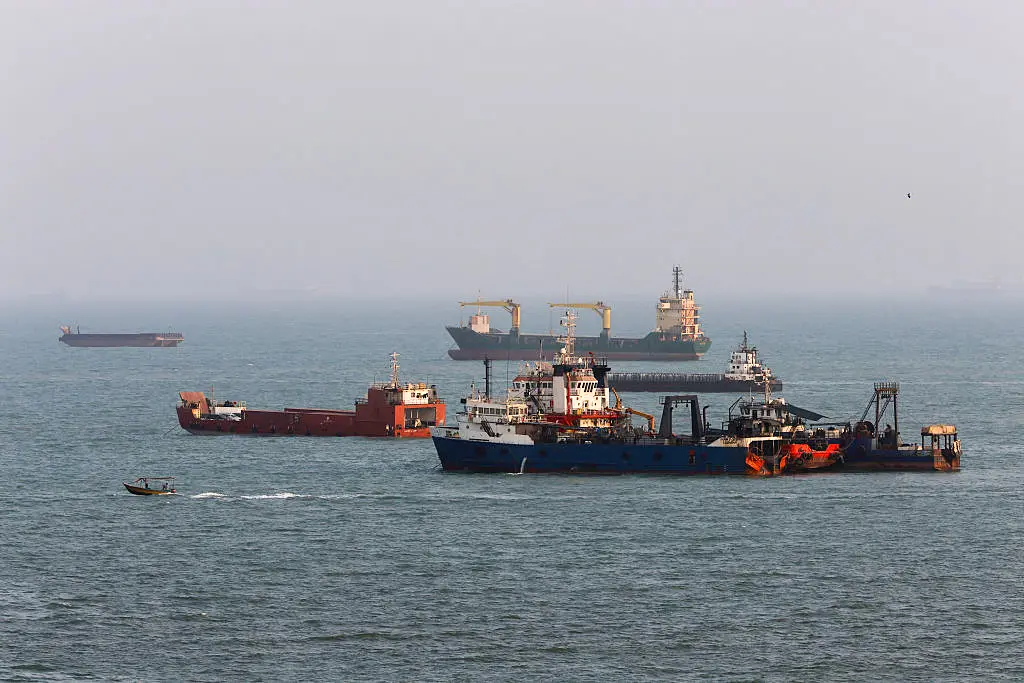
In a statement, the department said two individuals, 14 “shadow fleet” ships, and 15 entities that it says have provided revenue for the Iranian regime “to conduct its malign activities,” including terrorism, were hit with U.S. sanctions.
The report by the Vienna-based organization said that Iran had developed roughly 605 pounds of uranium enriched up to a 60 percent threshold.
That level of purity is a technical step away from being converted to the 90 percent required for a nuclear weapon, the report said, and the 605-pound mark presented about a 40 percent increase in the quantity of Iran’s enriched uranium six months earlier.
According to the report, it requires about 92.5 pounds of enriched uranium at that level to produce a nuclear warhead, suggesting Tehran had about enough uranium to create half a dozen nuclear weapons.
Operation Midnight Hammer included more than 125 U.S. aircraft, as well as warships and layers of deception, as it targeted sites in Fordow, Natanz, and Isfahan overnight on June 21–22.
Eslami’s comments suggest a change of tack by Tehran, which had previously remained defiant about its nuclear capabilities.
He added that Iran’s “access to sophisticated enrichment technology is the product of indigenous knowledge and the dedication of the country’s scientists, and as a scientific achievement and national pride, it cannot be ignored within the framework of the right to peaceful use of nuclear energy; the success of any negotiation depends on the recognition of this principle.”
The foreign minister told a forum on Sunday in Tehran that amid talks with the United States, “no one has the right to dictate our behavior,” according to an AFP reporter who attended the event.
“Their military deployment in the region does not scare us,” Araghchi also told the event, referring to a U.S. aircraft carrier positioned in the Arabian Sea.
The news comes as Israeli Prime Minister Benjamin Netanyahu prepares to meet with President Donald Trump.
“Prime Minister Benjamin Netanyahu is expected to meet with US President Donald Trump this Wednesday in Washington, and will discuss with him the negotiations with Iran,” Netanyahu’s office announced in a Feb. 7 statement.
On Feb. 10, in anticipation of the visit, Iranian Foreign Ministry Spokesperson Esmail Baghaei accused Israel of acting in a “detrimental” manner in the Middle East.
“Our negotiating party is the United States, and it is up to the United States to decide whether to act based on destructive pressures that are detrimental to the region and even to the interests of the United States,” he said, according to the regime-aligned Iranian Labor News Agency (ILNA).
“Basically, one of the external problems in the West Asian region is the support and compliance with the demands of the Zionist regime, which has been the main cause of insecurity in the region for the past 8 decades.”
Baghaei added that Israel was responsible for turning Tehran’s nuclear program into an “artificial crisis” and said it was “up to American officials to act independently of these lobbies and not allow others to decide on American foreign policy.”
Netanyahu said in a Feb. 10 post on X that the ongoing negotiations with Iran would be “first and foremost” in his discussions with Trump.