Iran and Israel have continued strikes in the Middle East after U.S. President Donald Trump postponed the bombing of the Islamic Republic’s power plants and other energy infrastructure because of what he described as productive talks with Iranian officials.
The Israel Defense Forces (IDF) said that Iran launched multiple waves of missiles at Israel on March 24, striking the coastal city of Tel Aviv.
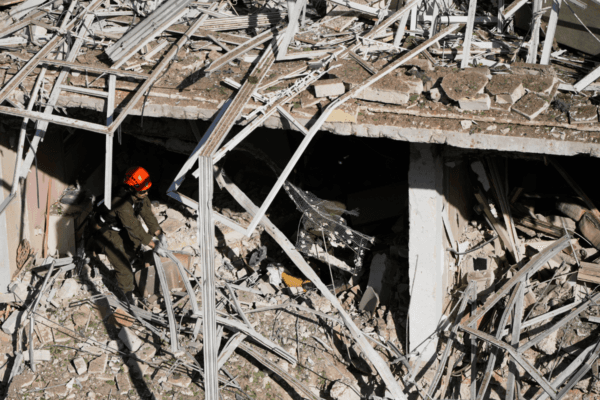
The strike resulted in extensive damage to a multistory apartment building, leaving it with gaping holes in its facade. It was not immediately clear whether the damage was caused directly by a missile strike or by debris following an interception by anti-missile defense systems.
Israel’s Fire and Rescue Service said it was searching for civilians trapped in one building, and discovered others in a shelter in another damaged building.
The Kuwaiti Army said its air defenses were intercepting “missile attacks and hostile drones” overnight, according to a post on X from the Gulf nation’s official state news service, the Kuwait News Agency.
Falling debris from air defense interceptions struck overhead power lines in several areas of the country, knocking power out in some areas, according to the Kuwaiti Ministry of Electricity, Water, and Renewable Energy.

Missile alert sirens sounded in Bahrain, and Saudi Arabia’s Ministry of Defense said it intercepted and downed several drones fired at the country’s oil-rich eastern province.
The IDF said in a post on X that it continued to conduct strikes on March 23 and throughout the night on missile sites in western and central Iran, including sites used for storing and launching ballistic missiles.
It also said it hit regime headquarters in the capital, Tehran, including two belonging to the intelligence organization of the Iranian Revolutionary Guard Corps and the headquarters of the Iranian Ministry of Intelligence.
Trump Announces Negotiations
The continued volley of drones and missiles comes after Trump said on March 23 that Washington and Tehran had reached “major points of agreement” in talks to end the war.“We have had very, very strong talks. We’ll see where they lead. We have points, major points of agreement, I would say, almost all points of agreement,” Trump said, adding that U.S. special envoy to the Middle East Steve Witkoff and senior adviser Jared Kushner had conducted the talks with Iranian counterparts.
“All I’m saying is, we are in the throes of a real possibility of making a deal.”
In a post on Truth Social earlier on March 23, Trump wrote that the United States and Iran had had “very good and productive conversations regarding a complete and total resolution of our hostilities in the Middle East.”
He said that constructive conversations would continue throughout the week, adding that he had instructed the Department of War to postpone planned strikes on Iranian power plants and energy infrastructure for five days, contingent on progress in negotiations.
Tehran denied that negotiations were taking place.
Iran’s parliamentary speaker, Mohammad Baqer Qalibaf, said in a post on X on March 23 that all of Tehran’s officials “stand firmly behind their supreme leader and people until this goal is achieved.”