



The move followed public pushback from consumers and organizations who raised transparency concerns. The health agency has clarified that no foods from cloned animals are currently on the Canadian market and that the proposal only affected the requirement for a pre-market safety assessment—not labelling rules.
But the policy change pause raises a key question: if labelling rules remain unchanged, would Canadians know—either through additional labelling or a separate meat category—if cloned meat was introduced to the market, regardless of whether it underwent pre-market safety evaluations?
Under current labelling regulations, foods from cloned animals would not have to be labelled as such if sold, because companies are not required to disclose a food’s production methods, including genetic modification. Additional labelling is only needed when there are health or safety concerns.
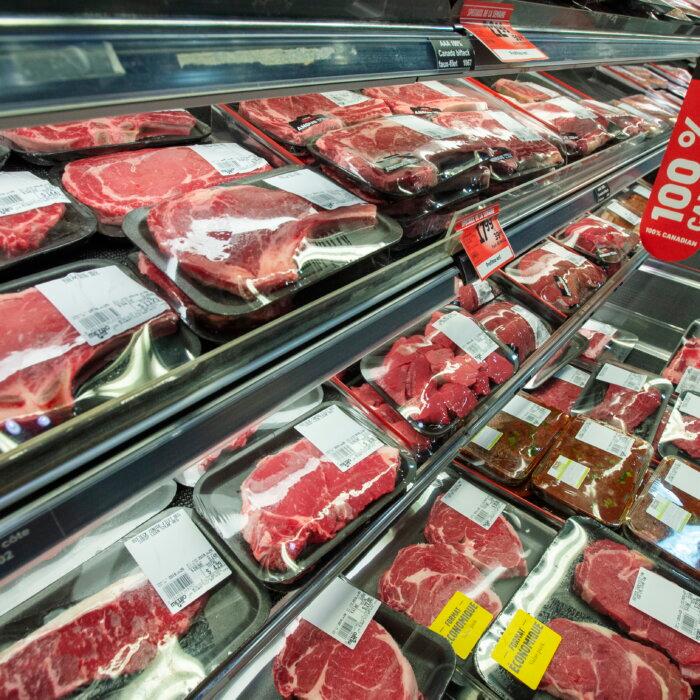
Health Canada previously told The Epoch Times that because foods from cloned cattle and swine are considered no different from those of naturally reproduced animals—based on a scientific review it conducted with other government departments—the agency wouldn’t require additional labelling.
Cloned Meat and Novel Foods
Health Canada was referring to a scientific analysis it published in November 2023, which concluded that there are no significant compositional differences between foods from healthy cloned cattle and swine and those from animals produced through conventional breeding. The analysis was conducted in collaboration with Agriculture and Agri-Food Canada, the Canadian Food Inspection Agency, and the environment department.The paper says that clones exhibit “higher incidences” of birth defects, malformations, and pregnancy-related complications compared to conventionally bred animals, but these issues “do not appear to be present” in the offspring of cloned cattle and swine. It adds that most clones would be used mainly for breeding and would enter the food and feed chain only past their normal slaughter age.
“Until the policy is updated, foods made from cloned cattle and swine will remain subject to the novel food assessment,” Health Canada said.
Labelling Guidelines
Health Canada labelling regulations say “it is not mandatory to identify the method of production, including genetic modification, used to develop a food product.” For this reason, the agency does not require genetically modified (GM) foods to be labelled differently from other foods, saying its safety assessments show they are “as safe and nutritious as non-GM foods.”It says special labelling for any food is only required when there are health or safety concerns, such as changes in a food’s composition or nutritional quality, or the potential to trigger allergic reactions.
Health Canada holds that SCNT cloning does not alter the composition or quality of food, eliminating the need for special labelling.
If cloned meat enters the market, its labelling requirements would be no different from those for any other food, says Canadian Biotechnology Action Network coordinator Lucy Sharratt.
Her advocacy group has spent nearly 20 years pushing for mandatory labelling of genetically modified foods. Most recently, the group voiced concern about Health Canada’s proposed policy change on cloned cattle and swine, saying that removing the need for pre-market assessments would assume all cloned meat is safe instead of assessing each product on a case-by-case basis.
“Regulated as a novel food or not, meat from cloned animals would not be identified on grocery store shelves unless companies decide they want to do that,” Sharratt told The Epoch Times in an interview.
She says that, just as genetically modified foods should be labelled as such to ensure transparency for consumers, foods derived from cloned animals should be labelled as well.
The agency notes that it agrees with the U.S. Food and Drug Administration, European Food Safety Authority, and Japan Food Safety Commission, which “have concluded that food products from cloned animals and their offspring are as safe as food products from conventionally bred animals.”
Calls for Mandatory Labelling
Sharratt was among the speakers at a Dec. 1 press conference on Parliament Hill, where Bloc Québécois MP Yves Perron, who serves as his party’s agriculture critic, urged the federal government to make labelling of all genetically engineered foods sold in Canada mandatory.“Genetically engineered foods, also referred to as genetically modified foods or genetically modified organisms (GMOs), are not required to be labelled in Canada and companies are not voluntarily labelling their genetically engineered food and food ingredients,” reads the petition.
The document says mandatory labelling would not only facilitate the tracking of GM foods in supply chains, but also “provide transparency to improve public trust in Canada’s food system.” The government must respond to the petition within 45 calendar days of its tabling.
Sharratt said that just as regulatory departments have the power to determine the safety of food products—as Health Canada has assessed meat from cloned cattle and swine to be safe for consumption—they also need a mandate to ensure transparency.
“The federal government needs to sort this out to make sure there are ways for new technologies to be identified for the public if they want that information,” she said.


