It was clear from U.S. President Donald Trump’s election campaign and first executive orders that tariffs wouldn’t be the only way he would make waves in Canada.
Trump’s executive orders signed on day one of his second term as president gave clear policy directions that he was reversing course on a number of key issues including net-zero emissions policies, energy, and immigration in which for years the Trudeau and Biden administrations had been aligned.
Meanwhile, Trump has promoted the bill as a way to unleash the U.S. economy. The bill contains tax cuts and sizable deregulation. It notably extinguishes a slew of federal climate change programs implemented by the previous administration under President Joe Biden.
Slashing Net-Zero Emissions Initiatives
Aside from boosting economic activity in the oil and gas and timber sectors, Trump’s bill takes a chainsaw approach to slashing the funding of multiple net-zero emissions initiatives, many of which had been implemented via Biden’s Inflation Reduction Act. This includes billions of dollars to fund electric or low-emission heavy-duty vehicles like school buses and garbage trucks, reduce diesel emissions, and address air pollution.

The new bill also rescinds funds destined for the Greenhouse Gas Reduction Fund, the Low Emissions Electricity Program, and the Environmental and Climate Justice Block Grants, among other energy initiatives and tax incentives.
The megabill also terminates a slew of climate-related credits, such as for clean electricity production and investment.
The Economy
Through the legislation, Trump is offering more tax cuts and also giving support to the oil, gas, and coal sectors, which could be draw more investments in those industries. If Canada doesn’t manage to keep pace, this could deepen its productivity and prosperity gap with the United States.As for prosperity, typically measured by GDP per capita, Canada has also been significantly lagging.
On June 26, Parliament adopted government Bill C-5 to remove federal interprovincial trade barriers and reduce approval time to build major projects deemed to be in the national interest.
These big tax cuts are accompanied by a more aggressive stance toward using more of America’s energy potential.
The megabill also has a number of other provisions to expand onshore and offshore oil and gas activities, helping to fulfill Trump’s promise to “drill, baby, drill.”
Trump also said the United States doesn’t need Canadian timber, and his bill has provisions to boost domestic logging. The bill says the National Forest System (NFS) and the Bureau of Land Management (BLM) have to sell a certain amount of timber each year. It calls for an annual increase of 250,000,000 board-feet of timber sold from NFS land and 20,000,000 board-feet from BLM land.
Border Security
Illegal immigration and border security have been major focuses of the Trump administration. Through the threat of tariffs, Trump forced Canada’s hand to allocate more funding and resources to boost border security.So far, however, a major influx hasn’t been seen at the border.
Even after the increased operations by Immigration and Customs Enforcement, which made international news after the recent riots in Los Angeles erupted, the RCMP told The Epoch Times the situation at the U.S. border has remained normal.
“No increase on our side in Quebec,” said a spokesperson for RCMP’s C Division. “Everything is stable.”
It remains to be seen if this changes with the implementation of Trump’s megabill.
Defence
Trump already had a sizable impact on Canadian defence and security before the adoption of his bill. Ottawa boosted border security in a bid to avoid tariffs and has introduced related security legislation. Carney has also pledged to meet NATO’s previous defence spending guideline of 2 percent of GDP this year and agreed to the military alliance’s new goal of 5 percent, as advocated by Trump.Now, the new legislation authorizes initial funding to begin Trump’s plan of creating a “Golden Dome,” an air defence system to protect against sophisticated missile threats. Canada has been in discussion with the United States on the matter. Trump has put the price tag of Canada’s participation in the dome at US$71 billion.
Sections of the megabill relate to “Next Generation Missile Defense Technologies” and “Layered Homeland Defense” and include amounts totalling over US$24 billion for items such as accelerating hypersonic defence systems.
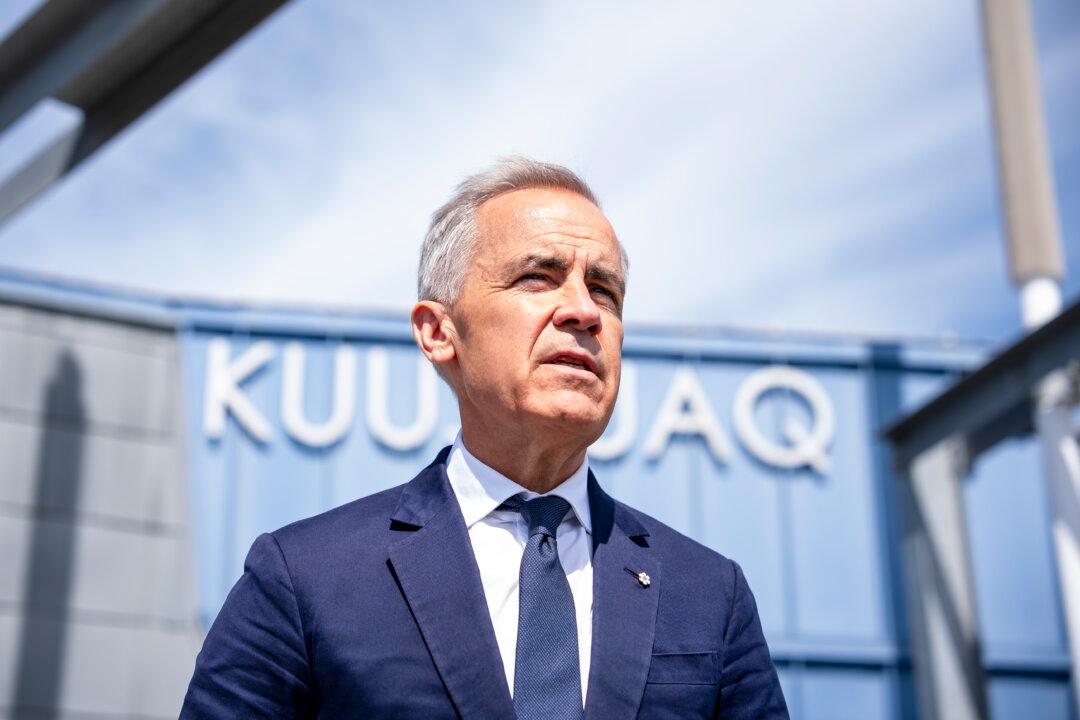
Carney, after hosting last month’s G7 Summit in Alberta, said there are “many reasons” why partnering with the United States on the Golden Dome “would make sense.”
“Part of the spirit, unfortunately, of these discussions is that the world is a much more dangerous place,” he said on June 17.