Being diagnosed with Parkinson’s disease changed Lloyd Taylor’s life immeasurably—in many ways for the better.
Taylor’s life has transformed tremendously since coming to terms with the fact that he suffers from a chronic, progressive neurodegenerative condition that results in tremors and makes the everyday movements that he used to take for granted a challenge.
The book, released on Sept. 23, is not just about cycling, however. It’s also about Taylor’s inward journey and his discovery that a fulfilling life was possible despite the disease.
Taylor said the disease has given him a new lease on life, changing him from a “cautious” man who was “uncertain” about society to someone who is open and optimistic.

“This seems to be a gift that Parkinson’s has given me,” he told The Epoch Times. “It changed my life in that I had to stop working, and the old me had to be reinvented, but I can’t be happier with the direction my life has gone. As crazy as it is to say this about an incurable brain disease, my life is better now than it was before the diagnosis.”
Taylor didn’t feel that way when he was first diagnosed by a specialist in 2019. He concealed the illness from everyone except his wife, attributing his unsteady hand and arm to the diagnosis initially provided by his family physician: an essential tremor, an often genetic neurological condition that causes uncontrollable rhythmic shaking.
It was an easy story to sell because Taylor’s father has an essential tremor. It was much harder to share the specialist’s diagnosis that his tremors were, in fact, because of Parkinson’s disease.
“There’s something about this disease that makes people hide,” Taylor said. “And with this disease, more than many others, people make a decision early on that they’re going to put their shaky hand in their pocket. They’re not going to let people see. And they start by hiding the symptoms and ultimately they end up hiding themselves, and they retreat from their lives.”
That is exactly what Taylor did. He stopped playing hockey, turned down dinner invitations, and avoided parties, spending most of his spare time surfing Netflix.
He didn’t go public with his diagnosis until 2022, after meeting with two members of the Rigid Riders, a Greater Toronto Area Parkinson Cycling club, who were planning to cycle across Canada as part of the Spinning Wheels Tour.
It was then that Taylor learned about the many benefits of cycling for people with Parkinson’s, and before he knew it, he was helping to host a fundraiser for the tour.
Riding Cross-Country
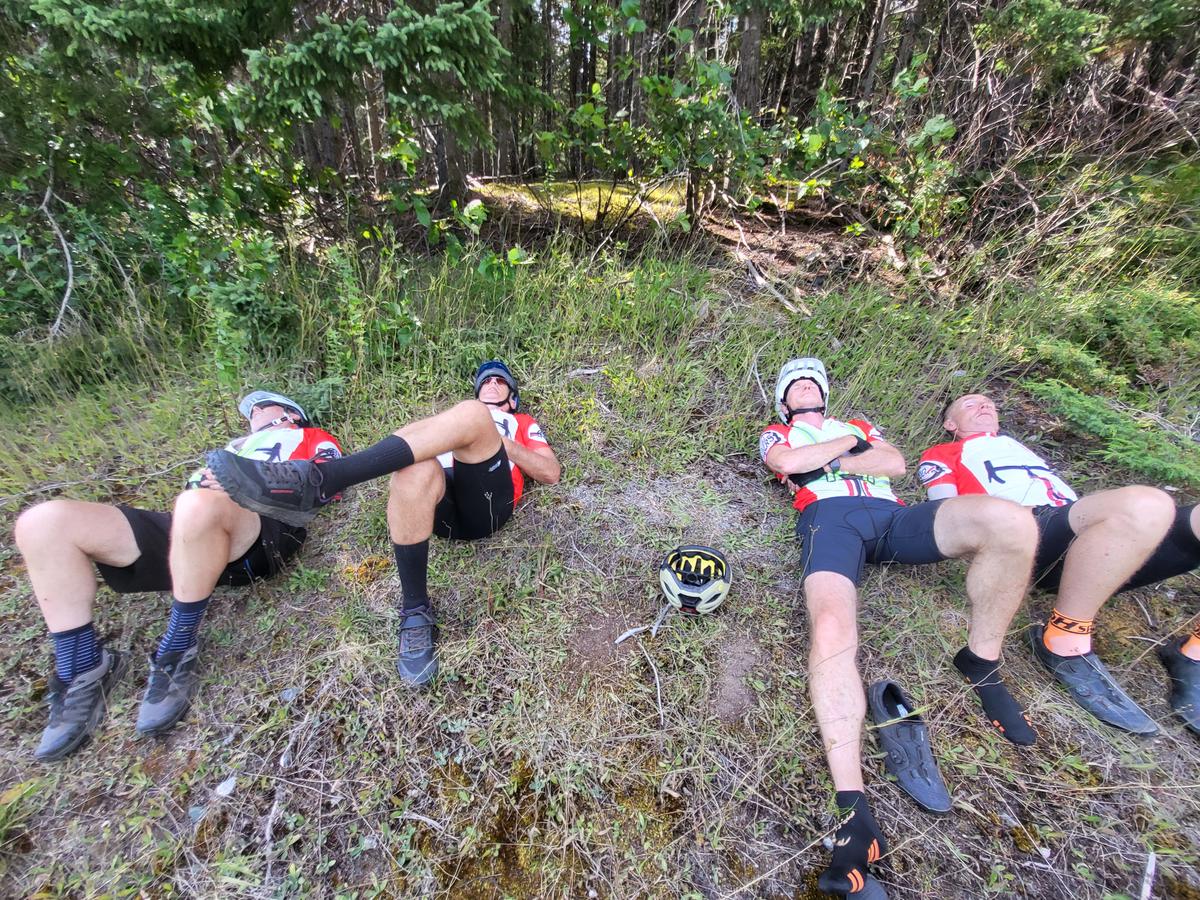
Taylor got his first taste of riding just weeks later when he did a 21-day stint with the tour, cycling from Halifax to Newfoundland. Miraculously, the tremors that made other sports impossible disappeared when he was on his bike.“I only stop shaking when I’m asleep or I’m riding the bike,” he said. “I start turning those pedals, and the tremor stops, and it’s such a relief.”
“He’s actually reversed his symptoms, and is the only medically documented person to reverse their symptoms, and he’s done it through cycling,” Taylor said.

The symptom relief that Taylor himself experienced while cycling made him ready for more, and before he knew it, he was busy planning the next tour with his fellow Rigid Riders.
Taylor was set to embark on a brand-new ride just 18 months later. He would lead the eastern and northern legs of the coast-to-coast-to-coast tour while friends and Rigid Riders Jim Redmond and Mike Loghrin would head up the western portion of the tour from Vancouver to Collingwood, Ontario.
The plan to ride 10,000 kilometers in 60 days kicked off on July 27, 2024. The journey was both exhilarating and grueling, largely determined by the weather and subsequent riding conditions.
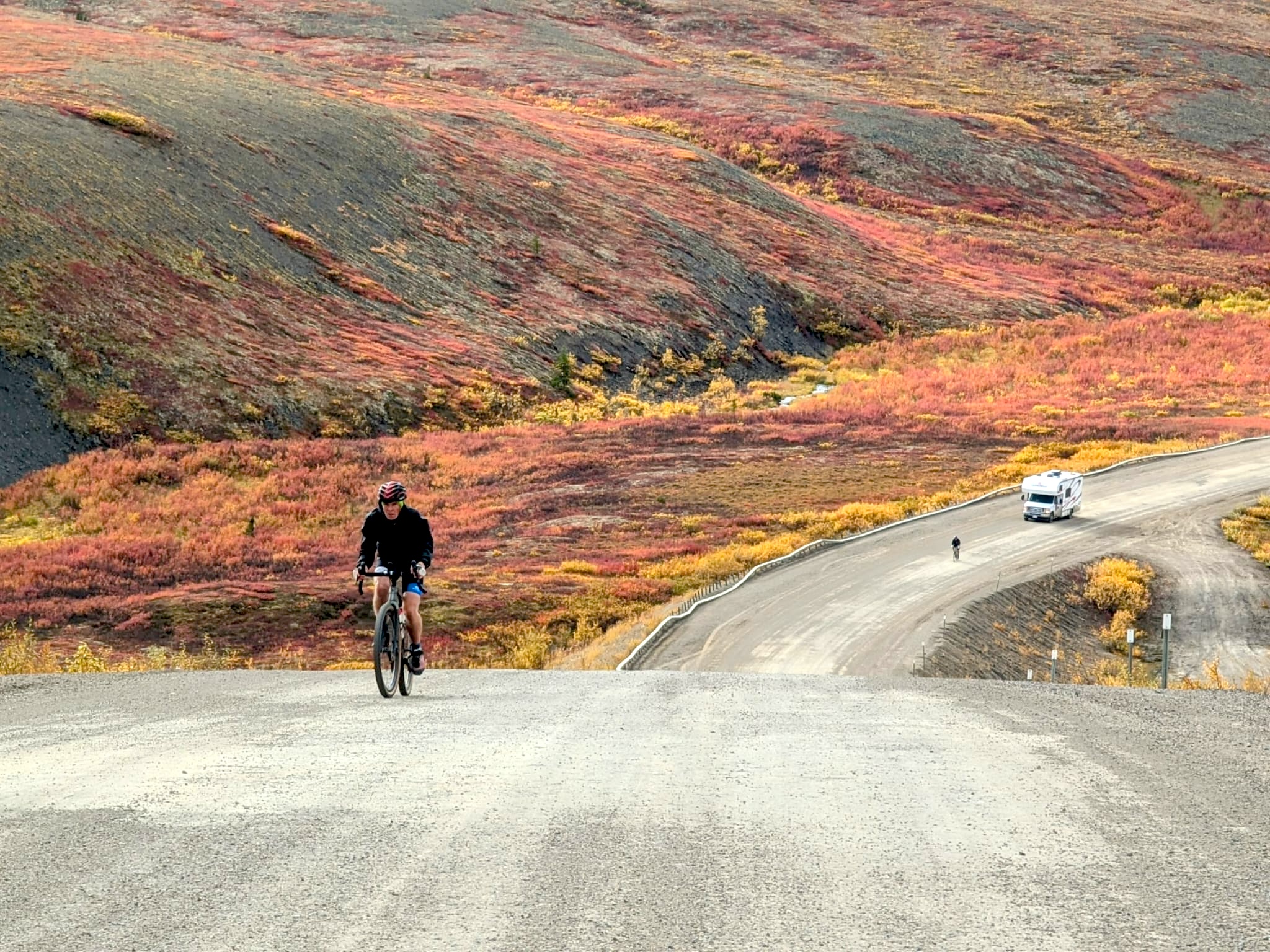
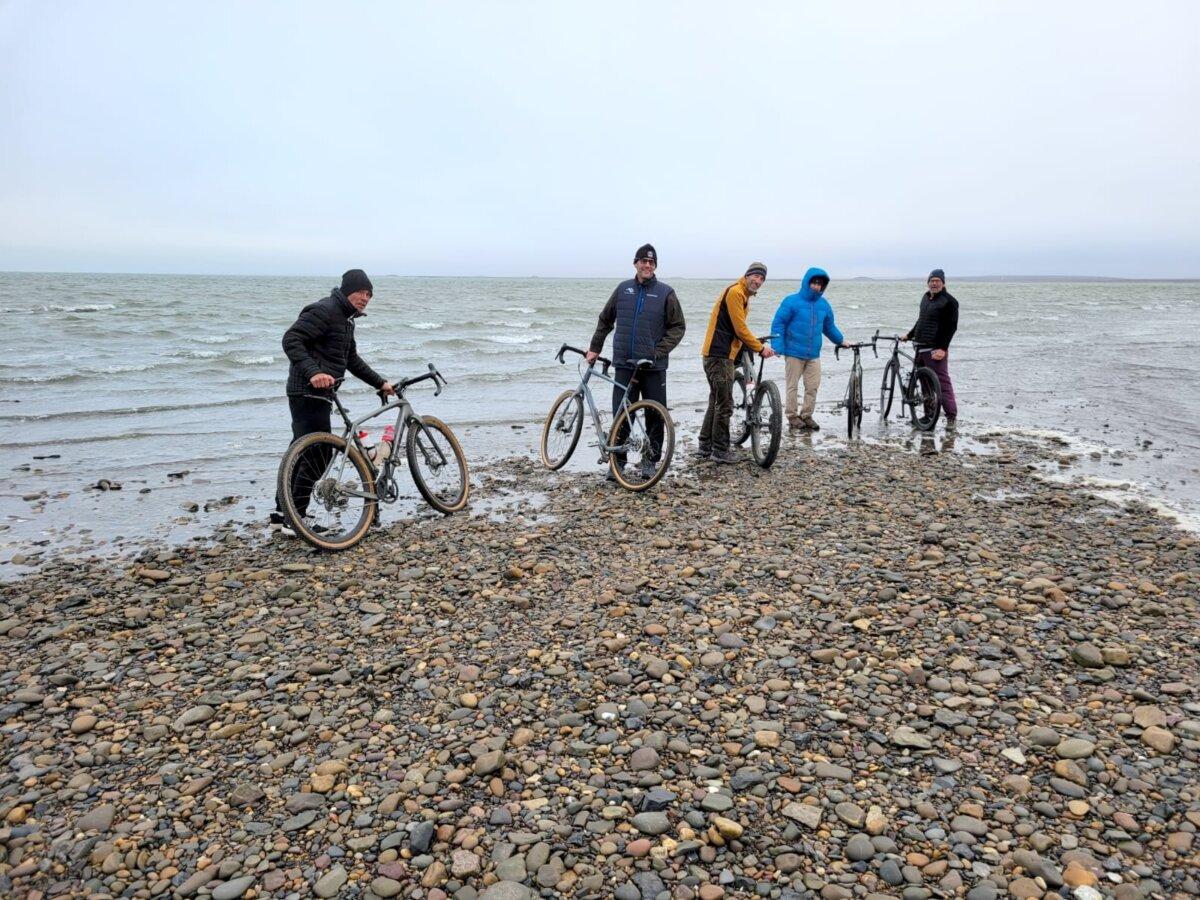
From riding in East Coast fog so thick that the riders couldn’t see the road ahead, to confronting the difficulties posed by pedaling on the Inuvik Tuktoyaktuk Highway (ITH), the challenges were many. It was the ITH that almost defeated Taylor. The 138-kilometer, two-lane gravel road that serves as the sole highway leading to the polar shore of the Arctic Ocean, combined with subzero temperatures, the fatigue and soreness that comes from riding nearly 4,000 kilometers, and a flareup of his symptoms, culminated in a tumble off his bicycle that left him feeling battered, bruised, and disheartened with just 35 kilometers left to go.
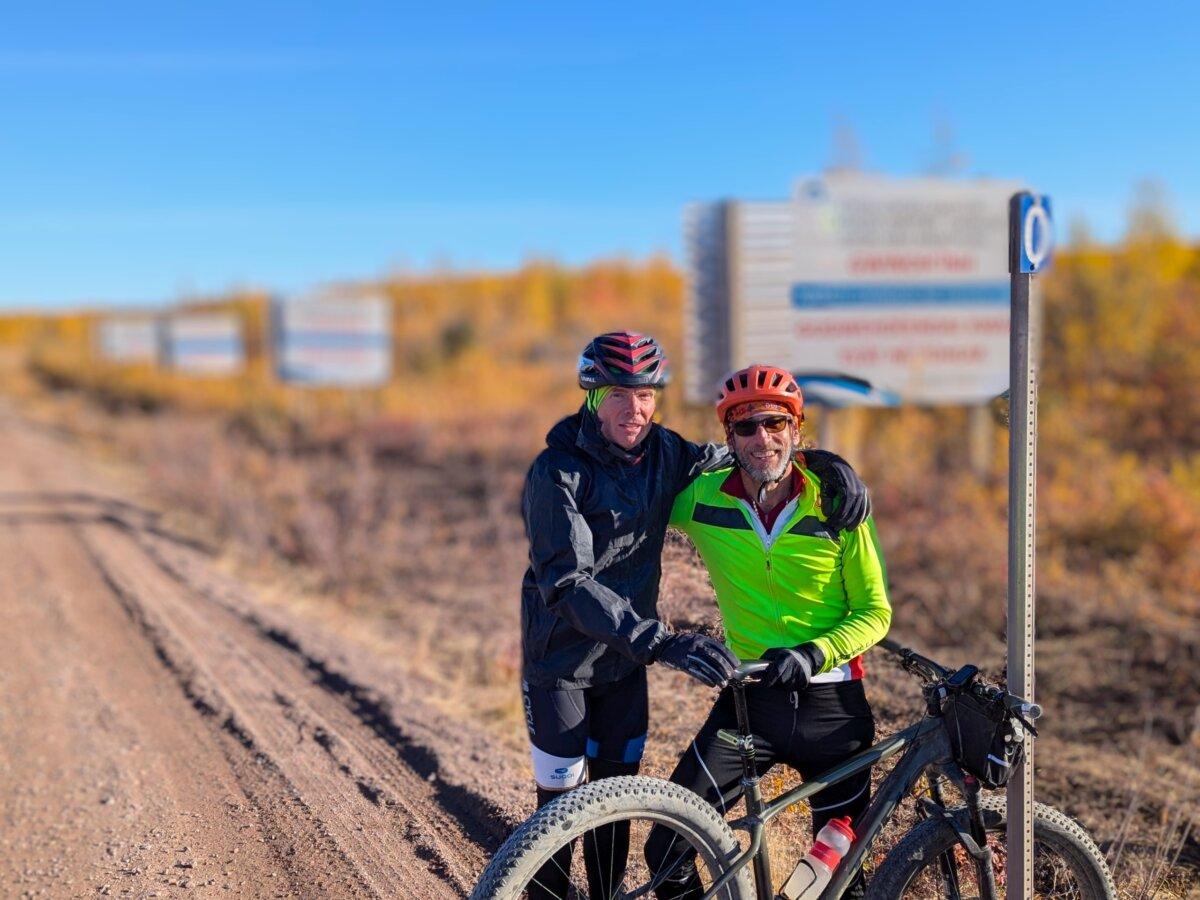
Ready to quit, Taylor told the team to go on without him. They didn’t listen. With their help and support, Taylor was able to make it to the group’s finish line: the Arctic Ocean.
A Tale of Kindness
A year later, in the summer of 2025, Taylor completed his second Spinning Wheels Tour, this time cycling the 5,000 kilometers from British Columbia to Ontario. The ride ended in September in Toronto.Despite the physical hardships and hard-fought victories of pedaling thousands of kilometers across Canada, it is not the physical achievement that Taylor values most. Nor is it the $300,000 that his group has raised for Parkinson’s research.
He says it’s the people he has met, the friendships he has made, and the acts of kindness he has benefitted from that mean the most to him.
“Everywhere we went, people took interest in what we were doing, whether they had Parkinson’s or they didn’t,” he said. “The recognition that we were riding for others, it gave people the opportunity to do things for us, whether that was give us a meal or give us a place to stay or give us a free repair on our bicycles.”
The stories of kindness are too many to name, Taylor said, but he noted that it wasn’t unusual for people to go out of their way to help the Spinning Wheels riders. In one instance, an Alberta hotel owner, hard-hit by wildfires, contributed the cost of their rooms back to the cause. In another, a Newfoundlander traveled more than an hour through thick fog to offer his cottage when the cyclists were unable to secure accommodation. These are two among the hundreds of individuals whom Taylor recalls with great fondness.
The kindness of strangers—which is also the title of his book—became the theme of both his 2024 and 2025 rides. The many kind gestures that he experienced during his weeks on the road were an eye-opener for Taylor.
Many Canadians have a bad habit of declining help out of politeness, he said, admitting that he himself was one of the worst culprits. What he has come to realize, however, is that when kind offers are rebuffed, even in a nice way, it robs people of the chance to make a difference.
“Not only were people kind to us, they seemed to thank us for giving them the opportunity to be kind,” he said. “They had done us the kindness, and yet, at the end of it, they would say, ‘Thank you for letting me help.’ And it just slowly impressed upon me that everybody wants to help, everybody wants to be kind. I think we could all do a little better to accept people’s kindness, accept people’s help, and give them a chance to be part of our lives.”
“My main hope is that people can experience the type of kindness I’ve experienced,” he said. “You know, it may be a tired old saying, but you get what you give. And when it comes to kindness, that’s certainly the truth.”