Court Challenges Program
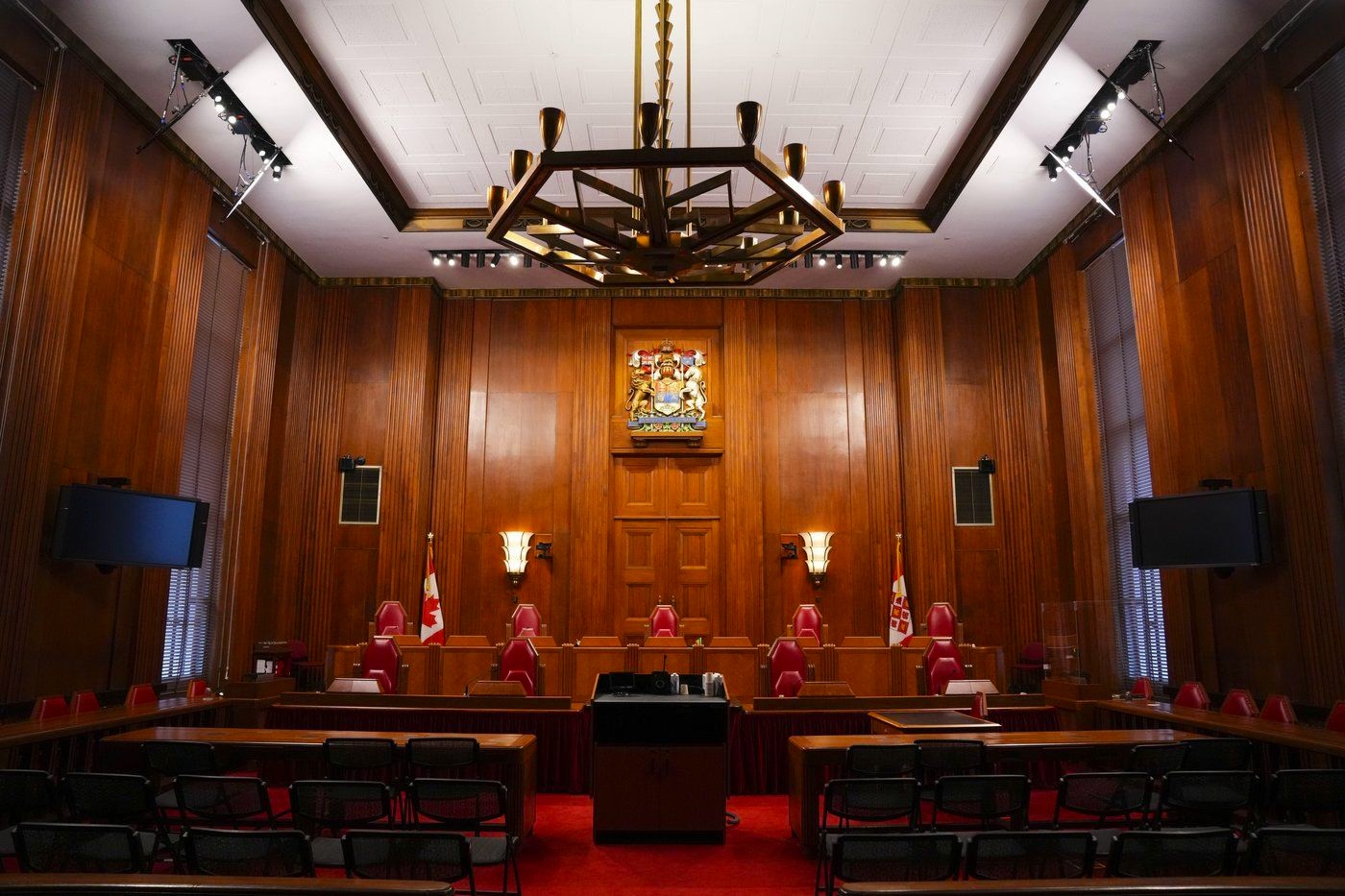
A prominent example of federal dollars directly funding cases involving provincial jurisdiction occurred in 2021, when Ottawa’s Court Challenges Program—a federal initiative that supports cases related to the Charter and official language rights—funded two interveners in support of the federal carbon tax during a Supreme Court challenge brought by Alberta, Ontario, and Saskatchewan.
“Part of the controversy relates to the federal government trying to affect how provinces are doing things that are within their jurisdiction, and subsidizing litigation to challenge policies within provincial government’s jurisdiction that the federal government just happens not to agree with or doesn’t like,” Mark Harding, professor of political science at the University of Guelph, told The Epoch Times in an interview, referring to the Court Challenges Program in particular.
Other cases of the Court Challenges Program funding interventions in support of federal policies in the face of provincial jurisdictional challenges include its support for groups defending federal authority in a division-of-powers case involving indigenous family services legislation, according to the MLI report.
Dave Snow, political science professor at the University of Guelph and one of the report’s authors, says using the Court Challenges Program to challenge provincial policies violates the program’s terms of reference.
“This is supposed to be about money to citizens and groups to challenge laws that violate your human rights,” he said. “It’s not supposed to be money to citizens and groups to help the government maintain their laws.”

A ‘Progressive Bias’
The Feb. 13 MLI report raises concerns about what it calls an “overwhelming progressive bias” of the Court Challenges Program’s human rights panel. The program’s funding decisions are made by two “independent expert panels,” according to the program’s description, with members being appointed by the department of Canadian heritage.Originally created in 1978 by Prime Minister Pierre Trudeau, the Court Challenges Program was reinstated in 2017 by Justin Trudeau’s Liberal government. Over the years, it has tended to be shut down under Conservative governments and revived under Liberal ones.
The authors concluded that 96 percent of cases funded progressive activism. They define progressive causes as those that aim to expand the Canadian state or federal government authority, promote an activist interpretation of the Charter, and contribute more broadly to the judicialization of politics—the growing reliance on courts to resolve political, social, or policy disputes.
“By contrast, we did not identify a single example of [Court Challenges Program] funding that could be tied to anything approximating a conservative rights claim,” the report says.
Harding says the federal program’s use by interest groups influences the range of perspectives represented in the courts.
“There’s lots of evidence to suggest that [the Court Challenges Program] does have a significant effect on the kinds of perspectives that courts hear and don’t hear,” Harding said. “And there is a strong argument and strong evidence to suggest that there is a certain ideological persuasion to the kinds of groups that get funding.”
The Epoch Times reached out to the Court Challenges Program to inquire about its position on allegations that it funds progressive causes and litigation in areas under provincial jurisdiction, but did not receive a response by publication time.
Snow says that while it is common for governments to support causes aligned with their political and social views, the Court Challenges Program’s mandate to operate as an independent body appears inconsistent with the predominantly progressive cases it funds, according to its annual reports.
“It’s not unusual for a Conservative government to fund Conservative causes and programs, even if they don’t represent all Canadians, and a Liberal government to fund global causes and programs,” he said. “What’s more egregious to me is that the Court Challenges Program is framed primarily in neutral terms.”

One Side of the Spectrum
Harding says there are two possible reasons for the absence of conservative-leaning cases in the examples cited by Court Challenges Program reports, but notes that it’s difficult to draw firm conclusions due to the program’s limited disclosure about applicants and funded cases.One is that the panel may intentionally favour progressive causes in its funding decisions. The other is a lack of applications from conservative groups, he says, which may stem from philosophical or principled reasons.
“I know that there are kind of conservative or right-of-centre groups that are against taking federal money and subsidizing their litigation,” he said, adding that some believe it creates a “conflict of interest” for taxpayer funds to support third-party legal efforts.
‘Echo Chamber’
In the case of recent legislation by Alberta and Saskatchewan dealing with parental rights issues, both provinces have been taken to court by activist groups. The new legislation in the two provinces requires parental consent for children changing pronouns at schools.Leis notes that the activist groups receiving federal funds are overly represented on the progressive side, whereas many right-leaning organizations that are active in court cases, such as the Justice Centre for Constitutional Freedoms, operate solely from private donations.
He says that’s because many of those who advocate for socialism or the left historically have “seen it as their political prerogative to use the money funded by the taxpayer for the benefit of their ideological cause.”
“It’s often the assumption that the ends justify the means, and so if they believe there’s an opening to fund proxies for their ideological cause, history’s shown this to be the case time and again,” he said.
He says that beyond judicial action, the multitude of government-funded organizations pushing a certain viewpoint or cause creates an “echo chamber,” as these groups appear on media panels, advocate for or against policies or legislation, and take legal action against measures they deem contrary to their cause.
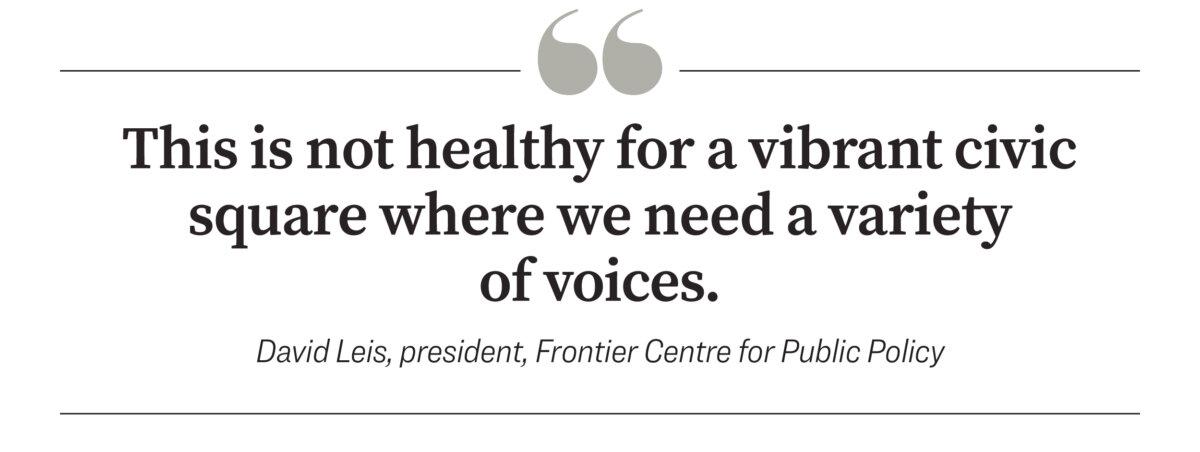
“There’s such a proliferation of government funded groups really creating an echo chamber and a kind of group think that does not at all reflect the Canadian society and its diversity of intellectual opinion,” Leis said, adding that it would go against democracy if they’re acting against the will of taxpayers as reflected in the policies of elected representatives in the provincial government.