HOUSTON—Saudi Arabia and its Persian Gulf neighbors may seek to “de-risk” relations with Iran to get ships moving through the Strait of Hormuz while also staying aligned with the United States.
It is a precarious balance that offers short-term relief but poses long-term perils, a panel of veteran diplomats and military leaders suggested on March 26.
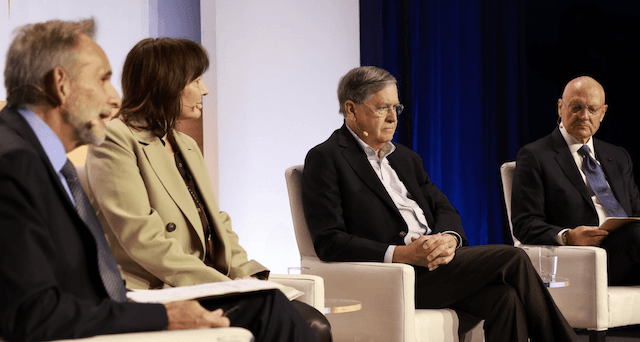
Gulf states “fear two outcomes” in how the war ends, Rice University Baker Institute for Public Policy Director David Satterfield said during a forum at CERAWeek by S&P Global in the Americas Hilton-Houston.
“One, there is no outcome,” he said. “It muddles on in increasingly chaotic, nasty fashion with further engagement of U.S. forces, perhaps beyond air forces, and it doesn’t come to a clean end. Indeed, maybe it doesn’t end at all. That’s a worry.”
The “second worry,” said Satterfield, a former U.S. ambassador to Turkey in the first Trump administration and a senior Iraq adviser during the Bush administration, “is it does end … in a declaration of victory by [President Donald Trump] that isn’t a victory at all and Iran now has a dominant hand” in the Persian Gulf.
Washington-based nonprofit think tank Arab Gulf States Institute senior resident scholar Kristen Diwan said a “great fear” of Gulf states “going back to the Obama administration and the whole idea of ‘pivot to Asia’ is they were going to be abandoned” by the United States after decades of intractable Mideast upheaval.
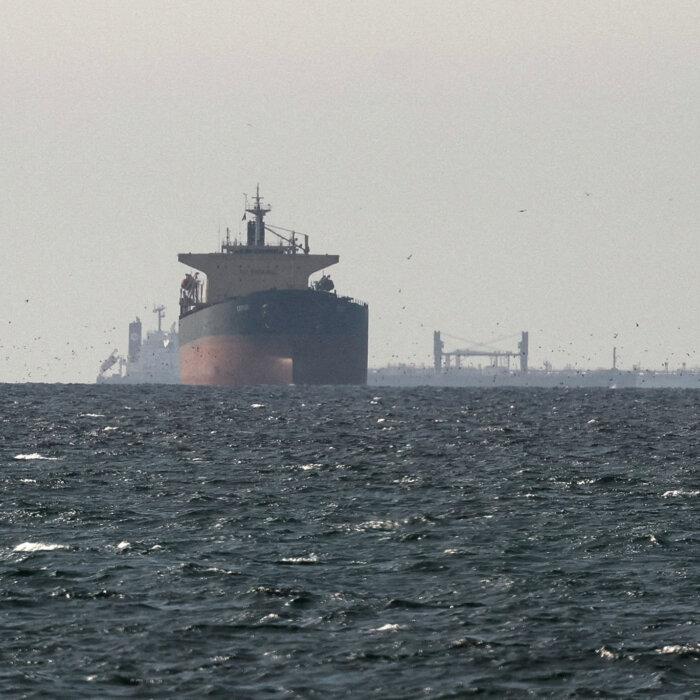
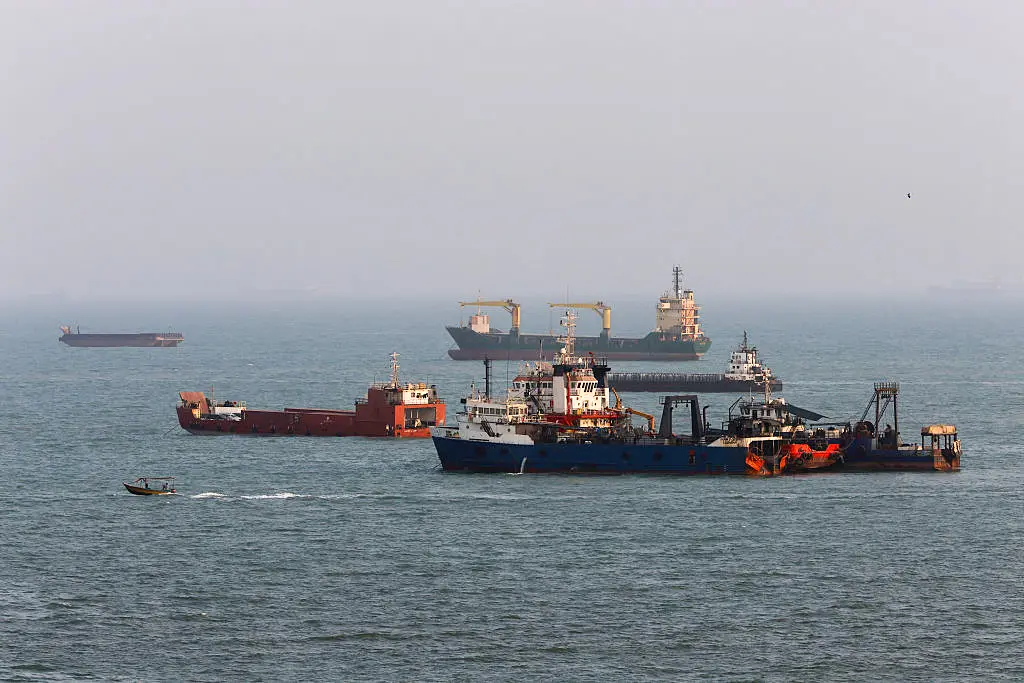
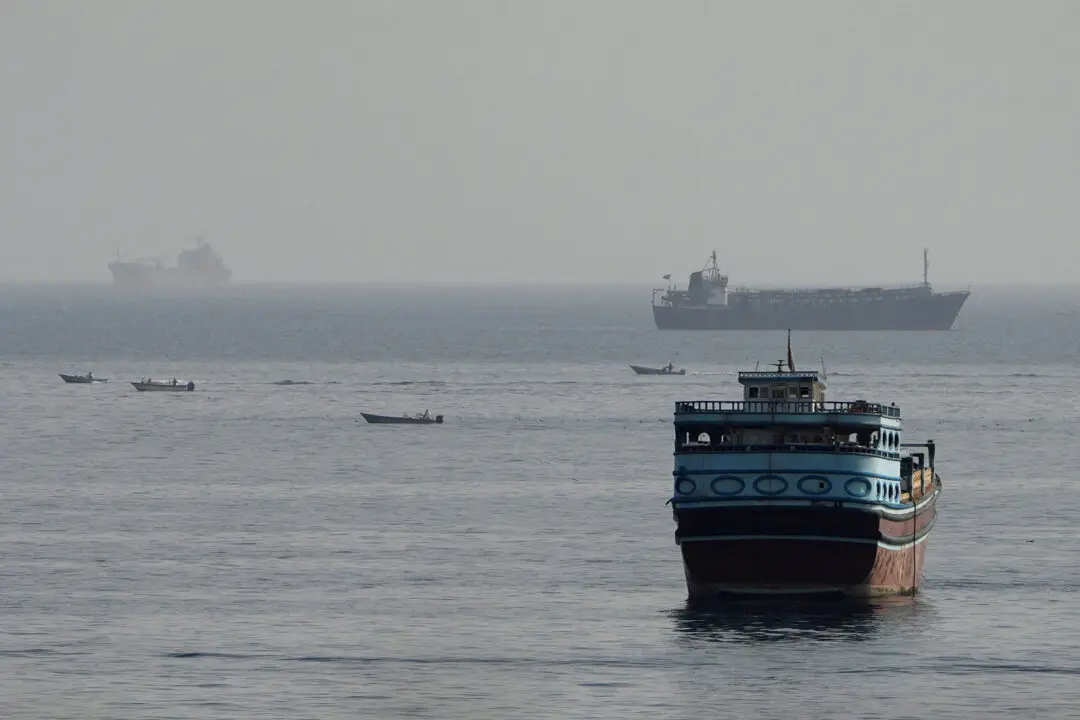
Since the United States and Israel launched Operation Epic Fury on Feb. 28, fewer than 100 ships have transited the 24-mile-wide Strait of Hormuz, leaving an estimated 800 ships and 20,000 crewmen idling in the Gulf and Arabian Sea.
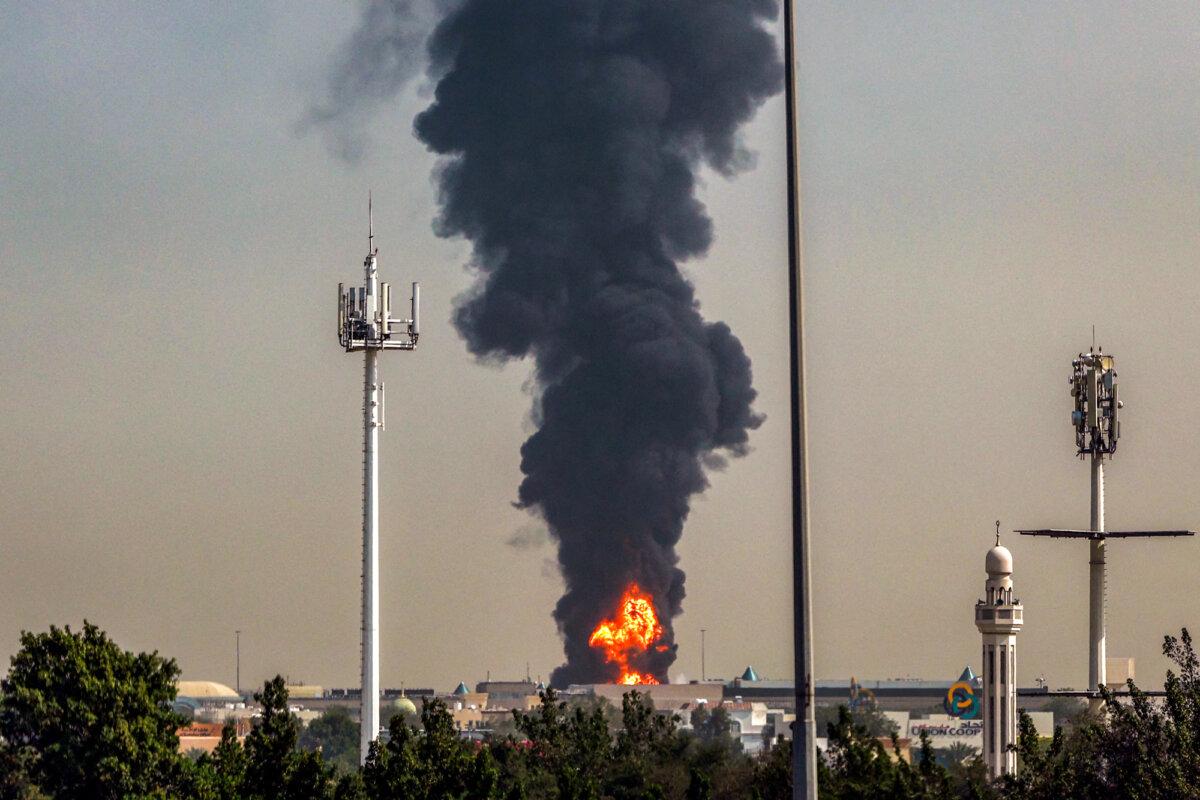
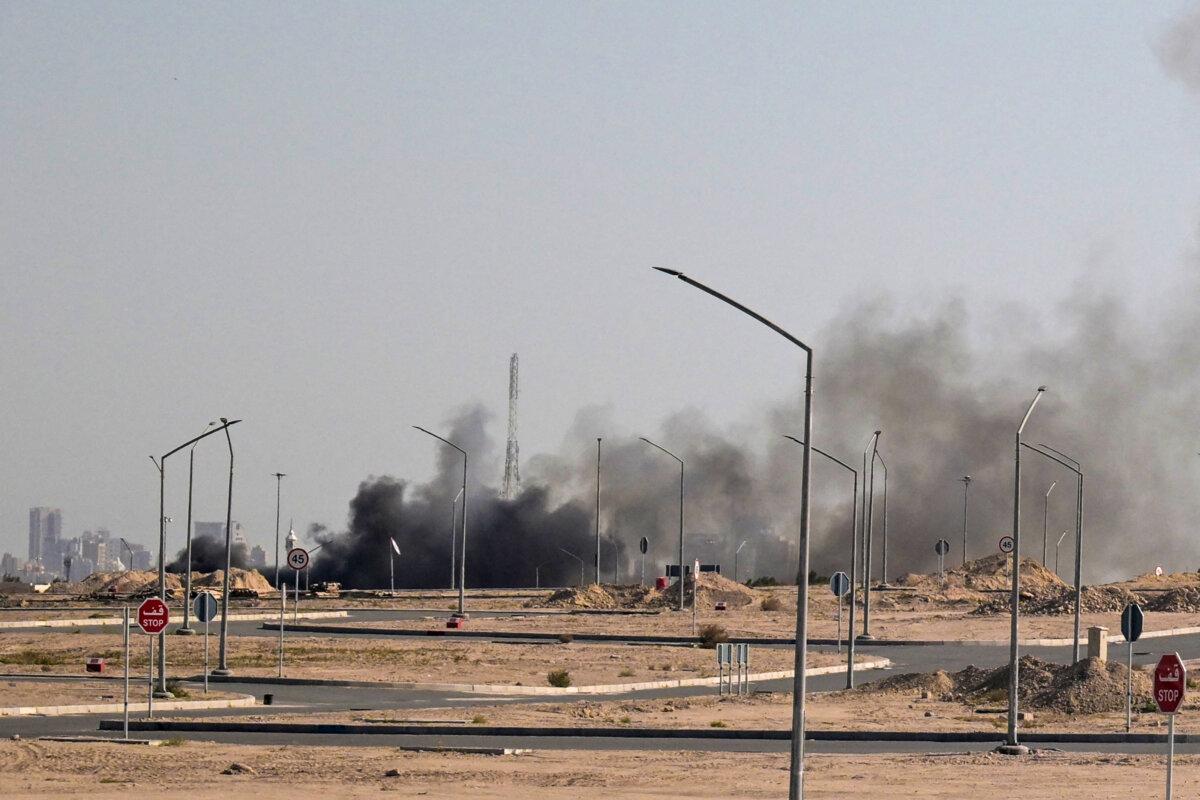
The standoff in the strait, and Iranian attacks on energy infrastructure in Saudi Arabia, the United Arab Emirates, Qatar, and Kuwait, have left 20 percent of daily globally traded crude oil, and 20 percent of the world’s daily liquified natural gas, unable to be exported from the Gulf, devastating economies across the planet.
“We see a real test of power” without a military solution, Diwan said. “It’s now sort of a total battle and, I think, for the Gulf states, they’re worried the Trump administration will decide this is too much and just pull out.”
‘Iran Believes It’s Winning’
Satterfield said it’s “difficult to say” how “off-ramp” discussions between the Trump administration and Iranian representatives are progressing. Still, it is certain intermediaries such as Pakistan are involved, according to U.S. special envoy to the Middle East Steve Witkoff, and likely some Gulf states are engaged in talks with Tehran.The 15-point U.S. proposal “could have been drafted by any department of state, NSC, presidential staff over the course of the last many years,” he said.
He noted that the United States requires Iran to end its uranium enrichment program, relinquish enriched uranium, accept constraints on its ballistic missile arsenal, and cease supporting proxies such as Hamas, Hezbollah, and the Houthis.
Unfortunately, Satterfield said, “The Iranians have agency here and believe they’re winning.”
Tehran has, in public, rejected the proposals and “countered, in principle, with points of their own which are rather outrageous,” he said.
“They require the United States to pay reparations, accept Iranian sovereignty over the Strait of Hormuz—a contradiction of international law—and cease all activities directed against Iran now and forever,” Satterfield said.
In fact, Diwan said, “Iranian demands have ... become greater” by making sovereignty on the strait a point of negotiation to pressure Gulf states, to “have a pathway to achieve something they have long wanted, to push the Americans out of the region, and to take what they see as their rightful place as … the controllers of the Gulf, of having more say over the Arab Gulf states.”
Nothing about this is new, Stanford University Annenberg distinguished fellow Jim Ellis said.
The retired four-star admiral was the captain of aircraft carrier USS Lincoln—now in the Arabian Sea—during the first Gulf War against Iraq in 1990–1991 and was an F-14 pilot in 1979 aboard USS Constellation, which led the first U.S. response to the Iranian revolution.
“The dilemma of tactical successes” without strategic gains has been a restraint in pursuing military action in the strait for decades, he said, questioning “the idea that we could end it on our terms without a conversation, without a negotiation.
“I would argue we’re not even in negotiations yet. We’re bargaining. They’re not the same,” he said.
Ellis said bargaining “is when you tell people what the outcome is going to be and the only debate is about the price they’re willing to pay,” while negotiating “has a win-win outcome. We’re not seeing that yet” in talks between the Trump administration and Iran “because the differences are so large,” he said.
He doubts the standoff will end soon and expects “there’s going to be some negotiations” between some Gulf states and Iran.
“These people are realists and pragmatic, and they’re going to do what they need to restore their credibility as a hub for manufacturing, for finance, to restore trust and confidence in the region,” he said.
US–Israel ‘Divergence’
Satterfield said the conundrum is further complicated by “a divergence in goals” between the United States and Israel in how it ends.He said Israelis are concerned that “at some point, the pressure mounted on the president will lead him to declare victory, to pull out” rather than see “a fractured, chaotic Iran emerge” led by “hard men with a clerical overlay of the thinnest possible character, killing their own people as needed … any more than he wanted to see that in Syria.”
Israeli Prime Minister Benjamin Netanyahu “has very different strategic objectives in which chaos, dissolution—‘Ghaflah,’ as the Arabs say—is a perfectly acceptable, if not ideal, end state because it provides greater agency for Israel,” Satterfield said.
Diwan said that “Gulf states are really concerned with the split between the Americans and Israelis” after Israeli attacks on Iranian energy infrastructure.
“They’ve been trying to communicate to the United States that [Israel] shouldn’t be targeting Iran’s oil and gas facilities,” and desalination plants, “because, basically, the strategy the Iranians are taking is sort of a tit-for-tat” in attacking Gulf state assets, she said.
“The Gulf states feel like they don’t necessarily have the ear of the president,” Diwan said. “It’s quite concerning to them, and you could see [a] sort of diversion between the United States and Israel [before] the president said, ‘Well, we’re not going to do that anymore. We’re not going to strike’ [Iranian energy and water infrastructure]. But the escalation had already happened.”
She noted there’s “contrary reporting” about retaliation by the UAE and, particularly, Saudi Arabia, tempered by a recognition they “live in the middle of all of this, and what they need is a little bit more strategic thinking about” how to deal with Iran when the war ends.
“You can see them making different decisions,” Diwan said. “‘OK, should we ally ourselves much closer to the United States’—and Israel, by the way, because Israel is the other partner, which is also very complicated—‘or do we need to hedge?’”
“We’re seeing in the Gulf a bit of a split,” Satterfield said. “Some states are saying, ‘United States, finish this,’ whatever that might mean, and others are saying, ‘We’ve got to recognize we have to deal with whatever the remnants [in Tehran] are, and therefore, let’s figure out a way to get to some sort of settlement that allows us to deal with whatever that is in a more viable way.’”
No ‘Pivot’ From US
Satterfield and Ellis said that despite whatever “hedge” Saudi Arabia and Gulf states may pursue with long-established contacts in Tehran, they aren’t going to seek a separate peace without retaining security compacts with the United States.“I do not see Gulf states pivoting away from security relationships on a purely transactional basis with the United States,” Satterfield said, citing a prominent UAE official.
Satterfield said the official said in public that “he thinks that at the end of the war, all of the Gulf states will become much closer to the United States. And he also said, over time, they also start to strengthen ties to Israel because they will need to have those ties.”
“I don’t think they'll ever break ties to the United States,” Ellis said.
“I think that integration, that support, the missiles, the interceptors, they need to keep their air defense network up and going, the parts, supplies they need for aircraft they bought—the F-16s, the F-15s, those types of things—they recognize that partnership with the United States is going to be an important part going forward.”
Satterfield said several nations, particularly Saudi Arabia, could pursue a “de-risking strategy with Iran.”
At the same time, “they rely even more intensely on U.S. resupply and new supply of air defense. They harden to the extent they can their critical facilities” while softening relations with Tehran, he said.
Under Crown Prince Mohammed bin Salman, Saudi Arabia was already pursuing such a strategy, “starting from the dramatic walk-away from the UAE in Yemen,” battling Iran-sponsored Houthis, he said.
Bin Salman “decided this was not worth it and made a separate peace with the Houthis. He reopened his embassy in Tehran after a long period of closure. It’s all de-risking. I think you'll see that start again,” he added.
Diwan added: “The Saudis kind of pivoted and said, ‘Okay, we need to come to some terms with Iran.’ And basically, pressure from Iran brought that about.
“A really important thing to note is when they needed a guarantor for that agreement, it wasn’t the United States they turned to, it was China, and that was the first time we saw China brought into the region, not just in an economic way [but to] have some political security role.”
China’s emergence in Gulf affairs is “the real purpose” behind U.S.–Saudi security ties ostensibly linked to “normalization with Israel,” she said.
“That was the device to get the necessary votes in the Senate for a U.S. treaty-level security guarantee to Saudi Arabia,” she said.
“What the agreement really was about was China, China, and also China, and maybe China.”