German Chancellor Friedrich Merz has said that Europe wants to maintain the NATO alliance, saying that Europe and the United States have the shared goal of stopping Iran from obtaining nuclear weapons.
“We are really willing to keep this alliance alive for the future,” Merz said at a press conference on May 9 alongside Swedish Prime Minister Ulf Kristersson.
“We know that there are some differences. We know that we are seeing challenges, all of us, but our final goal is to bring this conflict to an end and to guarantee that Iran is not able to produce nuclear weapons.
“And this goal is a common goal between America and Europe.”
Troop Drawdown in Germany
Tensions between Germany and the United States over defense have been high since Merz said last month that Washington had been “humiliated” by the Iranian leadership over attempts to hold peace talks to end the war. Trump disputed Merz’s claim, and he suggested that the German chancellor stop interfering in the Middle East conflict and focus on domestic issues.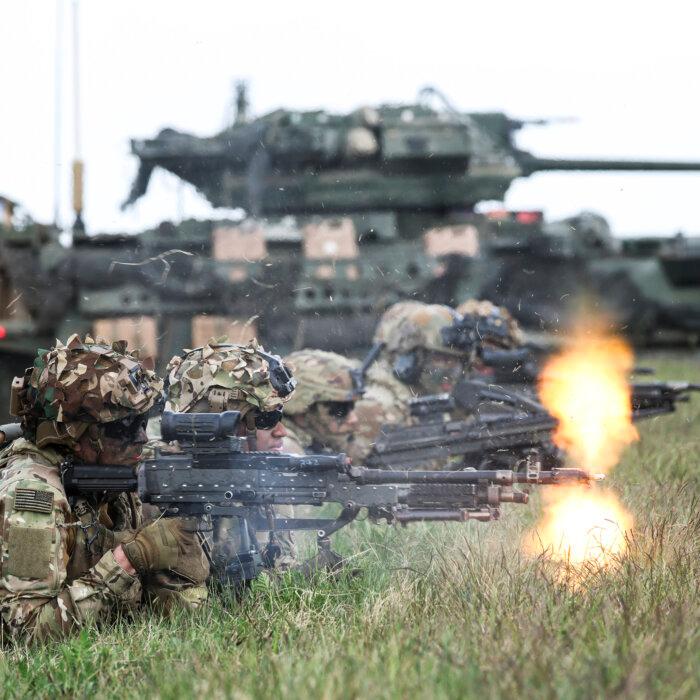
Last week, German Foreign Minister Johann Wadephul suggested that there was no rift between the two leaders, saying that the relationship between Merz and Trump is “very solid.”
“We’re going to cut way down,“ Trump told reporters on May 2. ”And we’re cutting a lot further than 5,000.”
In an interview with German public broadcaster ARD that aired on May 3, Merz said, “I have to accept that the American president has a different view on these issues than we do.”
When asked whether the troop drawdown was linked to the dispute over Iran, Merz said, “There is no connection.”
On May 9, Merz further said that the main issue was not troop numbers but “unity of purpose” and that it was in the United States’ interest to have a strong European component of NATO.
Europe Stepping Up on NATO
In recent weeks, European leaders have renewed calls for their allies on the continent to take on a greater role in NATO, particularly as the United States pivots toward other security priorities, both domestically and globally.“We’ve been behind the curve for too long: over dependencies, over reliance, and assumptions about the world that we live in—they’ve gone,” he said.
However, Poland said last week that allies need to meet the 5 percent target much sooner.
“It must be achieved by 2030, because later may be too late,” he said.
The calls for Europe to do more to secure its own defense follow the United States’ announcement of a reorientation of its defense and security priorities.
It also states that the United States would encourage partners in other parts of the world, including Europe, to take primary responsibility for their own defense “with critical but limited support from U.S. forces.”